Climate Change Intensifies Wildfires, Forcing Firefighters into Impossible Resource Decisions
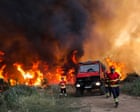
The escalating climate crisis is intensifying wildfires globally, pushing them into previously unaffected regions and forcing firefighters to make agonizing decisions about resource allocation. César Alcaraz, now an officer with Alicante's provincial firefighters, recalls his early career in the late 1990s when he and his colleagues were overwhelmed by a blaze on Spain's Montgó mountain, running out of water and wishing for more support. Decades later, Alcaraz understands the immense pressure on commanders who must ration limited resources when wildfires become too widespread. He likens the situation to a hospital emergency room with insufficient ventilators, where difficult choices about which fires to prioritize and fight are unavoidable. This challenging reality underscores the growing strain on firefighting services as they confront increasingly severe and frequent wildfire events fueled by climate change.
The increasing frequency and intensity of wildfires, exacerbated by climate change, present a significant challenge to existing firefighting infrastructure and resource management strategies. The described scenario highlights a systemic issue where demand for emergency services is outstripping supply, forcing difficult ethical and operational choices. This situation prompts a re-evaluation of proactive measures, including land management practices, early warning systems, and potentially the expansion of firefighting capacity. The long-term implications involve not only the immediate safety of communities and ecosystems but also the sustainability of emergency response models in the face of escalating environmental pressures. Future planning must consider the evolving risk landscape and adapt resource allocation frameworks to enhance resilience.
AI-generated to prompt reflection — not editorial opinion, not advice, not a statement of fact. How this works.