Climate Change Made Spanish Wildfire Conditions 20x More Likely, Study Finds
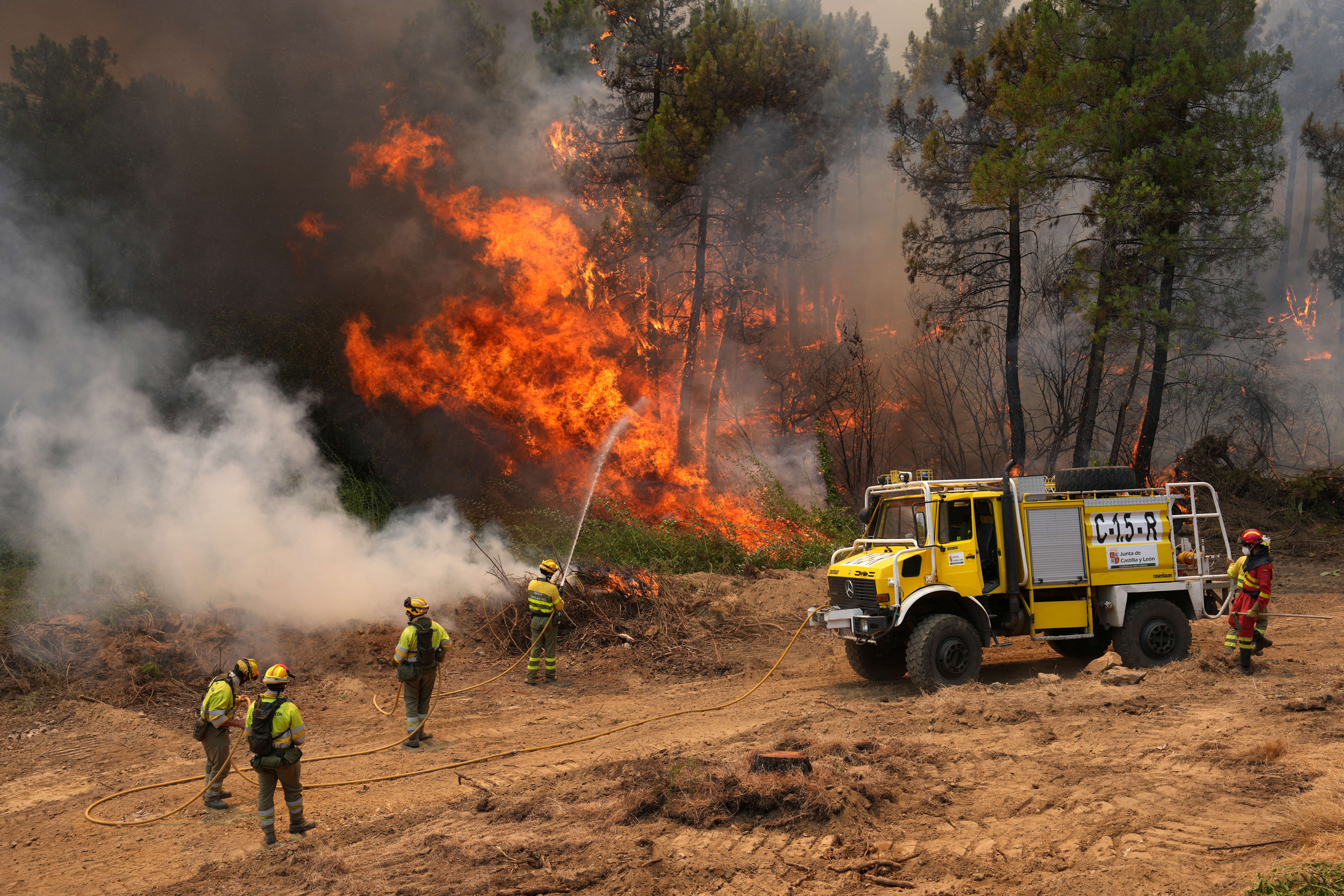
Human-caused climate change has made the extreme conditions fueling July's widespread wildfires in Spain at least 20 times more probable, according to an analysis by World Weather Attribution (WWA). In southwestern France, global warming at least doubled the likelihood of similar scenarios. The study did not investigate the specific ignition sources of the fires but rather how the combination of high temperatures, lack of rain, and wind created a favorable environment for rapid spread and difficult control. In the current climate, such intense conditions are expected roughly once every six years in central Spain and once every 20 years in southwestern France. Compared to a planet 1.4°C cooler, the intensity of these combined factors has increased by approximately 42% in Spain and 46% in France. Researchers noted that severe fire weather is no longer rare. The study highlighted a sequence of extremes, including Spain's wettest January in 25 years fostering vegetation growth, followed by a dry spring and heatwaves that depleted soil moisture. In France, successive heatwaves and drought also reduced soil moisture and stressed pine and shrub vegetation. María José Sanz, director of the Basque Centre for Climate Change, pointed out that forest management and rural land abandonment, leading to vegetation accumulation, also contributed to the fires, alongside climatic conditions. She stated that these fires are becoming part of reality, posing health risks due to pollutants and smoke. While the WWA study focused on meteorological conditions, other experts noted that fire size and severity also depend on terrain, vegetation, ignition sources, human activity, and emergency response speed. Eduardo Rojas Briales, a professor at the Polytechnic University of Valencia, suggested a limitation of the study was its focus solely on meteorological analysis. Víctor Riera of the Pau Costa Foundation acknowledged the study's use of established methods and its role as a timely warning. The researchers concluded that while firefighting remains essential, reducing future risk requires vegetation management, urban and rural planning, forest diversification, early warning systems, and international cooperation, alongside rapid reductions in fossil fuel use.
This analysis by World Weather Attribution quantifies the increased probability of extreme fire weather conditions in Spain and France due to human-induced climate change. By examining meteorological factors like temperature, rainfall, and wind, the study provides a data-driven perspective on the link between global warming and the severity of recent wildfires. It highlights that while climate change exacerbates the conditions, other factors such as land management practices and vegetation accumulation also play a significant role, suggesting a complex interplay of drivers. The findings underscore the need for integrated strategies that go beyond immediate firefighting to include long-term adaptation measures like improved land use planning and forest management. Furthermore, the study implicitly points to the systemic challenge of reducing fossil fuel dependency, which is critical for mitigating the escalating frequency and intensity of such extreme weather events in the coming decade.
AI-generated to prompt reflection — not editorial opinion, not advice, not a statement of fact. How this works.