Climate Change May Trigger Millions of Years of Tropical Vegetation Shifts in Decades
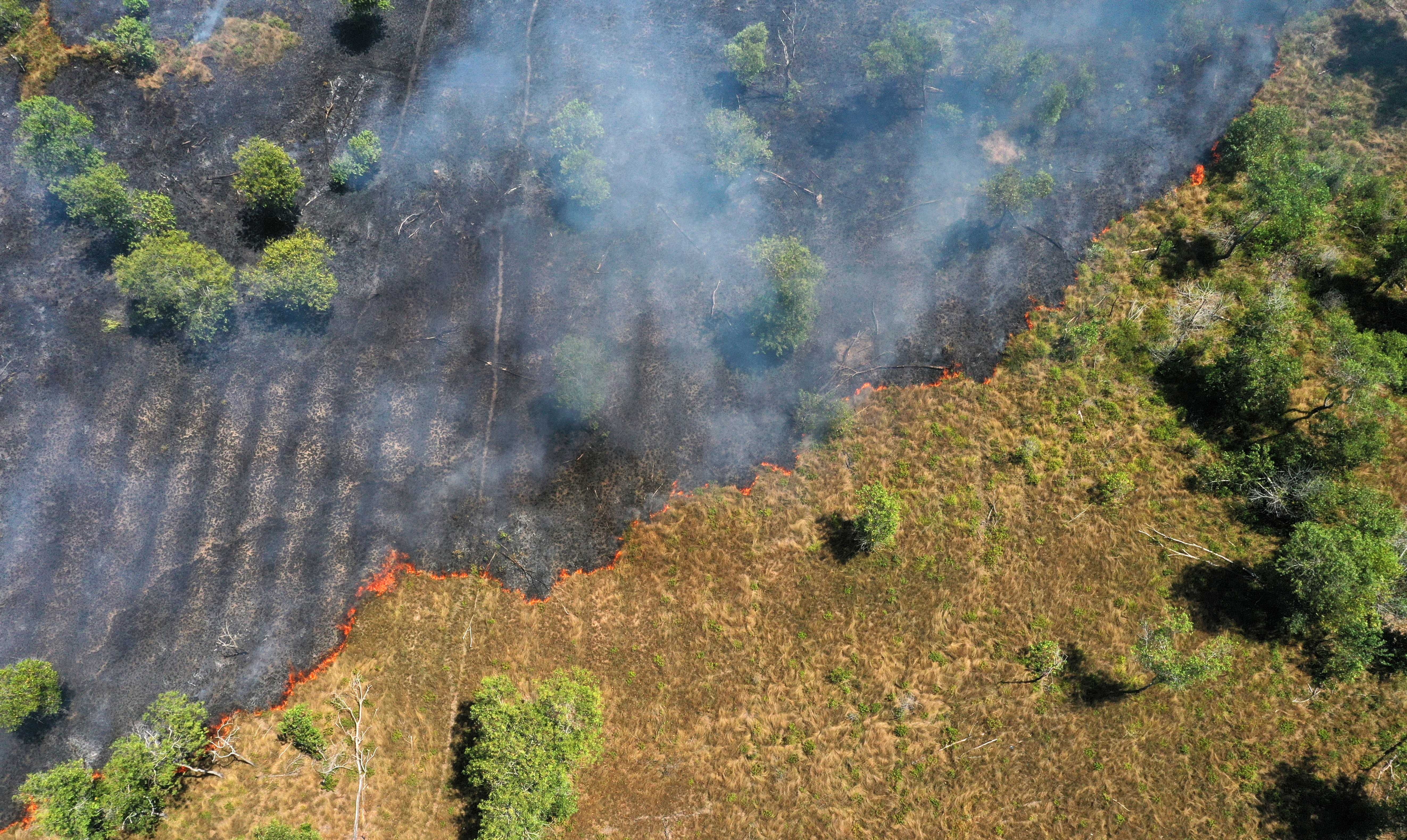
A new study by researchers at the Federal University of Minas Gerais (UFMG) in Brazil reveals that current climate change could cause tropical vegetation shifts comparable to those that occurred over 3 million years. The research, published in the Journal of Biogeography, reconstructed tropical vegetation distribution over the past 3.3 million years and projected changes up to 2050. By combining satellite data, paleoclimate records, and machine learning, the team mapped the redistribution of forests, savannas, and deserts across the tropics over eleven distinct periods. These historical shifts, driven by natural climate fluctuations, were slow, occurring over hundreds of thousands of years, allowing species time to adapt or evolve. For instance, 3.2 million years ago, during a warmer period, tropical forests were at their minimum extent, with the Amazon occupying less than half its current area and savannas dominating regions now covered by dense forests. Africa, the most dynamic tropical continent historically, predominantly featured savannas. Even the Sahara desert has experienced cycles of vegetation. During the last ice age, the Amazon lost a third of its area but remained a continuous core, while the Atlantic Forest fragmented. The Malay Archipelago, however, remained remarkably stable, preserving forests for over 3 million years and acting as a biodiversity hotspot.
This study highlights a critical divergence between natural climate variability and anthropogenic climate change. While past climate shifts over millions of years allowed for gradual ecological adaptation, the projected changes by 2050, driven by accelerated warming and altered rainfall patterns, are compressed into an unprecedentedly short timeframe. This rapid transformation poses a significant threat to biodiversity, particularly for species that evolved in historically stable tropical refugia. The study's findings underscore the systemic risk of ecological collapse when evolutionary timescales are drastically outpaced by environmental change, potentially leading to mass extinctions and irreversible ecosystem degradation. The research implicitly calls for urgent mitigation strategies to slow the rate of climate change, thereby providing ecosystems a greater chance to adapt and preserving the planet's rich biodiversity for future generations.
AI-generated to prompt reflection — not editorial opinion, not advice, not a statement of fact. How this works.