Clouds Found to Influence Sub-Neptune Planet Interiors, New Research Reveals
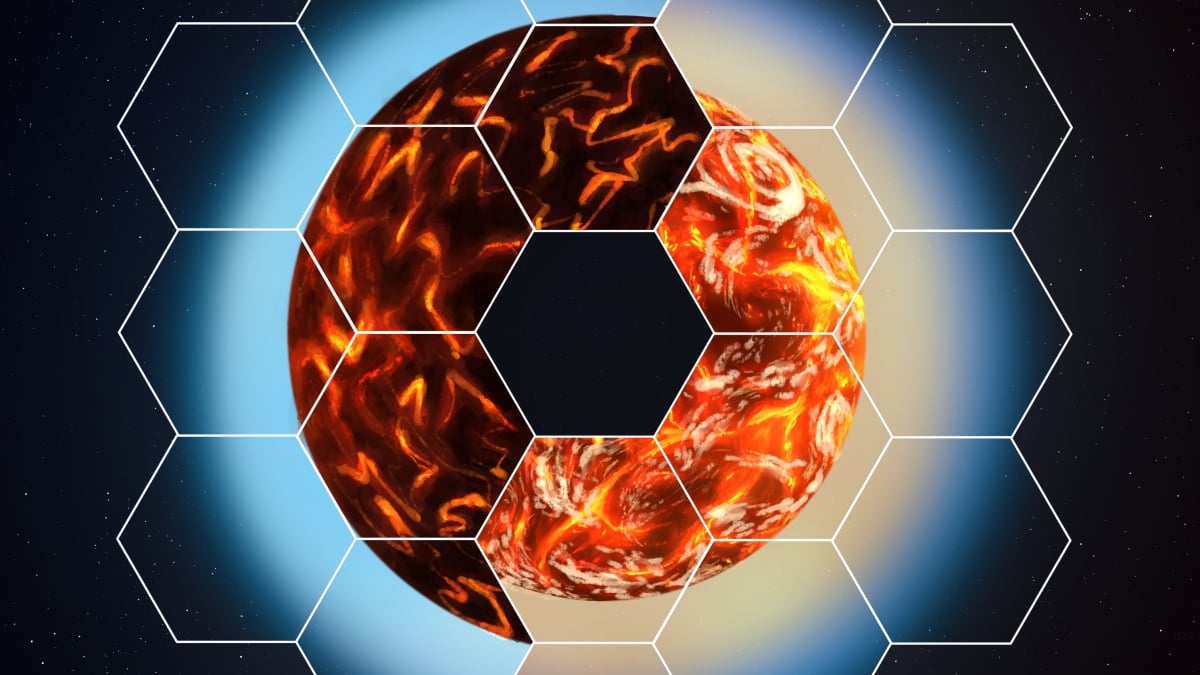
Scientists from Arizona State University's School of Earth and Space Exploration have published new research detailing how clouds within the atmospheres of sub-Neptune planets significantly influence their internal structures. Sub-Neptunes are a class of exoplanets larger than Earth but smaller than Neptune, and their atmospheric composition plays a crucial role in their development. The study demonstrates that the presence and characteristics of these clouds are not merely a surface phenomenon but have a direct impact on the planet's core and mantle. This understanding is vital for accurately modeling the formation and evolution of these common types of exoplanets. The research contributes to a broader effort to characterize planets outside our solar system and understand the diversity of planetary architectures. By analyzing atmospheric cloud data, scientists can infer properties of the planet's interior that would otherwise be impossible to observe directly. This work advances our ability to interpret exoplanet observations and refine theories of planetary science.
This research highlights the interconnectedness of atmospheric phenomena and planetary interior dynamics in sub-Neptune exoplanets. Understanding how cloud formation influences internal structure provides a novel avenue for inferring planetary properties, moving beyond surface observations. This approach could refine models of planetary evolution, particularly for a class of planets common in the galaxy but absent in our own solar system. Future studies may leverage this insight to better predict the habitability potential of exoplanets by linking atmospheric conditions to internal geological processes and magnetic field generation, crucial factors in the context of long-term planetary stability and the search for extraterrestrial life.
AI-generated to prompt reflection — not editorial opinion, not advice, not a statement of fact. How this works.