CNPEM Develops Plant-Based Nanocellulose Alternative to Petroleum Derivatives in Cosmetics and Medicine
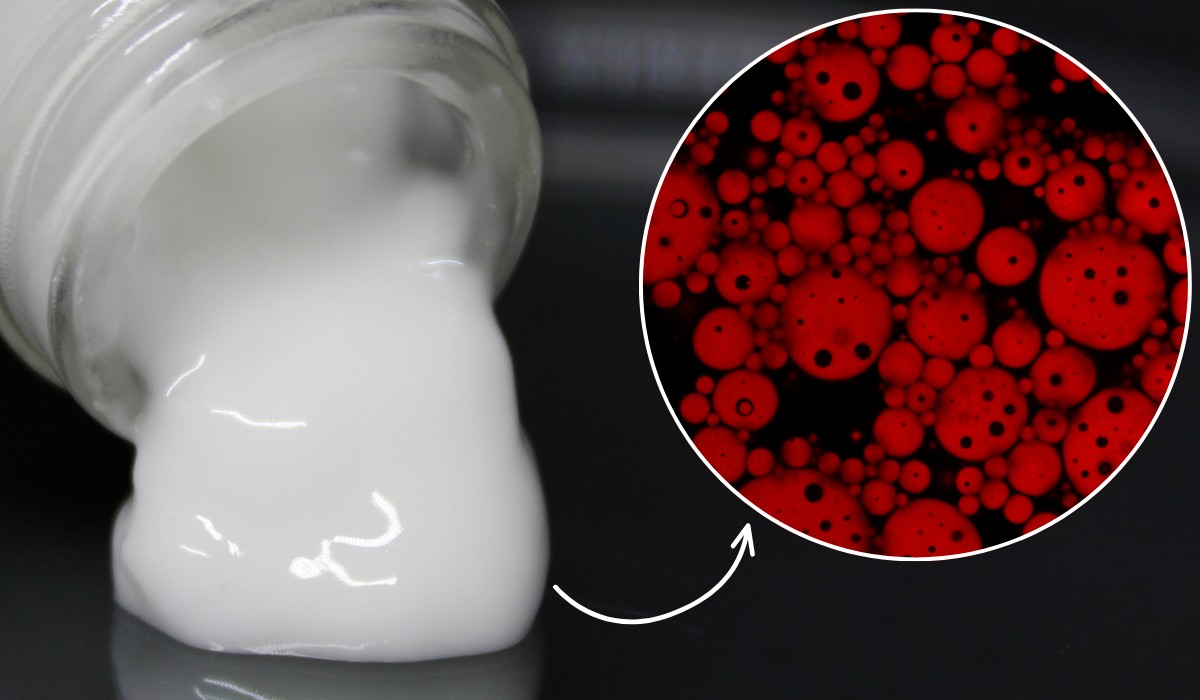
Researchers at the National Center for Energy and Materials Research (CNPEM) in Campinas, Brazil, have created a novel technology to produce multiple emulsions using only plant-derived components. This innovation offers a sustainable alternative to petroleum-based synthetic emulsifiers, utilizing nanocellulose and oleic acid, a compound naturally found in vegetable oils. The developed technique successfully addresses common challenges associated with these emulsions, such as instability and reliance on fossil fuels. Multiple emulsions are crucial for integrating ingredients that typically do not mix, like oil and water, serving as delivery systems in cosmetics, pharmaceuticals, and food products. The new method allows for the creation of water-in-oil-in-water emulsions in a single manufacturing step, as published in the scientific journal Food Hydrocolloids. This research involved collaboration among scientists from CNPEM, Ilum School of Science, Unicamp, Federal University of the ABC (UFABC), and the Center for Engineering Research in Advanced Materials (CEMol), with funding from the São Paulo Research Foundation (Fapesp). The nanocellulose, derived from cellulose nanofibers, works in conjunction with oleic acid, found in oils like almond oil, to create a stable structure. While nanocellulose stabilizes the outer oil droplets, oleic acid facilitates the interface between water and oil, reducing interfacial tension and enhancing system stability. This enhanced stability is a key outcome, potentially extending product shelf life and simplifying formulations. The research team aims to explore further applications, including encapsulating hydrophilic and lipophilic molecules for controlled release and protection within the emulsion. Furthermore, a parallel CNPEM research line has developed a more efficient, large-scale production method for nanocellulose from sugarcane bagasse, a readily available agricultural residue. This process simplifies production, reduces energy consumption, and allows for a significant scale-up, making nanocellulose a more accessible and promising material for various industrial applications.
This development represents a significant step towards sustainable chemistry in consumer products. By replacing petroleum-derived emulsifiers with plant-based nanocellulose and oleic acid, the research addresses both environmental concerns and the growing market demand for eco-friendly ingredients. The innovation's ability to create stable multiple emulsions in a single step offers potential manufacturing efficiencies. Future industrial adoption will likely depend on scaling production costs for nanocellulose and demonstrating equivalent or superior performance compared to established synthetic alternatives across diverse product formulations. The long-term impact hinges on integrating such bio-based solutions into supply chains, potentially reducing reliance on finite fossil resources and aligning with circular economy principles.
AI-generated to prompt reflection — not editorial opinion, not advice, not a statement of fact. How this works.