CO2 and Bicycloalkane Copolymerization Yields Circular Polyesters
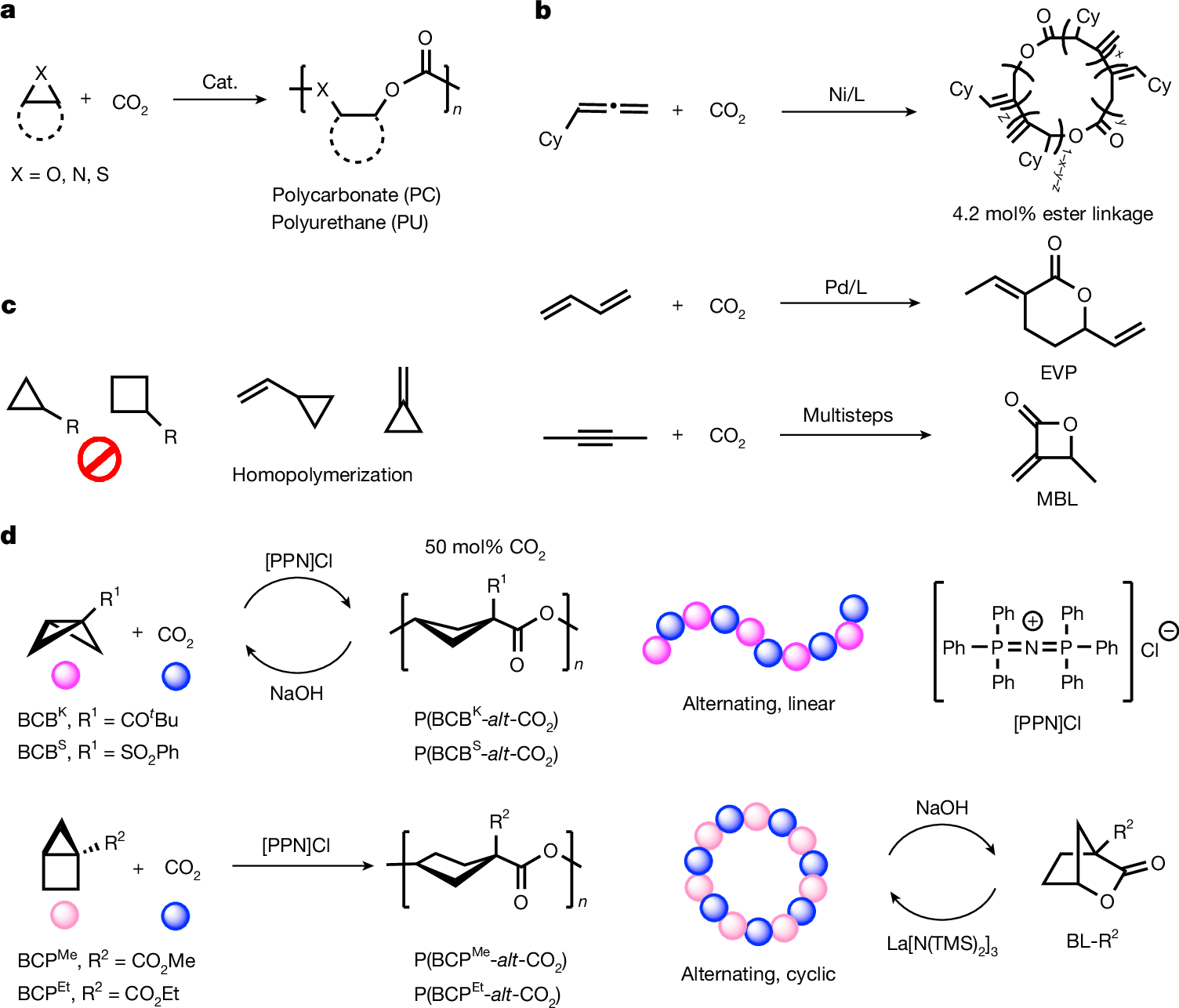
Researchers have developed a novel method for creating circular polyesters through the alternating copolymerization of carbon dioxide (CO2) and bicycloalkanes. This innovative process offers a sustainable pathway for polyester production, addressing environmental concerns associated with traditional methods. The study details the specific reaction conditions and catalysts employed to achieve efficient copolymerization. The resulting polyesters exhibit properties that make them suitable for various applications, potentially reducing reliance on petroleum-based plastics. This advancement represents a significant step towards a circular economy for polymers, where materials can be recycled and reused effectively. The methodology focuses on incorporating CO2, a greenhouse gas, into the polymer backbone, thereby valorizing waste streams. Bicycloalkanes serve as the comonomer, enabling the formation of robust polyester chains. The research highlights the potential for scalability and industrial application of this technique. Further investigation into the material properties and degradation profiles of these circular polyesters is ongoing. The development aims to contribute to a more sustainable chemical industry.
This research presents a compelling chemical engineering solution for plastic waste by directly utilizing carbon dioxide as a feedstock for polyester synthesis. The method's success hinges on efficient catalysis and monomer design to achieve controlled alternating copolymerization. From a systemic perspective, this approach offers a potential pathway to decouple polyester production from fossil fuels, aligning with global decarbonization goals. The long-term viability will depend on the energy efficiency of the process, the cost-effectiveness of bicycloalkane sourcing, and the recyclability or biodegradability of the resulting polyesters in real-world circular economy models. Future developments could explore broader ranges of bicycloalkanes or alternative cyclic monomers to fine-tune material properties and expand application scope.
AI-generated to prompt reflection — not editorial opinion, not advice, not a statement of fact. How this works.