Cocaine and Fentanyl Found Hidden in Fish Sculpture on Bus in Brazil
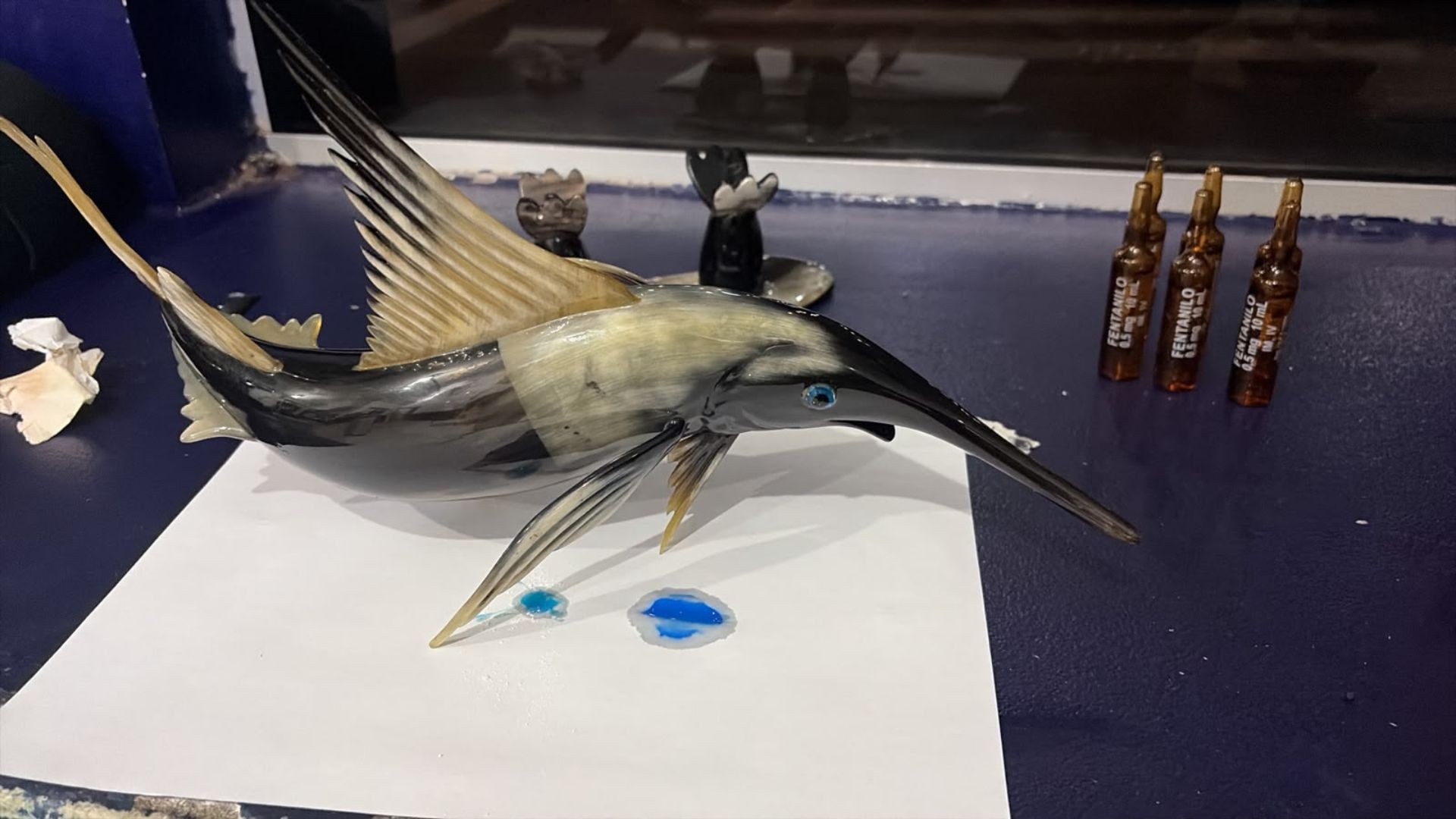
Federal Highway Police (PRF) in Brazil arrested a 33-year-old man on suspicion of international drug trafficking after discovering cocaine and fentanyl hidden within a swordfish sculpture on a bus. The seizure occurred on Tuesday, May 28, along BR-364 in Rondonópolis, Mato Grosso, during a routine inspection of a bus traveling from Rio Branco, Acre, to Brasília, Federal District. The suspect claimed to be returning from a tourist trip to Peru and heading to Goiânia, Goiás, where he resides. During the inspection of the luggage compartment, officers found an unattended backpack containing the swordfish sculpture, six ampoules of fentanyl, and four bags of a clear liquid, one of which had leaked. Preliminary tests on the white powder inside the sculpture and the liquid from one of the bags indicated the presence of cocaine. The man initially denied ownership of the backpack, stating it belonged to an acquaintance from his trip to Peru. However, he later changed his story multiple times, eventually confessing that he agreed to transport the drugs due to significant debt to a loan shark. He admitted he was sent to Peru to retrieve the narcotics and was instructed to deliver them at the São Paulo bus station in exchange for his debt being forgiven. In total, authorities seized six fentanyl ampoules, approximately 438.7 grams of a liquid suspected to be cocaine, and about 188.4 grams of a substance believed to be cocaine hydrochloride hidden within the sculpture. The suspect and the seized drugs were handed over to the Federal Police in Rondonópolis for further investigation into international drug trafficking.
This incident highlights the evolving tactics employed in international drug smuggling, utilizing disguised objects like sculptures to conceal illicit substances. The suspect's shifting narratives suggest a potential attempt to distance himself from the cargo, possibly under duress or in an effort to minimize his involvement, underscoring the complex networks and pressures within the drug trade. The involvement of fentanyl, a potent synthetic opioid, alongside cocaine, indicates a diversification of high-value narcotics being trafficked. The case also points to the challenges faced by law enforcement in interdicting such shipments, particularly when travelers are coerced or incentivized by debt to act as unwitting or complicit carriers. Future efforts may need to focus on intelligence gathering regarding novel concealment methods and addressing the underlying economic vulnerabilities that drive individuals into such high-risk activities.
AI-generated to prompt reflection — not editorial opinion, not advice, not a statement of fact. How this works.