Cockroach Cyborgs: Waterproof Shells Enable Disaster Zone Exploration
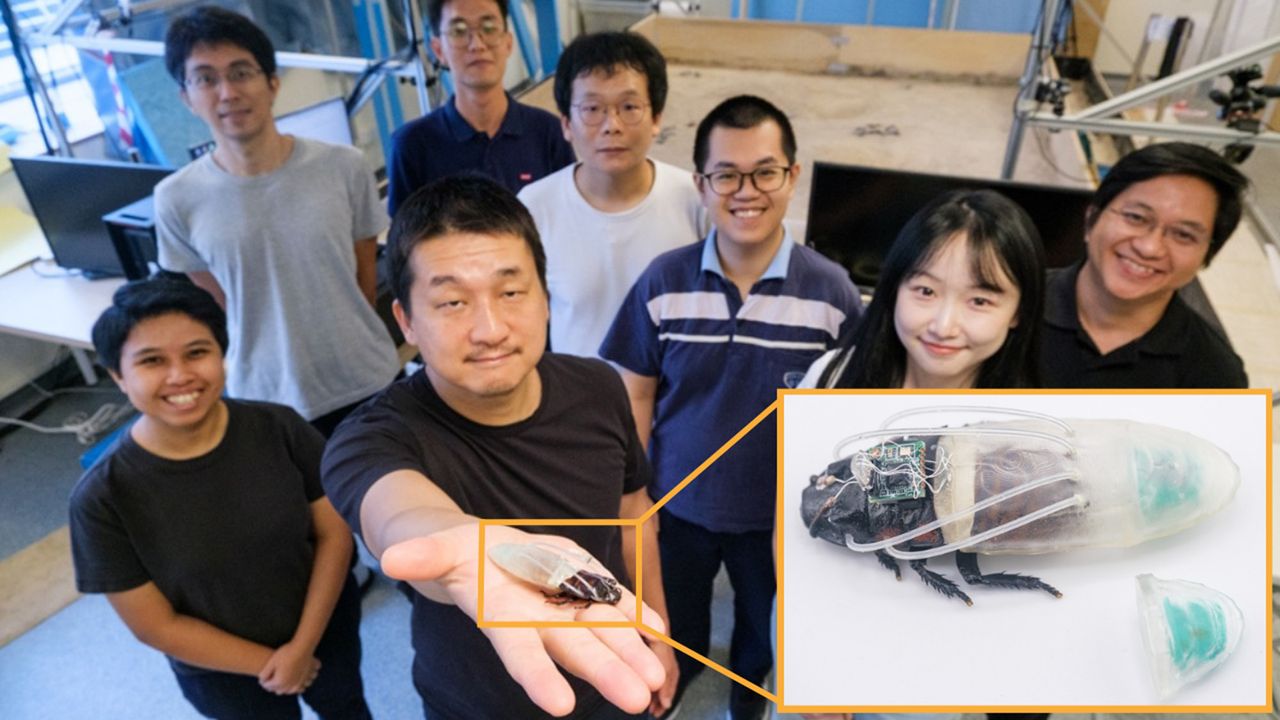
Scientists in Singapore and Japan have developed a waterproof shell designed for cyborg cockroaches. This innovative technology aims to transform these insects into mobile exploration units for disaster zones. The primary application envisioned for these cyborg cockroaches is to investigate flooded areas following natural disasters. By equipping cockroaches with this specialized suit, researchers can potentially access and survey environments that are too dangerous or inaccessible for humans. The waterproof nature of the shell is crucial for navigating submerged or waterlogged terrains, which are common in post-disaster scenarios. This advancement represents a novel approach to search and rescue operations, leveraging biological organisms enhanced with technology. The goal is to provide a cost-effective and agile method for initial reconnaissance in complex and hazardous conditions. The development highlights the growing field of bio-hybrid robotics and its potential applications in emergency response.
This development in bio-hybrid robotics presents a novel approach to reconnaissance in hazardous environments, particularly in disaster scenarios involving flooding. By integrating technology with living organisms, researchers are exploring new avenues for search and rescue operations that could bypass limitations of traditional drones or human responders. The system's effectiveness will hinge on factors such as the cockroaches' ability to navigate complex debris, the reliability of their communication systems, and the ethical considerations surrounding the use of living creatures in such missions. Future iterations might focus on enhancing the payload capacity and sensory capabilities of these cyborg insects, while also addressing potential ecological impacts and ensuring robust control mechanisms.
AI-generated to prompt reflection — not editorial opinion, not advice, not a statement of fact. How this works.