Cockroach Janata Party Vows to Continue Protest at Jantar Mantar
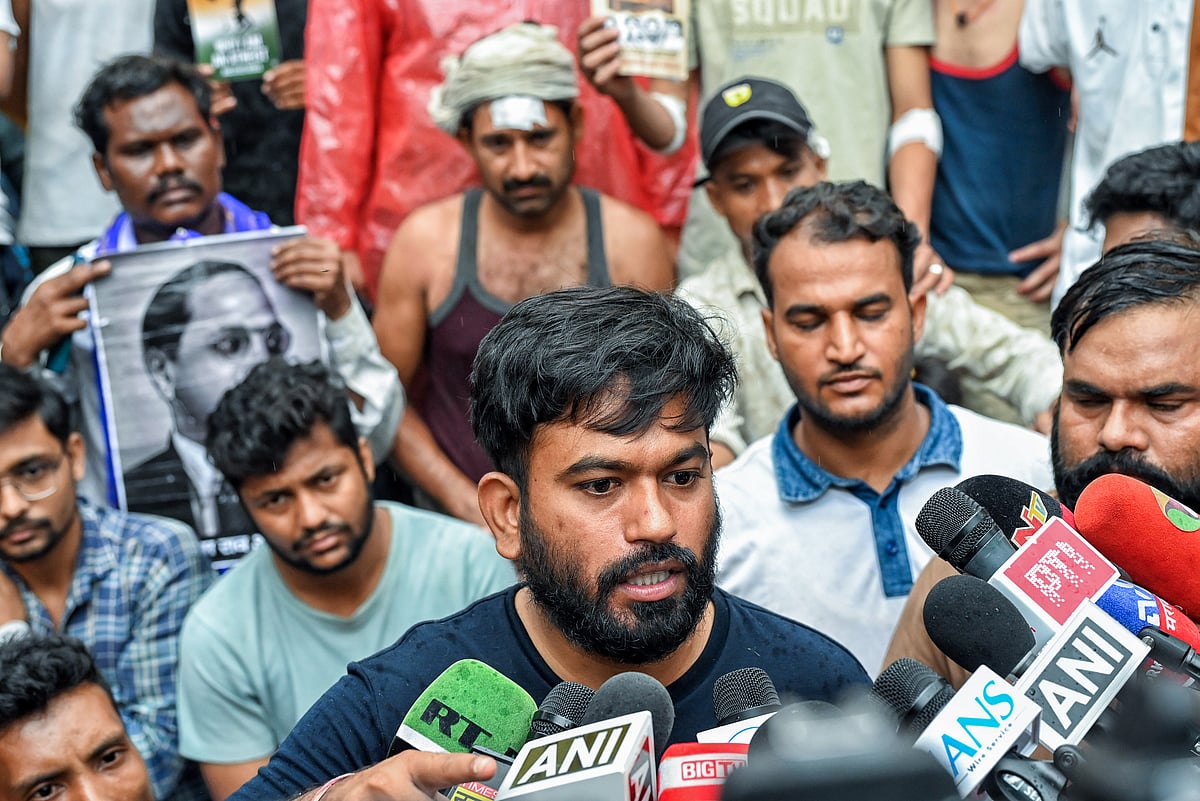
The Cockroach Janata Party (CJP) has vowed to continue its protest at Jantar Mantar in New Delhi, despite police dismantling their demonstration site on Monday. CJP leader Abhijit Dipke announced on Tuesday morning that they have returned to Jantar Mantar and will remain there until their demands are met, though they will not participate in further attempts to storm Parliament. Dipke stated that a new attempt to storm Parliament would only serve the police's agenda, leading to further attacks and discrediting of students. He criticized the government and the BJP, suggesting that the current protests would have been unnecessary if Education Minister Dharmendra Pradhan had been dismissed. Dipke also issued a public apology to students injured during the previous day's events, expressing regret for not being able to protect them from what he described as the Delhi Police's inhuman brutality. He specifically blamed Education Minister Pradhan for the deaths of over 20 students, accusing the government of protecting him at the expense of innocent students. The CJP and opposition parties blame the police and the government for the violence, asserting that the police's use of force escalated the situation, while the police claim students attacked them. The Delhi Police have filed five FIRs and detained over 70 students, investigating potential larger conspiracies behind the movement. The police reported 118 injured personnel, while the CJP claims over a hundred students were hospitalized, some with serious injuries. Government sources admitted underestimating the scale and determination of the protesters, acknowledging a significant intelligence failure. The CJP presented three key demands to the government: the dismissal of the Education Minister, the unconditional release of environmentalist Sonam Wangchuk, and compensation of one crore rupees to the families of each of the 20 students who died by suicide. Prime Minister Narendra Modi, in a meeting with the NDA parliamentary party, assured that those responsible for the NEET exam paper leak would face severe punishment and that a flawless examination system would be established.
The confrontation between the Cockroach Janata Party (CJP) and Delhi Police highlights a critical breakdown in public discourse and protest management. The CJP's insistence on continuing their demonstration at Jantar Mantar, coupled with their specific demands, suggests a deep-seated grievance regarding educational policy and governance, particularly concerning the NEET exam. The police's forceful dismantling of the protest site and subsequent FIRs indicate a state response prioritizing order maintenance over de-escalation and dialogue. The differing accounts of the violence underscore a significant information asymmetry, where objective truth is obscured by competing narratives and blame-shifting. Looking ahead, such incidents reveal systemic vulnerabilities in how educational reforms are implemented and how dissent is managed. The CJP's demands, including the dismissal of a minister and compensation for student suicides, point to a crisis of confidence in institutional accountability. Future policy frameworks must integrate robust mechanisms for student consultation and grievance redressal to prevent the escalation of protests into such volatile confrontations, thereby fostering a more stable and responsive educational ecosystem.
AI-generated to prompt reflection — not editorial opinion, not advice, not a statement of fact. How this works.