Coco de Roda: African-Indigenous Dance Tradition Thrives in Paraíba, Brazil
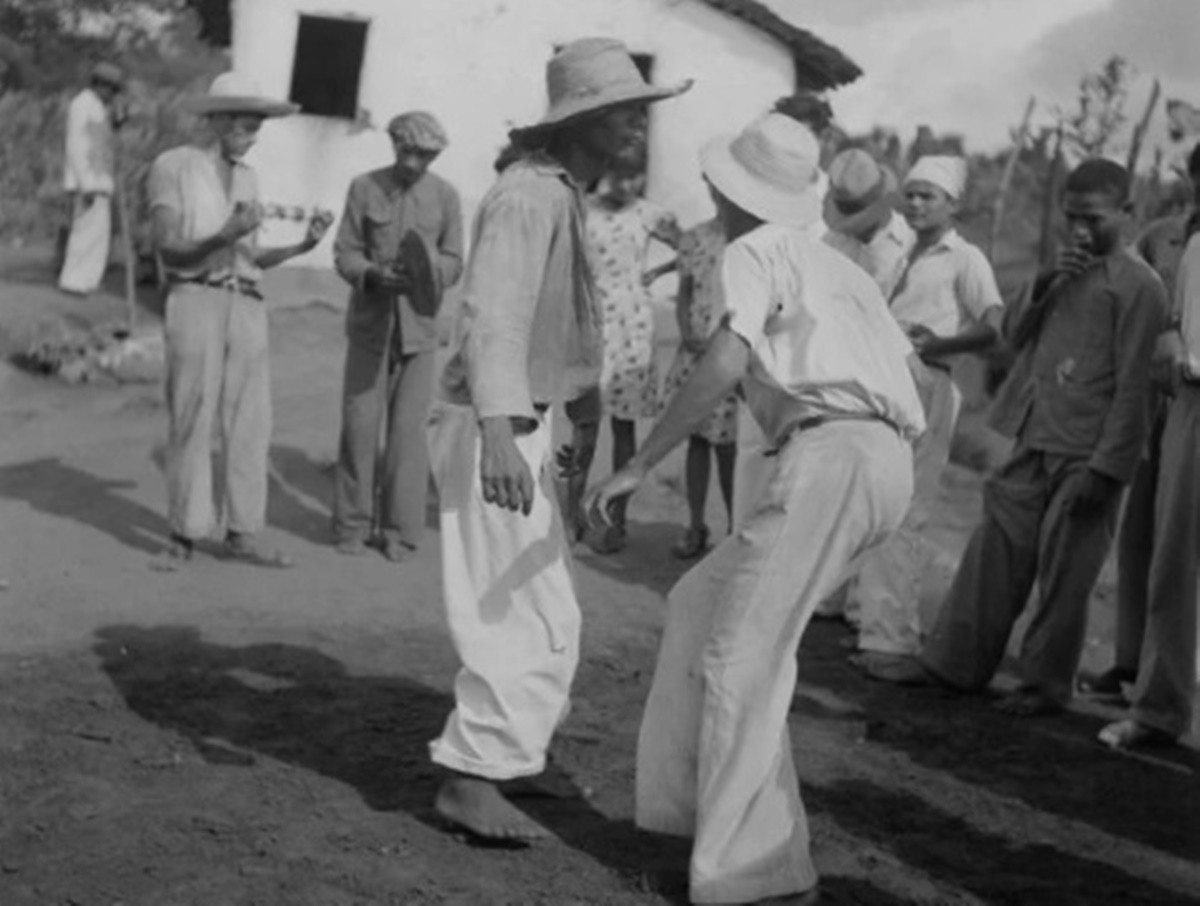
The 'Coco de Roda' is a vibrant dance and musical tradition with African and Indigenous roots that continues to be celebrated in various communities across Paraíba, Brazil. Celebrated on the National Day of Coco de Roda, Ciranda, and Mazurca on July 26th, this tradition holds deep cultural significance, particularly in peripheral neighborhoods, Indigenous territories, and traditional communities. The date is historically linked to the feast day of Nossa Senhora Santana, with some groups traditionally performing the 'coco' only on this occasion, a practice that still persists in places like Baía da Traição and Conde.
In Paraíba's coastal regions, especially within quilombo communities, the 'coco' showcases strong African influences, most notably through the 'umbigada,' a distinctive hip-touching gesture originating from Bantu cultures. Conversely, manifestations linked to Indigenous traditions emphasize the powerful footwork and rhythmic stomping. For the Potiguara people, 'coco' is a vital expression of identity and collective strength, as exemplified by the annual Garapirá festival in Baía da Traição, which unites at least 20 villages. Clara Potiguara, an acclaimed singer, highlights the 'coco's' role in her life since childhood, cherishing memories of learning from her master, Seu Tonhô.
Beyond quilombos and villages, 'coco de roda' is also intertwined with Afro-Brazilian religions, particularly Jurema Sagrada. This form, characterized by call-and-response singing inspired by ritual chants, is passed down orally. Matheus Presto of the group Seu Zé Quer Coco explains that 'coco de terreiro' incorporates instruments central to Jurema cosmology, such as the maracá (Indigenous origin) and ilús (Afro-Brazilian drums), serving both rhythmic and ritualistic purposes. While one theory links the 'coco's' origin to the sound of coconuts being hit in Quilombo dos Palmares, researcher Zé Silva suggests 'coco' is a broad term for various contemporaneous cultural expressions across different regions and continents, not necessarily requiring direct lineage. He notes rhythmic similarities to a tradition in South Sudan, Africa. Clara Potiguara describes 'coco' as a welcoming space, a 'mother's heart' filled with historical layers and representational power.
The 'mazurca,' also celebrated on July 26th, is recognized as a variation of 'coco de Roda.' While its name suggests Polish origins, Zé Silva posits that the Paraíba mazurca is much older than the term 'coco' itself and is fundamentally Indigenous, characterized solely by foot-stomping and hand-clapping without instruments. He theorizes that the name 'mazurca' might have been adopted historically to conceal its Indigenous identity, similar to capoeira and Jurema Sagrada, suggesting it likely had a different name among Indigenous peoples.
The enduring presence of 'Coco de Roda' across diverse communities in Paraíba highlights the resilience of cultural heritage in the face of historical pressures. The tradition's syncretism, blending African and Indigenous elements, demonstrates how cultural forms can adapt and evolve, becoming powerful symbols of identity and resistance. The debate surrounding its origins, particularly the 'coco' and 'mazurca,' underscores the complex processes of cultural transmission and potential historical obfuscation. Understanding these dynamics is crucial for appreciating how marginalized communities preserve and assert their cultural legacies, offering a model for cultural continuity in an era of rapid global change. The interplay between oral tradition, ritual, and community participation in 'Coco de Roda' provides a valuable case study in the intergenerational transfer of cultural knowledge.
AI-generated to prompt reflection — not editorial opinion, not advice, not a statement of fact. How this works.