Coconut ice cream in Salvador draws crowds with unique presentation
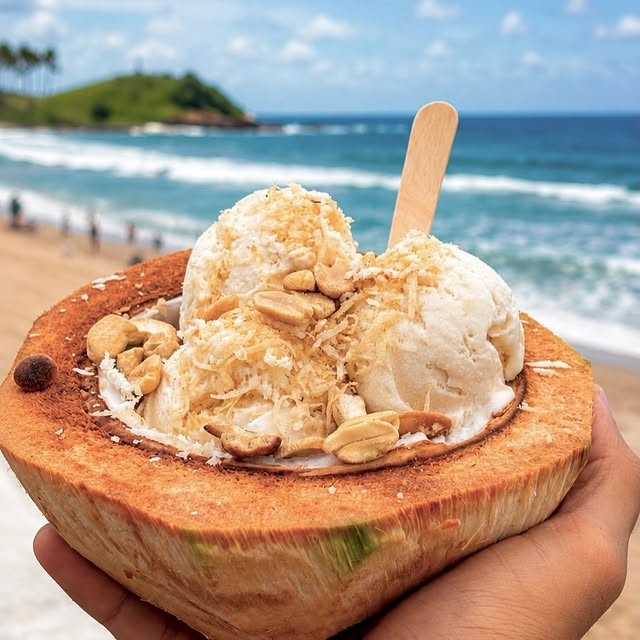
A natural coconut ice cream served in a dried coconut shell has become a sensation in Salvador, Brazil, drawing hour-and-a-half long queues. The brand, named "Amaré," was launched in May by two advertising professionals from São Paulo and a dentist from Bahia. Operating only on weekends along the Barra waterfront, Amaré has sold over 700 liters of ice cream, utilizing approximately 300 coconuts each weekend. The business has exceeded expectations, serving over 200 customers per weekend, according to co-owner Eduardo Pinheiro. The ice cream is gluten-free, made with a single flavor to prevent cross-contamination, and contains no artificial flavorings or hydrogenated fats. Customers can choose between two options: "Onda Leve," a single scoop in a cup with a topping for R$13, or "Maré Cheia," three scoops served in a coconut shell with toppings for R$28. The "meat" of the coconut is also edible, and excess coconut water is offered to those waiting in line. The inspiration for Amaré came from the TV series "Street Food: Asia," which featured a popular Thai coconut ice cream. Eduardo Pinheiro, inspired by a trip to Thailand in 2019, saw the potential for a similar product in Salvador. He partnered with his boyfriend, dentist Felipe Almazo, and friend Beatriz Louzão, to launch the business. Despite lacking prior culinary experience, the trio focused on adapting the Thai concept to Brazilian tastes. The current production, done at home, takes about 10 hours to produce 100 liters, requiring 300 coconuts for 600 servings. Profits are being reinvested into machinery to scale up production, with plans to expand to other locations in Salvador soon. Customers are advised to follow Amaré's social media for updates and to arrive early.
The rapid success of Amaré highlights the potent influence of "Instagrammable" presentation and novelty in today's consumer landscape. By leveraging a visually appealing and natural product served unconventionally, the startup has effectively generated significant organic buzz and demand, even with limited operational capacity. This phenomenon underscores a broader market trend where unique experiential consumption can outweigh traditional brand recognition or convenience. The business model, while currently constrained by production scale, demonstrates a low-overhead approach to market entry, relying on word-of-mouth and social media virality. Future challenges will involve scaling production efficiently without compromising product quality or the unique customer experience, and managing customer expectations during periods of high demand. The venture's reliance on social media also presents a vulnerability, necessitating a robust strategy for consistent engagement and adaptation to evolving platform algorithms and consumer preferences.
AI-generated to prompt reflection — not editorial opinion, not advice, not a statement of fact. How this works.