Coffee Dryer Smoke Causes Multi-Vehicle Crash on Brazilian Highway
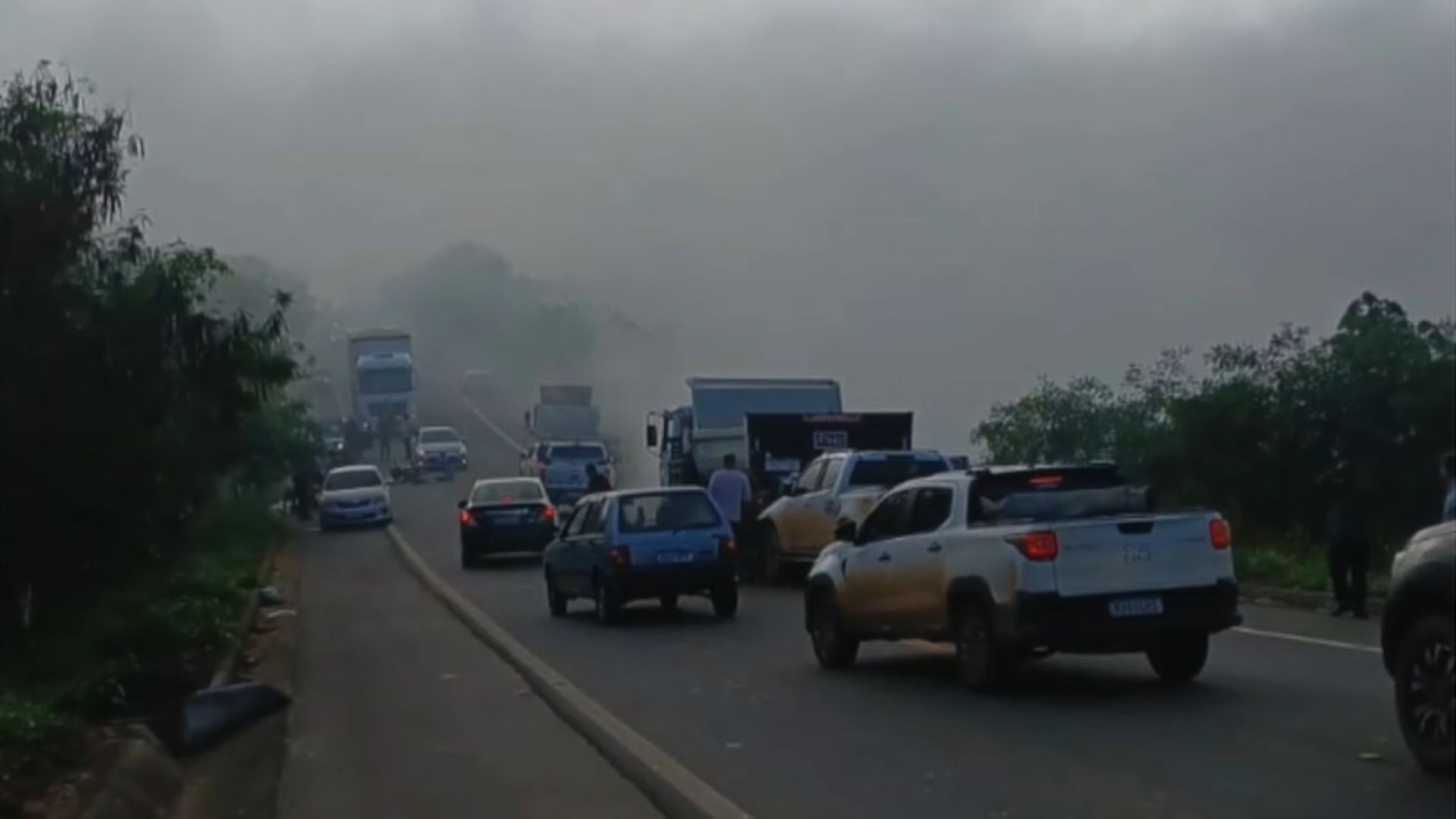
A chain-reaction accident involving five vehicles occurred on the ES-130 highway in Pinheiros, Espírito Santo, Brazil, on Tuesday morning, September 22nd. At least three people sustained injuries in the collisions, which reportedly stemmed from severely reduced visibility. Drivers involved cited a combination of fog and smoke emanating from nearby coffee dryers as the primary cause for the hazardous conditions on the road connecting Pinheiros and Boa Esperança. The incident began when a motorcycle collided with the rear of a car. Subsequently, drivers traveling in the opposite direction slowed down, leading to a multi-vehicle pile-up involving two trucks, a dump truck, and a Hilux pickup. Two passengers in the Hilux, an agricultural worker and two others, were taken to a local hospital and later transferred to Hospital Roberto Silvares in São Mateus, with their health reported as stable. The motorcyclist was also injured and transported to a regional hospital, with updates on her condition pending. This incident echoes a similar event on June 10th, where a crash involving six vehicles on the ES-080 in Águia Branca, also attributed to coffee dryer smoke and fog, resulted in five injuries. Traffic experts advise drivers to stop completely off the road in low-visibility conditions, or if that's impossible, to proceed at a slow, constant speed with low beams and fog lights, guiding themselves by lane markings. High beams are discouraged in fog due to light reflection.
This incident highlights a recurring conflict between agricultural processing activities and public safety infrastructure. The reliance on coffee dryers, a common practice in the region, creates intermittent but significant environmental hazards when combined with natural weather phenomena like fog. This points to a systemic issue in land-use planning and industrial regulation, where the externalities of agricultural operations, such as air pollution affecting visibility, are not adequately mitigated or managed. Future planning should consider buffer zones or emission control technologies for such operations, especially near critical transportation corridors. The repeated nature of these accidents suggests a need for proactive regulatory oversight to prevent future occurrences and ensure the safety of motorists by addressing the root cause of reduced visibility rather than solely relying on driver advisories.
AI-generated to prompt reflection — not editorial opinion, not advice, not a statement of fact. How this works.