Cold Snap Grips Central-South Brazil with Frost and Sub-10°C Temperatures Expected
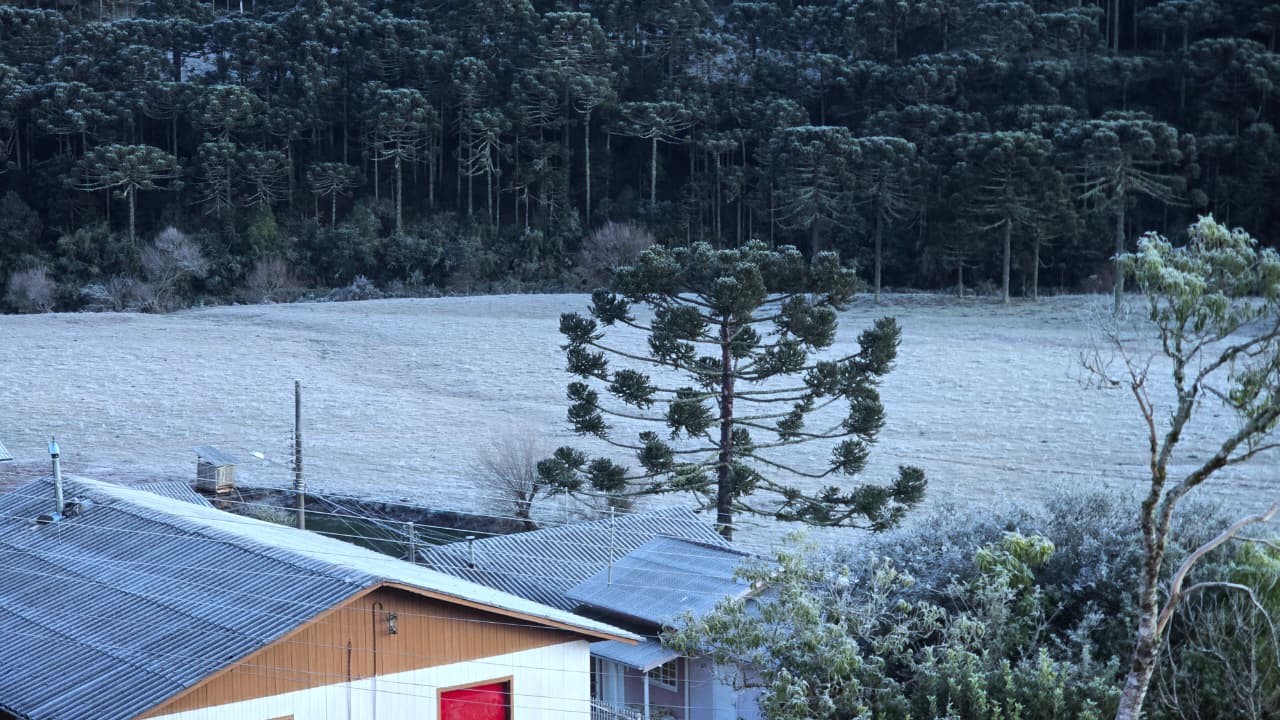
A polar air mass is causing significantly lower temperatures across Brazil's Central-South region on Wednesday, May 8th, particularly during the early morning hours. The Southern Region states of Rio Grande do Sul, Santa Catarina, and Paraná are experiencing the most intense cold, with widespread frost predicted. Temperatures in these areas, especially in elevated and inland locations, could approach or dip below freezing.
While frost warnings cover most of the South, excluding some coastal areas and extreme northern Paraná, sunny conditions are expected after sunrise, though afternoons will remain cool. The frost risk is highest in western and northern Rio Grande do Sul, the Gaúcha and Catarinense highlands, central-western Santa Catarina, and much of central-southern Paraná. Porto Alegre anticipates lows around 4°C, with frost possible, and this cold is expected to persist until Saturday, May 11th. Curitiba may also see morning frost, with a high of 18°C, and humidity could drop below 30% in western Paraná.
Southern Mato Grosso do Sul could see minimums between 6°C and 10°C, while Campo Grande expects a sunny day with a high of 26°C. The rest of the Center-West region will have dry weather, with sunny skies and rising afternoon temperatures. In São Paulo and southern Minas Gerais, cold mornings are forecast, though afternoons will gradually warm up from Thursday. São Paulo city may experience morning fog, with a high of 21°C and minimums between 11°C and 13°C through Saturday. Rio de Janeiro anticipates morning rain, possibly heavy, followed by clearing skies and a high near 22°C.
This weather event highlights the significant climatic variability across Brazil, driven by the interaction of polar air masses with tropical conditions. The forecast underscores the vulnerability of different regions to extreme temperature fluctuations, impacting agriculture and daily life. While the cold snap is a natural phenomenon, its intensity and geographical reach are crucial indicators for assessing climate resilience and adaptation strategies. Future climate projections will be essential in understanding potential shifts in the frequency and severity of such events, necessitating robust infrastructure and policy planning to mitigate risks associated with both extreme cold and heat across the diverse Brazilian landscape.
AI-generated to prompt reflection — not editorial opinion, not advice, not a statement of fact. How this works.