Colombia's Petro Fears Civil War Amid Allegations of Election Fraud
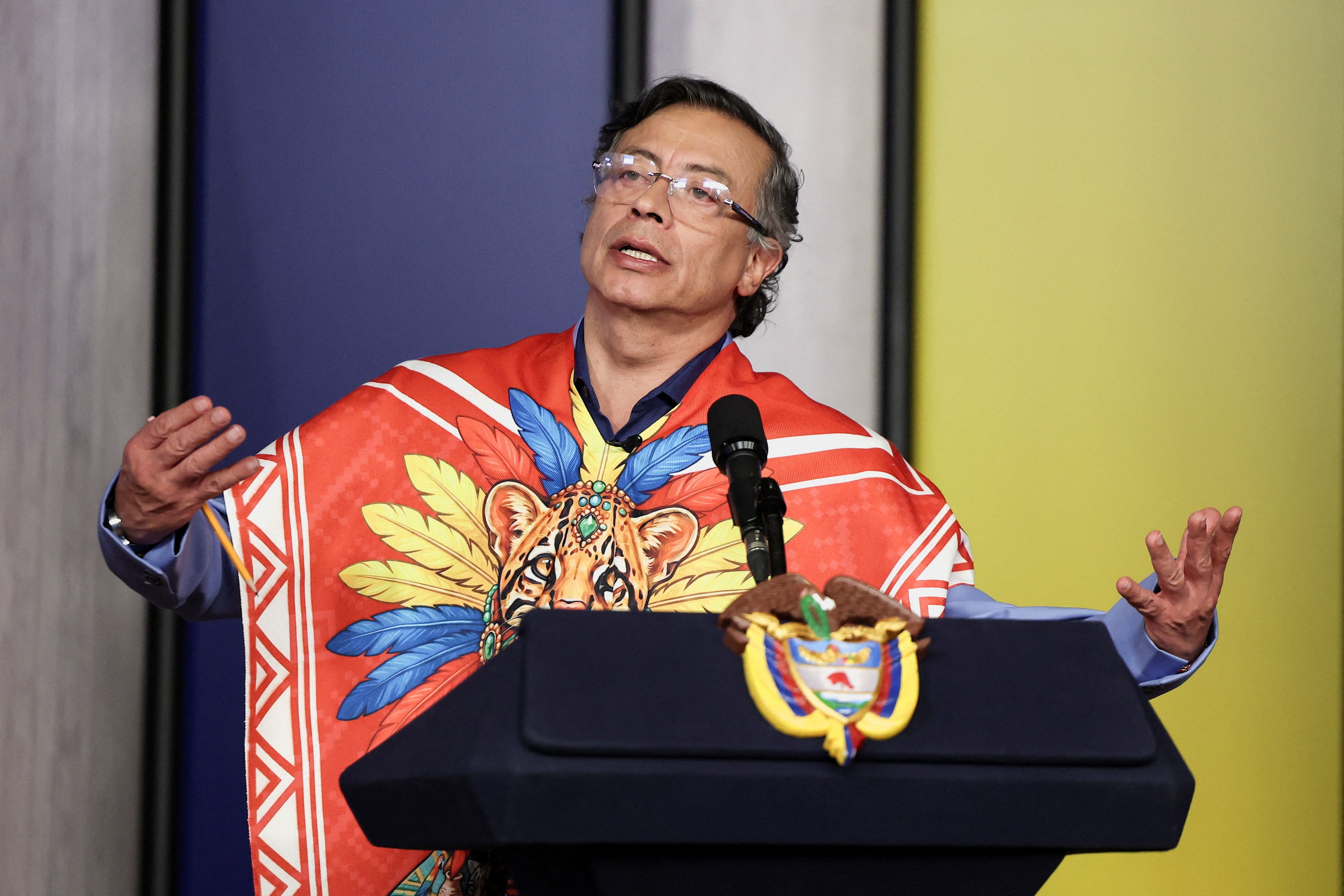
Outgoing Colombian President Gustavo Petro has claimed to possess evidence of fraud in the recent presidential election, which saw his candidate defeated. Petro stated that the incoming ultraconservative president, Abelardo de la Espriella, could instigate a "civil war" in the country. De la Espriella, 48, is scheduled to be sworn in on Friday in Cali, a departure from the traditional inauguration ceremony in Bogotá before Congress. Petro asserted that there was an "algorithmic, systematic electoral fraud" involving a significant volume of votes, allegedly orchestrated from abroad against the leftist candidate Iván Cepeda. He suggested that "foreign money and foreign companies" interfered with the election results. Petro also indicated that De la Espriella, who received support from former U.S. President Donald Trump, intends to extradite him to the United States based on fabricated charges. The president warned of a potential "civil war" due to the anticipated rejection of these and other plans by the incoming administration. The leftist bloc in Congress, led by Cepeda, has announced its boycott of De la Espriella's inauguration and called for demonstrations in Bogotá, Cali, and Barranquilla on the same day. Concerns exist about potential protests mirroring those Petro supported against his predecessor, Iván Duque, which resulted in numerous deaths between 2019 and 2021.
The outgoing president's claims of electoral fraud and warnings of civil war, if substantiated, point to deep institutional instability and a potential crisis of legitimacy. The alleged foreign interference and algorithmic fraud suggest vulnerabilities in electoral systems that require robust, independent investigation and technological safeguards. The political polarization, amplified by accusations of external influence and the potential for widespread public unrest, highlights the fragility of democratic processes when trust erodes. Future governance will need to prioritize transparency, reconciliation, and strengthening democratic institutions to mitigate such risks and prevent the recurrence of violence, particularly in a region susceptible to political volatility and external pressures.
AI-generated to prompt reflection — not editorial opinion, not advice, not a statement of fact. How this works.
