Colombia's President-Elect Halts Transition Talks with Petro Government
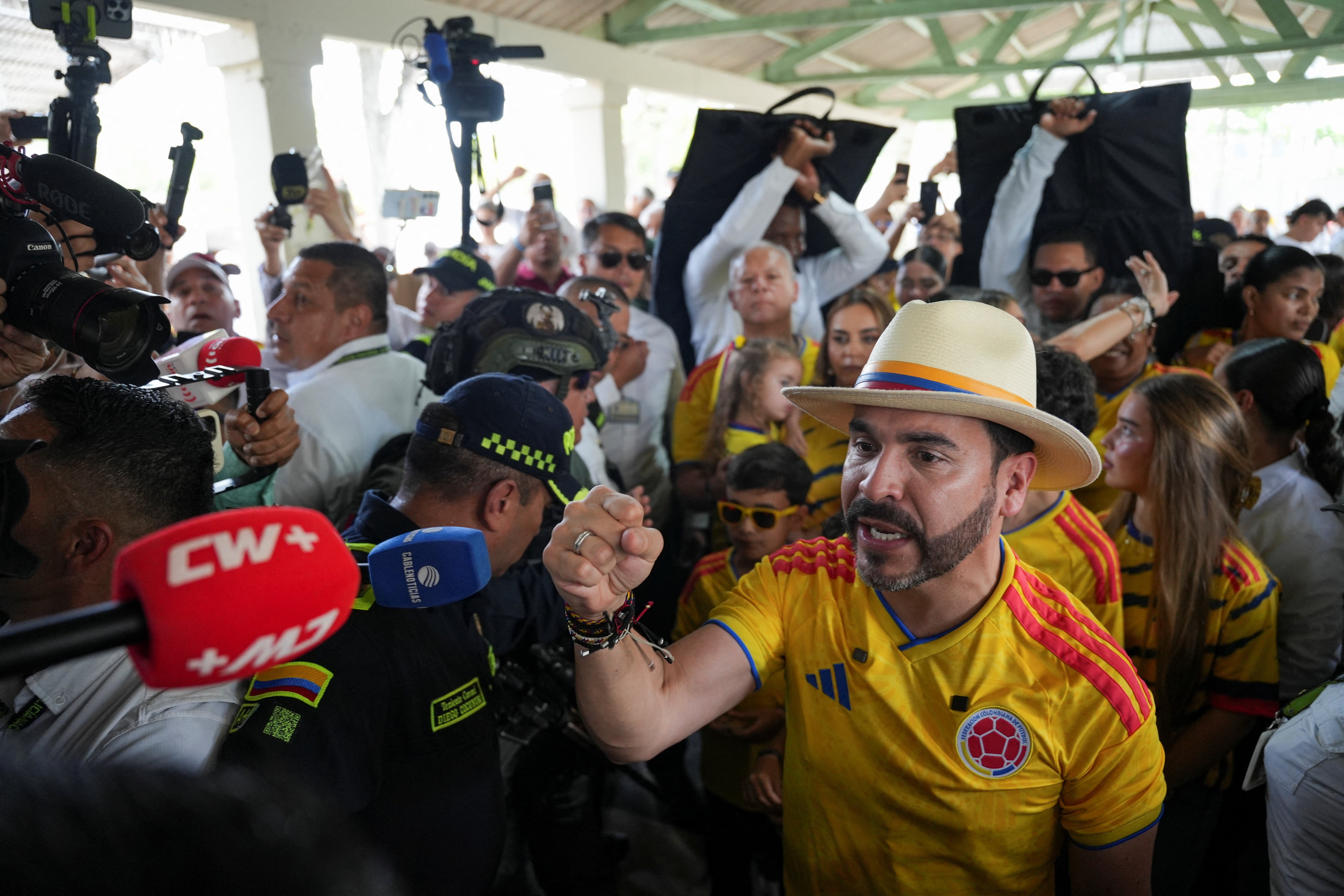
Colombia's president-elect, Abelardo de la Espriella, has ordered an immediate halt to the transition process with the outgoing government of Gustavo Petro. De la Espriella, who won the June runoff election, cited alleged corruption and "directed contracts" within the Petro administration as reasons for his decision. He has instructed his team to suspend all dealings with what he described as a "corrupt government." Petro, a left-wing leader, has reportedly refused to recognize the election results and has called for demonstrations on July 20, the date he plans to deliver his farewell speech. De la Espriella, a right-wing candidate and lawyer with no prior political experience, is set to be inaugurated on August 7. He secured a narrow victory against the government-backed candidate, Iván Cepeda. International observers and electoral authorities have dismissed claims of fraud or manipulation in the election. De la Espriella has stated his duty is to protect the nation's interests and ensure a serious, transparent transition, not to legitimize what he calls a "disaster" or disrespect for the constitutional order. He plans to explain his decision further, promising to stimulate private investment, reduce the size of the state by 40%, and adopt a tougher stance against guerrilla groups and drug cartels amid the country's worst violence crisis in a decade. He has already announced his picks for future ministers of Interior, Finance, Environment, and Defense.
The abrupt suspension of the presidential transition process between Colombia's president-elect, Abelardo de la Espriella, and the outgoing administration of Gustavo Petro highlights a deep political polarization. De la Espriella's accusations of corruption and Petro's questioning of legitimacy, despite official election validation, suggest a potential governance challenge rooted in differing ideological frameworks and transition expectations. This standoff could impact policy continuity, investor confidence, and the implementation of security and economic agendas. The situation underscores the systemic risks associated with highly contested elections and the importance of robust institutional mechanisms for peaceful power transfer, especially in nations grappling with significant security and economic pressures. Future administrations will need to navigate these divisions to foster stability and address pressing national issues.
AI-generated to prompt reflection — not editorial opinion, not advice, not a statement of fact. How this works.