Colombian President Petro to Deliver Farewell Address on Independence Day
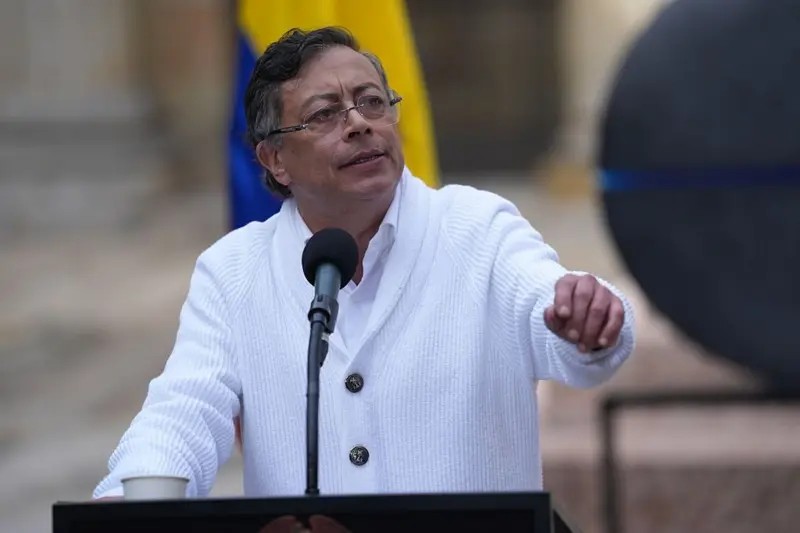
Colombian President Gustavo Petro has announced he will deliver his farewell address on July 20th, Colombia's Independence Day, over a month before his term officially concludes on August 7th. This shift from traditional August ceremonies moves the political discourse to public squares on the national holiday, occurring as the far-right opposition solidifies its electoral victory. Petro called for "general mobilization" and "resistance" in the streets, a move that coincides with the finalization of the presidential election's second round, held on June 21st. In the May first round, far-right candidate Abelardo de la Espriella led with 43.7% of the vote, followed by the ruling party's Iván Cepeda with 40.90%. Petro had previously questioned the preliminary count and the software used by Thomas Greg & Sons (TGS), citing a potential discrepancy of 800,000 in the electoral census, which then-President Iván Duque dismissed as disrespecting democracy. Iván Cepeda conceded the election to Abelardo de la Espriella on Wednesday, June 24th, reversing his party's initial stance of challenging 33,000 polling stations due to alleged technical errors. The National Registrar confirmed that the official scrutiny, conducted by the National Electoral Council (CNE), showed only a 0.003% divergence from the preliminary count, confirming Espriella's narrow victory by approximately 250,000 votes (less than one percentage point). Abelardo de la Espriella, 47, leads the ultraconservative Defensores de la Patria movement and has gained traction by focusing on public security, a major concern for Colombians amid recent clashes. Espriella, known as "El Tigre," has pledged to halt dialogue with armed groups, launch a military offensive with the construction of ten mega-prisons, and withdraw Colombia from international organizations like the UN and OAS. However, he faces a fragmented Congress, with Petro and Cepeda's Pacto Histórico expected to retain the largest bloc, necessitating continuous negotiation for legislative approval.
President Petro's decision to deliver a farewell address on Independence Day, rather than at the end of his term, signals a strategic attempt to frame his presidency and its challenges within a narrative of national sovereignty and public engagement. By shifting the focus to street-level mobilization and resistance, he aims to bypass traditional institutional channels and directly appeal to his base, potentially influencing the political landscape for the incoming administration. This move occurs against a backdrop of contested election results and Petro's prior criticisms of electoral processes, highlighting persistent tensions between the executive and electoral authorities. The incoming president, Abelardo de la Espriella, faces the immediate challenge of governing a deeply divided country with a fragmented legislature, requiring significant negotiation despite his hardline platform. His proposed policies, such as suspending dialogues with armed groups and withdrawing from international bodies, suggest a potential shift in Colombia's foreign and domestic security posture, which could lead to increased internal instability and international isolation if pursued without broad consensus.
AI-generated to prompt reflection — not editorial opinion, not advice, not a statement of fact. How this works.