Comet Tempel 2 Displays Striking Tail as Earth Crosses its Orbital Plane
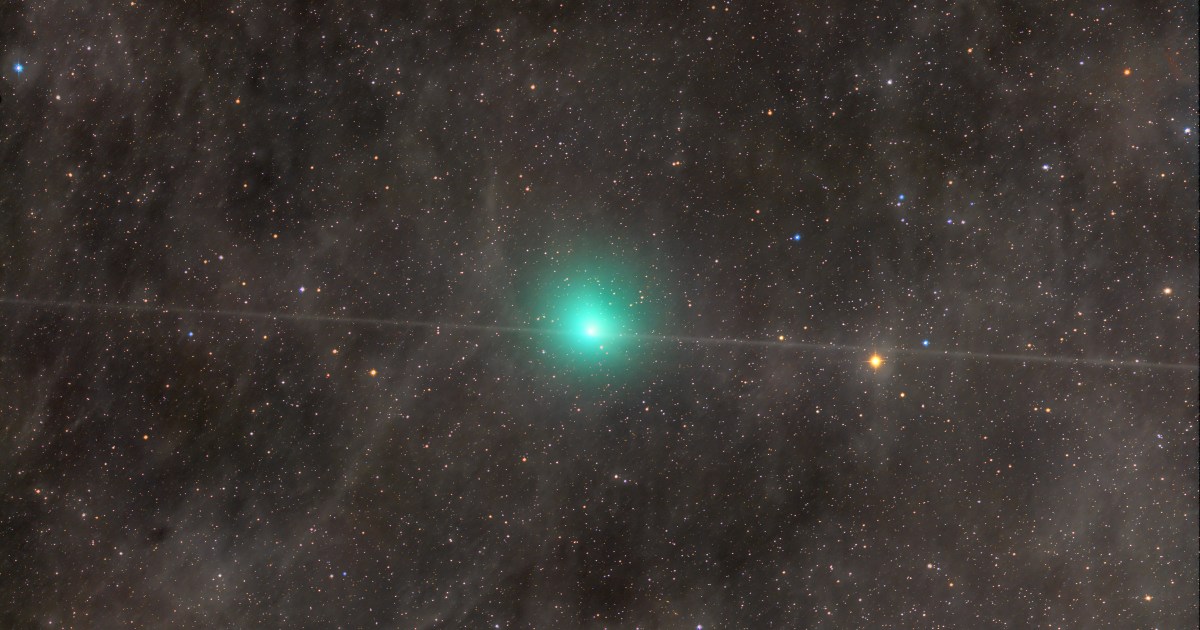
Comet 10P/Tempel, also known as Tempel 2, is currently exhibiting dramatic visual transformations as Earth aligns with the plane of its orbit. This celestial event is occurring as the comet approaches its perihelion, its closest point to the Sun, which is expected in early August. Observers can witness these changes in real-time, with the comet's tail appearing particularly distinctive. The Moon will also be visible, passing south of Venus on Friday, July 17. For those interested in further astronomical events, a "Sky This Week" column is available, offering a comprehensive guide to the week's celestial happenings. This period presents a unique opportunity to observe cometary activity influenced by our planet's perspective.
The visual spectacle of Comet Tempel 2 offers a compelling illustration of orbital mechanics and our dynamic relationship with celestial bodies. As Earth traverses the comet's orbital plane, the apparent shape and visibility of the comet's tail are altered, highlighting the three-dimensional nature of the solar system. This event underscores the ongoing scientific value of amateur and professional astronomy in observing and documenting cometary behavior, which can provide insights into the composition and evolution of these ancient solar system remnants. Future advancements in observational technology will likely enhance our ability to capture and analyze such phenomena with even greater detail, potentially revealing more about the processes that shape cometary tails and their interactions with solar radiation.
AI-generated to prompt reflection — not editorial opinion, not advice, not a statement of fact. How this works.