Communist Party Claims 5 Months of Government Rule Increased Public Fear and Distress
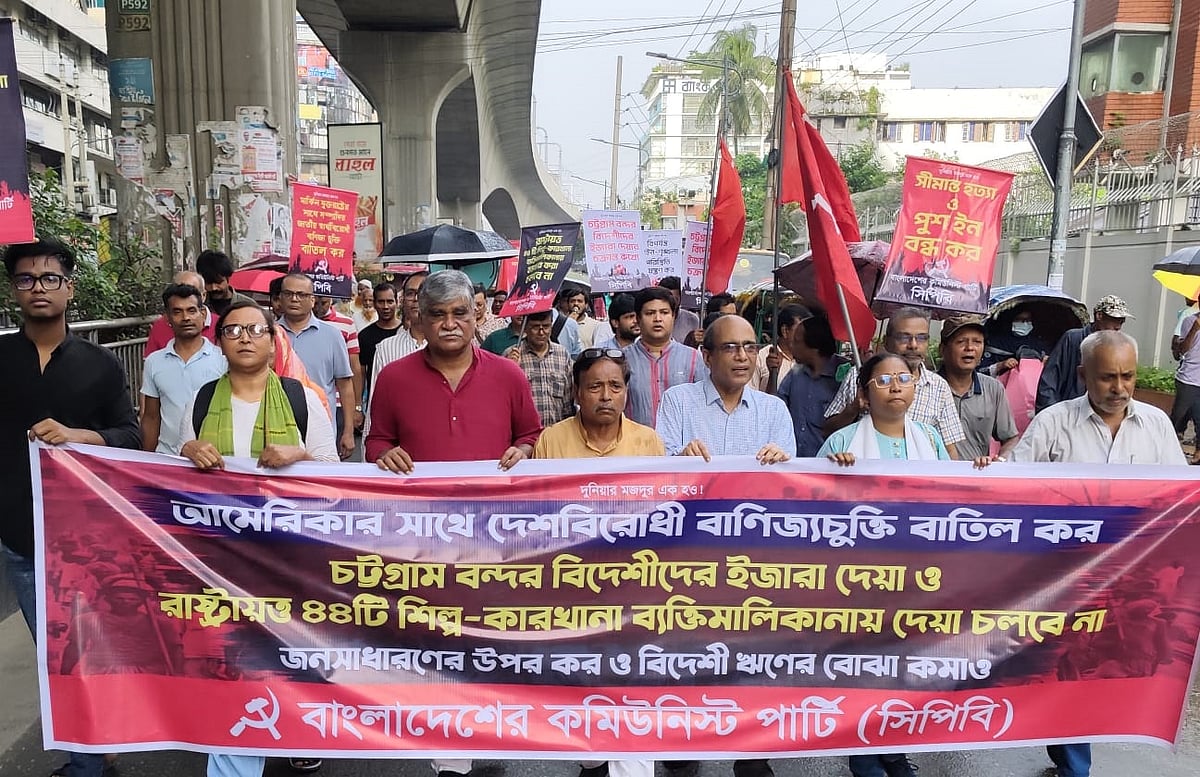
The Communist Party of Bangladesh (CPB) has asserted that the government's five months in power have led to increased public fear, apprehension, and sighs of distress. The party alleges that escalating fuel prices, a budget burdened by taxes and debt, deteriorating law and order, and decisions detrimental to national interests have intensified the crisis in people's lives. These claims were voiced during a protest rally organized by the CPB in front of the National Press Club in the capital on Wednesday afternoon. CPB President Kazi Sajjad Zahir Chandan stated that the country has become a land of fear and uncertainty due to the government's failures. He demanded the cancellation of a US trade agreement, the cessation of initiatives to lease out the Chittagong port, effective measures to prevent border killings and push-ins, and adequate state support for flood-affected populations. CPB Presidium member Ragib Ahsan Munna criticized the government for prioritizing corporate interests over public welfare by imposing tax and debt burdens and attempting to privatize state-owned enterprises. Another Presidium member, Dibyalok Singha, declared that any move to lease or place the Chittagong port, a strategic national asset, under foreign control would be resisted by the public. CPB leaders also announced plans for larger nationwide protests if their demands are not met.
The Communist Party of Bangladesh's critique highlights a common tension between government fiscal policies and public welfare, particularly concerning essential goods, taxation, and strategic national assets. The party's framing emphasizes popular suffering and national sovereignty, suggesting that current economic strategies may be perceived as favoring external or corporate interests over domestic needs. This perspective raises questions about the sustainability of economic models that rely on increased debt and taxation while potentially compromising control over key infrastructure. Future governance will likely need to balance fiscal imperatives with public confidence and national strategic interests, especially in a globalized economic environment where such trade-offs are increasingly scrutinized by electorates.
AI-generated to prompt reflection — not editorial opinion, not advice, not a statement of fact. How this works.