Comparing Football Eras and Stars: An Impossible Task
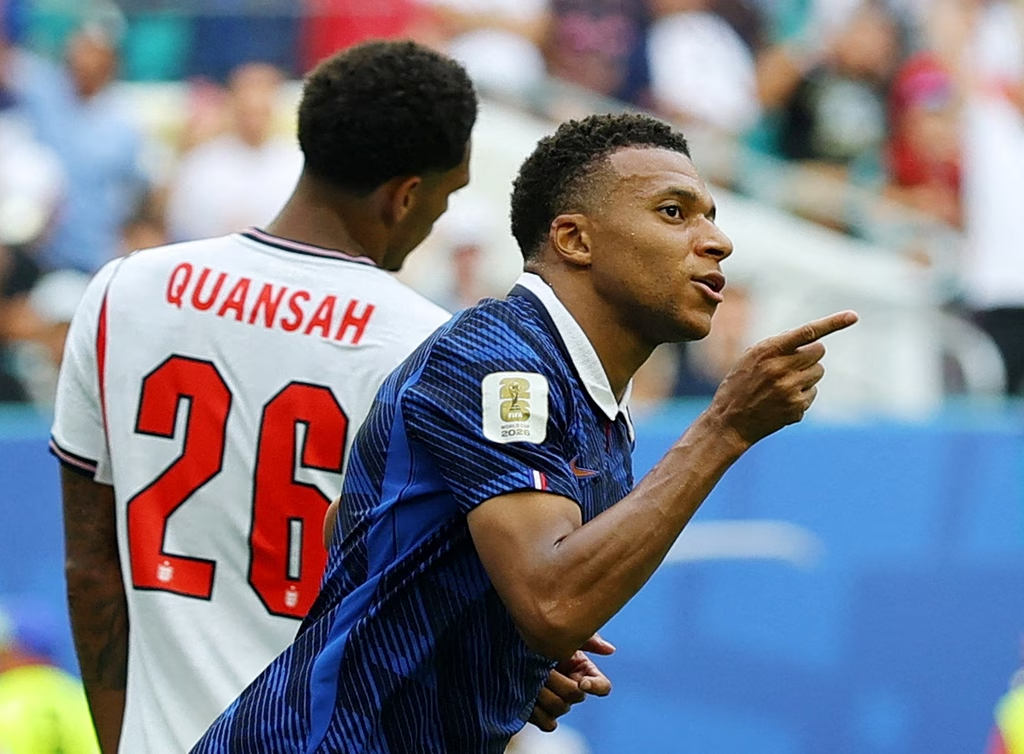
The article argues that directly comparing football players from different eras is fundamentally flawed and lacks meaning. It questions the validity of placing Kylian Mbappé on the same scale as Miroslav Klose, or Lionel Messi alongside Ronaldo Nazário, often referred to as 'Ronaldo the Phenomenon'. The author emphasizes that each player possesses distinct characteristics, making direct comparisons inherently difficult. Furthermore, the piece rejects the notion that current-generation goal scorers are definitively superior to their predecessors. The text implies that such comparisons often overlook the unique contexts and qualities that define each player's career and impact on the sport. Ultimately, the article suggests that appreciating each player within their own historical and competitive framework is more appropriate than attempting to rank them against each other across different generations.
The subjective nature of comparing athletes across different historical periods highlights the challenges in establishing objective metrics for performance. Factors such as rule changes, training methodologies, equipment advancements, and the evolution of tactical approaches significantly influence player development and game dynamics. While fan engagement often thrives on such debates, a rigorous analytical approach would necessitate controlling for these variables or acknowledging their impact on any comparative framework. This underscores the importance of contextualizing achievements within their specific eras, rather than seeking a singular, universal ranking that may oversimplify the rich tapestry of football history and individual talent.
AI-generated to prompt reflection — not editorial opinion, not advice, not a statement of fact. How this works.