Composer Reimagines 3.5-Century-Old Opera
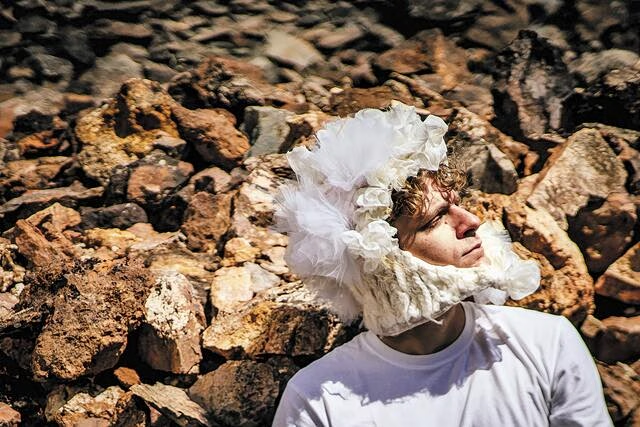
Greek composer Vasiliki Legaki has created a new musical arrangement of Jean-Baptiste Lully's opera "Phaëton." This contemporary interpretation involved a dialogue with the original 1683 composition. Legaki's work aims to bridge the gap between Baroque-era music and modern sensibilities. The opera "Phaëton" was first performed in 1685, with its libretto by Philippe Quinault. Lully, a prominent composer of the French Baroque period, wrote the original score. Legaki's approach to arranging the opera signifies a deep engagement with historical musical forms. Her work explores how classical pieces can be recontextualized for contemporary audiences. This project highlights the enduring relevance of Lully's compositions. It also showcases Legaki's innovative approach to musical heritage.
Vasiliki Legaki's musical adaptation of Jean-Baptiste Lully's "Phaëton" presents an interesting case study in the reinterpretation of historical artistic works. By engaging in a "dialogue" with the 1683 composition, Legaki is not merely performing an arrangement but actively re-contextualizing a Baroque opera for a 21st-century audience. This endeavor taps into a broader trend of reviving and reimagining classical art forms, driven by a desire to make them more accessible and relevant. The success of such projects often hinges on balancing fidelity to the original intent with innovative creative choices that resonate with contemporary tastes. This approach can foster new appreciation for historical art but also risks alienating purists if not executed thoughtfully. The long-term impact will depend on how well this bridge between eras is constructed and received, potentially influencing future approaches to classical music preservation and innovation.
AI-generated to prompt reflection — not editorial opinion, not advice, not a statement of fact. How this works.