Concrete Mixer Truck Hits Pole, Causing Traffic Chaos and Power Outage
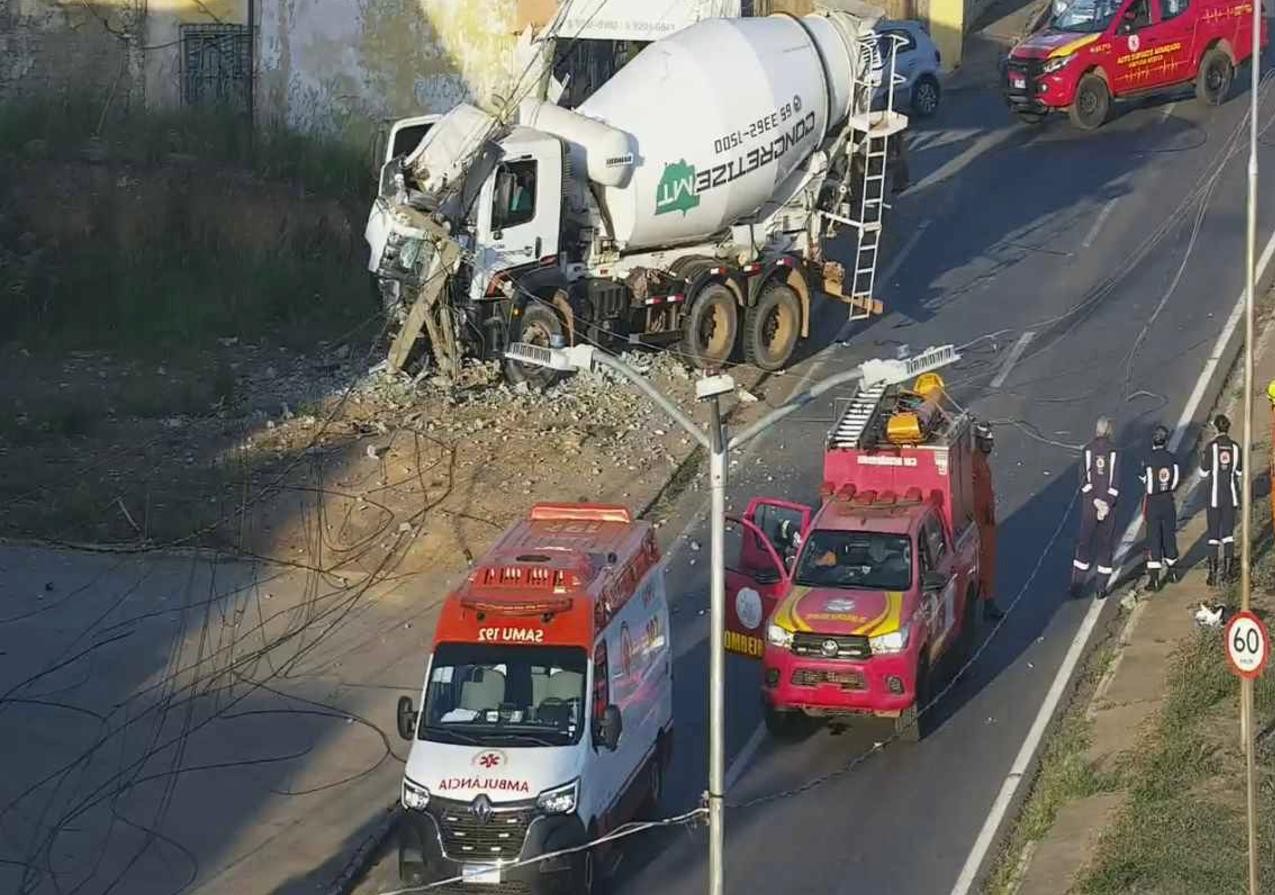
A concrete mixer truck collided with a public lighting pole on Ulisses Pompeu de Campos Avenue in Várzea Grande, Mato Grosso, on Thursday, May 16th. The accident occurred near the "Curva da Morte" (Curve of Death) area, heading towards Júlio Campos Avenue, and resulted in the closure of the road in both directions. The impact caused the pole to fall onto the roadway, scattering debris and electrical wires. The truck driver was unharmed but remained in the cabin until the energy company de-energized the power lines due to the risk of electrocution. After the power was shut off, the Military Firefighters of Mato Grosso (CBMMT) safely extricated the driver, who did not require hospitalization and stayed to observe the recovery efforts. The power disconnection also temporarily disabled traffic lights at the intersection of Júlio Campos Avenue with Ulisses Pompeu de Campos and Couto Magalhães avenues. While the traffic signals have begun to be reactivated, the affected sections of the road experienced significant traffic delays. The Municipal Guard of Várzea Grande has established detours, redirecting traffic from the Zero Km region towards Júlio Campos Avenue via the Jardim Panorama neighborhood, and traffic in the opposite direction via the Água Vermelha neighborhood.
This incident highlights the critical infrastructure vulnerabilities inherent in urban transportation networks. The collision of a heavy vehicle with essential utility infrastructure, such as a power pole, demonstrates the cascading effects that can disrupt daily life and commerce. Such events underscore the need for robust urban planning that considers the safe separation of traffic flows from critical infrastructure, potentially through improved road design, protective barriers, or stricter regulations on vehicle dimensions and routes. Looking ahead, the integration of smart city technologies could offer predictive analytics to identify high-risk areas or moments, while automated traffic management systems might mitigate congestion more effectively during disruptions. The event also serves as a reminder of the importance of coordinated emergency response protocols between transportation authorities, utility companies, and first responders to ensure public safety and expedite service restoration.
AI-generated to prompt reflection — not editorial opinion, not advice, not a statement of fact. How this works.