Constitution Amendments Possible If Needed, Says Anisul Islam Mahmud
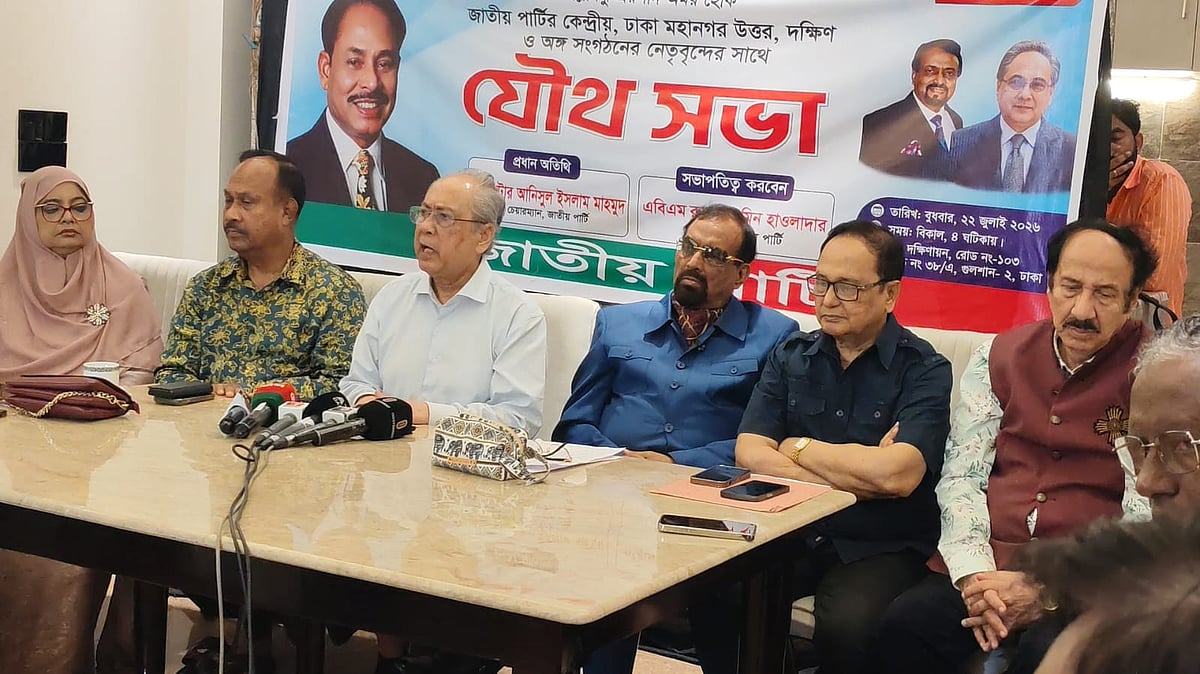
Anisul Islam Mahmud, Chairman of a faction of the Jatiya Party, stated on Wednesday that the constitution of Bangladesh can be amended if the need arises, citing that it has been changed in the past to meet the demands of the times. He emphasized that any such amendment must serve the nation's interests, foster democratic development, and align with public expectations. Mahmud explained that constitutions are dynamic documents, and countries worldwide frequently amend theirs to adapt to evolving societal, state, and public needs. He also believes Bangladesh requires a provincial government system and decentralization of the judiciary, alongside a re-evaluation of the balance of power between the President and Prime Minister. The former Foreign Minister stressed the importance of strengthening public trust in the electoral process to ensure political stability and democratic progress. He welcomed the Election Commission's recommendations for amending local government election laws, viewing them as a reflection of a genuine desire to make elections more inclusive. Mahmud asserted that participatory elections bolster democracy and protect citizens' voting rights, necessitating a neutral and responsible role from all election-related institutions. During the meeting, ABM Ruhul Amin Howlader, Secretary-General of the Jatiya Party faction, highlighted good governance, the rule of law, and the protection of citizens' rights as fundamental to a democratic state. He called for strengthening democratic institutions and fostering political tolerance, mutual respect, and dialogue. Howlader also expressed deep concern over the deaths of 800 children in Hama, urging visible legal action against those responsible and demanding a swift, transparent investigation to ensure exemplary punishment, warning that impunity erodes public faith in justice.
The statements by Anisul Islam Mahmud and ABM Ruhul Amin Howlader highlight a recurring theme in Bangladeshi politics: the perceived need for constitutional reform and electoral integrity. Mahmud's assertion that the constitution is a 'living document' subject to amendment reflects a pragmatic approach to governance, acknowledging that legal frameworks must adapt to societal changes. However, the political context of such proposals, particularly from opposition factions, often involves strategic positioning to critique the incumbent government's governance and electoral management. The call for strengthening democratic institutions and ensuring fair elections, while universally desirable, also serves as a mechanism for opposition parties to hold the ruling administration accountable and advocate for reforms that could potentially level the political playing field. The concern raised by Howlader regarding the deaths of children and the lack of visible legal action points to systemic governance challenges, where accountability and justice mechanisms may be perceived as insufficient or slow, potentially impacting public trust in the state's capacity to protect its citizens and uphold the rule of law. Future governance in Bangladesh will likely continue to grapple with balancing the need for constitutional flexibility with the imperative of maintaining democratic stability and public confidence in electoral processes.
AI-generated to prompt reflection — not editorial opinion, not advice, not a statement of fact. How this works.