Contestant Refuses Runner-Up Title at Rodeo Queen Pageant Amid Controversy
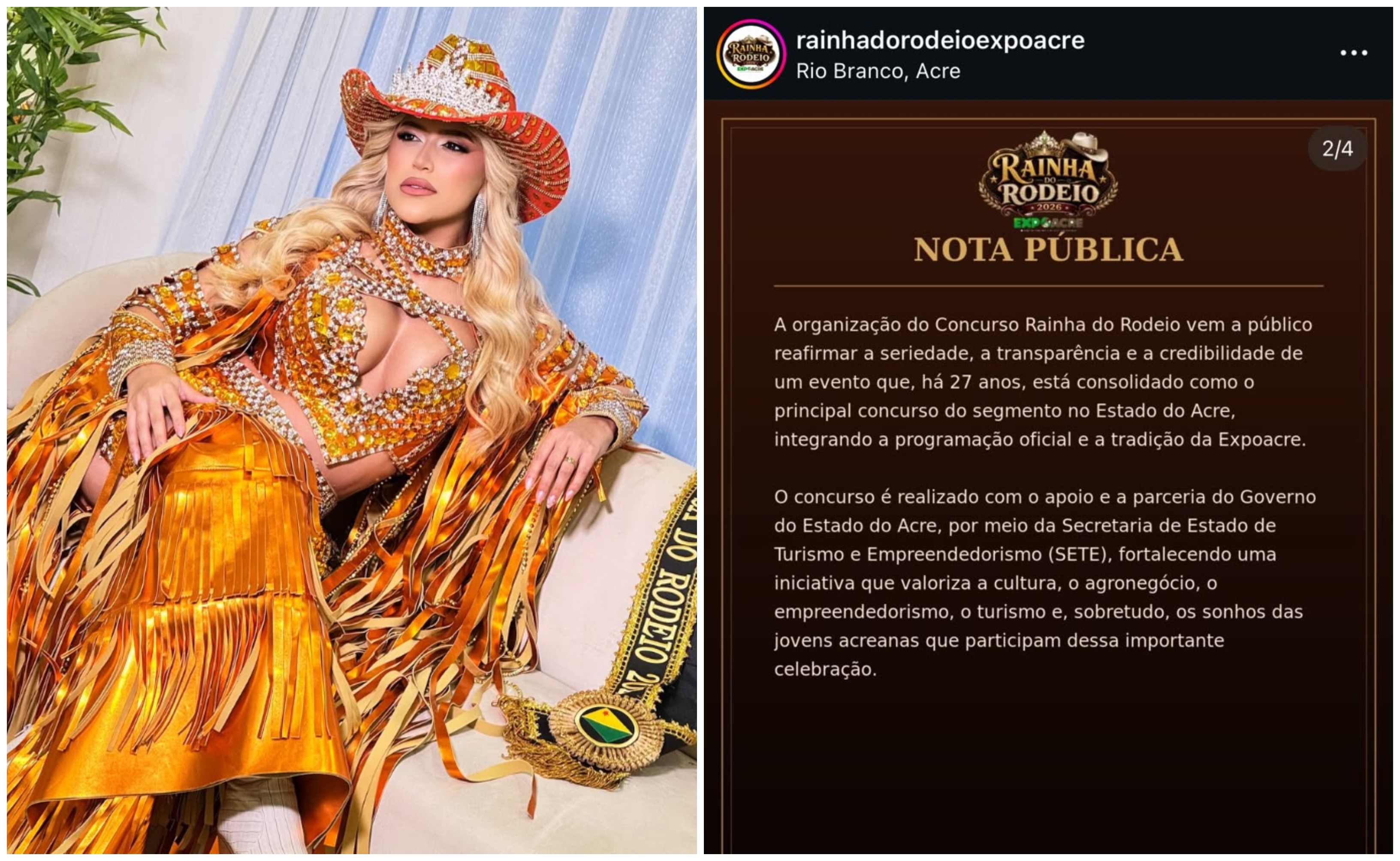
A controversy erupted at the Expoacre 2026 Rodeo Queen pageant held on Saturday, May 25th, in Rio Branco, Acre, Brazil, when contestant Maiane Sobrinho refused the second-place title of "Princesa do Laço" (Lasso Princess). Sobrinho, who previously held the princess title in 2023, stated that she did not believe the judges' decision was fair and that the criteria used did not accurately reflect the contestants' performances. She emphasized the importance of transparency and questioning results when legitimate concerns arise. Following Sobrinho's refusal, the title was awarded to Josefa Inácio from Plácido de Castro. The pageant's organization released a statement on Sunday, May 26th, asserting the competition's seriousness, transparency, and credibility. They highlighted that the judging panel consisted of individuals with recognized integrity and that the selection process respected the commission's autonomy. The organization also noted the involvement of the State Government in the commission, reinforcing their commitment to the event's integrity. The main title of Rodeo Queen was won by Erica Oliveira, a former Rio Branco Carnival Queen, who received R$10,000. Josefa Inácio received R$5,000 for her second-place title, and Maysa Valadão was named "Madrinha dos Peões" (Cowboys' Godmother) with a R$3,000 prize. Fifteen participants competed, evaluated on criteria including charm, communication, posture, poise, and elegance. The Expoacre 2026 event is scheduled to take place from August 1st to 9th at the Wildy Viana Exhibition Park.
This incident highlights the inherent tension between subjective judging criteria in competitive events and participants' expectations of objective fairness. The contestant's public refusal and subsequent statements suggest a perceived disconnect between performance and outcome, potentially stemming from unclear evaluation metrics or external influences on the judging process. The organization's defense, emphasizing the judges' credibility and governmental oversight, aims to reinforce institutional trust. However, such controversies often prompt scrutiny of the transparency and accountability mechanisms within similar pageants and cultural events, particularly when significant prizes or representative roles are at stake. Moving forward, refining scoring rubrics and ensuring independent oversight could mitigate future disputes and bolster public confidence in the integrity of these traditional contests.
AI-generated to prompt reflection — not editorial opinion, not advice, not a statement of fact. How this works.