Contract and Daily Wage Workers Protest Inside Singha Durbar
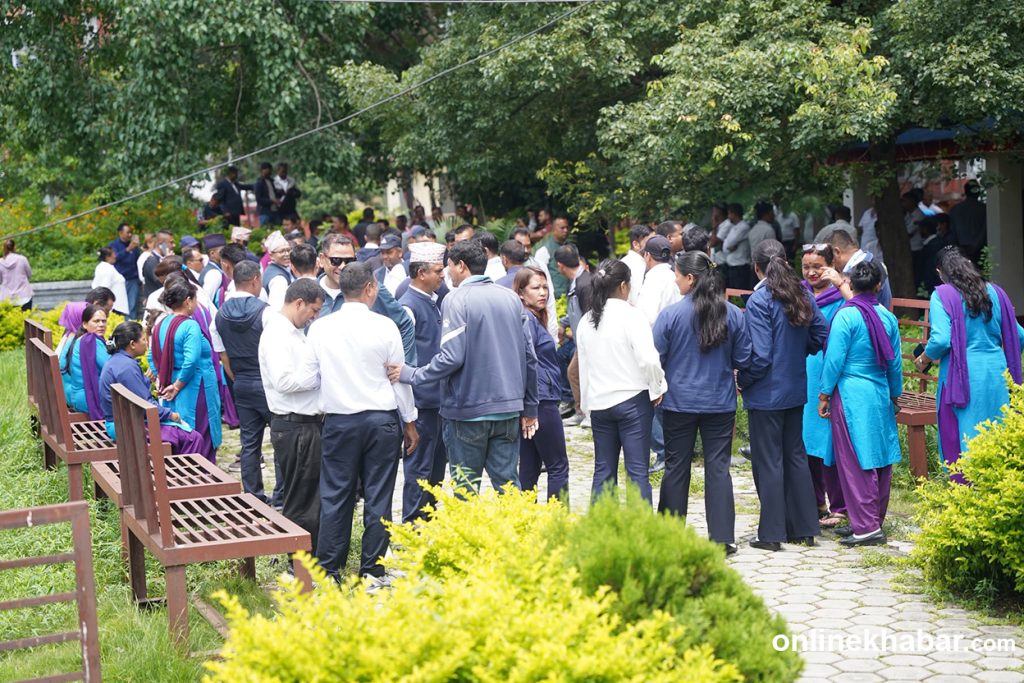
A group of contract and daily wage workers staged a protest inside Singha Durbar, the administrative heart of Nepal. The protesting employees hold various positions, including office assistants, security guards, technicians, electricians, computer operators, auxiliary health workers (aheb), female community health volunteers (anami), and nurses. These workers are employed on a contractual or daily wage basis, highlighting their precarious employment status. The demonstration took place within the government complex, signaling their demand for better treatment or job security. The specific grievances and outcomes of the protest were not detailed in the provided information. The presence of diverse roles among the protesters indicates a broad base of workers facing similar employment challenges.
The protest by contract and daily wage workers within Singha Durbar underscores a systemic issue regarding employment stability in public service. The reliance on temporary labor, despite the essential roles they fill, suggests a potential imbalance between workforce needs and sustainable employment policies. This situation may reflect broader economic pressures or a deliberate strategy to manage labor costs, but it raises questions about worker rights and the long-term implications for service delivery and institutional knowledge. Future policy discussions could explore models that offer clearer career paths and benefits for these vital contributors, aligning with principles of equitable labor practices and efficient public administration.
AI-generated to prompt reflection — not editorial opinion, not advice, not a statement of fact. How this works.