Controversy Erupts Over Billboard Featuring Convicted War Criminals at Rajshahi University
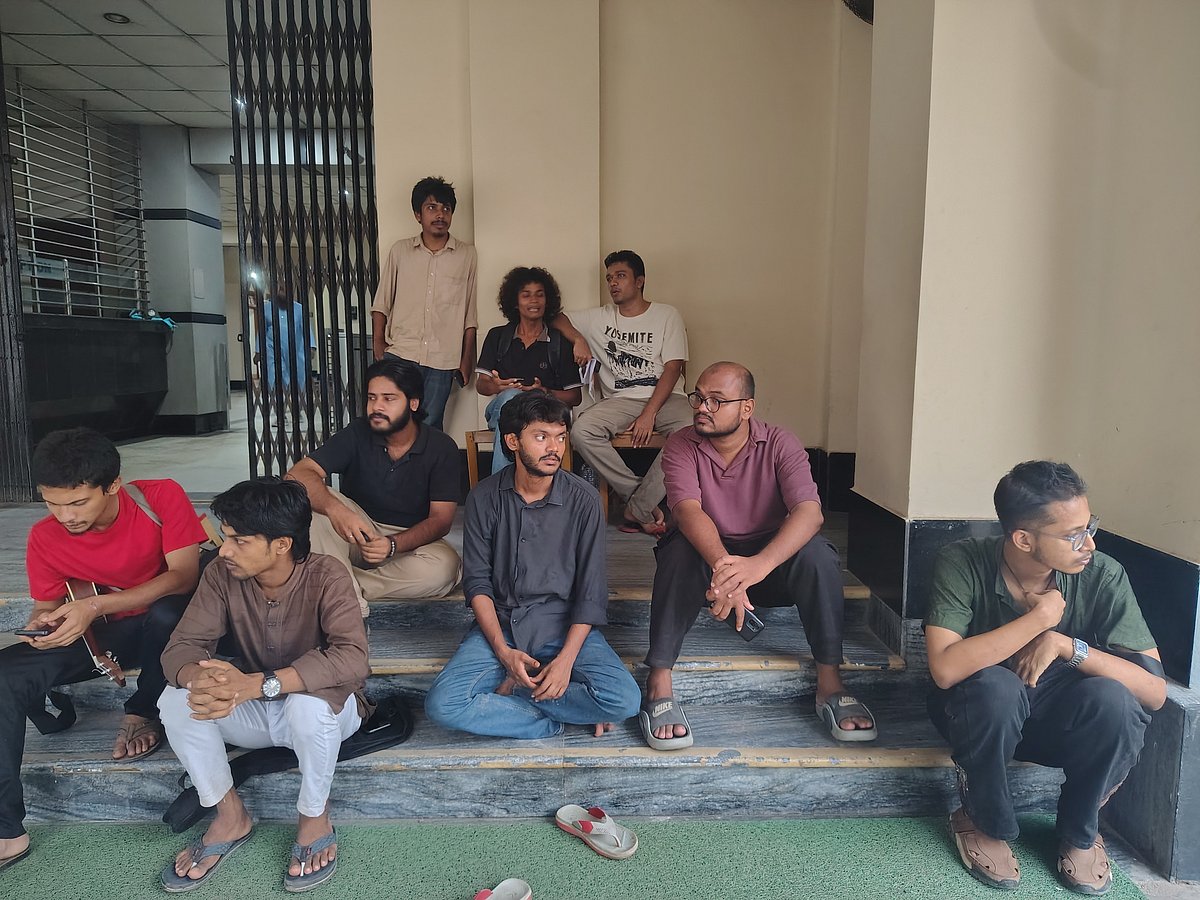
A billboard displaying images of individuals convicted of crimes against humanity during Bangladesh's 1971 Liberation War has sparked debate and protests at Rajshahi University. The billboard, titled 'Judicial Killing,' was erected on Friday by a cultural platform named 'Novoculture,' led by Raksu General Secretary Salauddin Ammar. A group of students is demanding the removal of the billboard, which they find objectionable, and have staged a sit-in protest in front of the administration building. The billboard features prominent figures from Jamaat-e-Islami, including former amirs Motiur Rahman Nizami and Delwar Hossain Sayedee, former standing committee member of BNP Salauddin Quader Chowdhury, and others like Abdul Quader Molla, Ali Ahsan Mohammad Mujahid, and Mir Quasem Ali. It also includes a picture of Major (retd.) Bazlul Huda, involved in the assassination of Sheikh Mujibur Rahman, with a caption alleging he was personally killed by Hasina in prison. The images of witness Sukhranjan Bali, who went missing, and Justice Manik Mia are also displayed. Students have raised concerns on social media, questioning the message conveyed by labeling the convictions as 'judicial killing' and deeming it an affront to established history and Bangladeshi law. Student organizations like the Chhatra Odhikar Parishad have condemned the display, calling it unacceptable for an institution like Rajshahi University. While some students advocate for the billboard's removal, citing the need to erase symbols of war criminals from campus, others have defended its placement. Novoculture director Salauddin Ammar stated that the billboard aims to highlight controversial political trials and executions, referencing alleged disappearances and killings under the current government. University Proctor Professor Mahbubur Rahman acknowledged the conflicting demands and stated that the billboard has been asked to be removed, with the outcome pending.
The controversy surrounding the 'Judicial Killing' billboard at Rajshahi University highlights the persistent societal divisions and historical interpretations surrounding the 1971 war crimes trials. The framing of convictions as 'judicial killing' by the 'Novoculture' platform appears to be a deliberate attempt to politicize the legacy of these trials, potentially leveraging contemporary political discourse on state actions and justice. This tactic risks undermining the established legal processes and historical consensus, while also potentially inflaming intergenerational tensions. The university administration's response, characterized by acknowledging conflicting viewpoints and requesting removal, reflects the challenge of navigating sensitive historical narratives within an academic environment. Future considerations for such displays should involve robust public discourse and educational initiatives that prioritize historical accuracy and national reconciliation over divisive political messaging.
AI-generated to prompt reflection — not editorial opinion, not advice, not a statement of fact. How this works.