Cornell Scientists Develop Self-Learning Microwave Chip for Secure Data Transmission
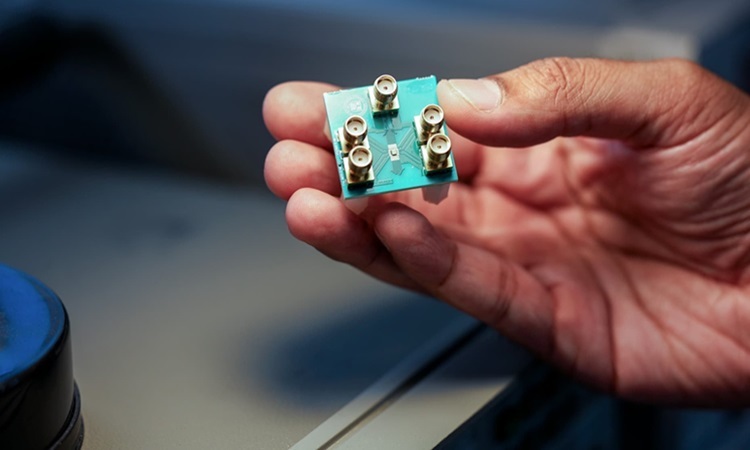
Researchers at Cornell University have engineered a novel 'microwave brain' chip capable of self-learning its own language. This advanced chip can compress satellite data by up to eight times. Furthermore, it enables ultra-secure wireless data transmission. The development represents a significant step forward in secure communication and data processing. The chip's ability to autonomously develop its communication protocols suggests a new paradigm for efficient and protected data handling. This innovation holds potential for various applications, including secure satellite communications and advanced data compression techniques. The self-learning aspect could lead to more adaptable and robust systems in the future.
This development in self-learning microwave chips by Cornell University researchers addresses critical needs in data security and transmission efficiency. The chip's capacity for autonomous language learning and significant data compression suggests a potential shift in how sensitive information, like satellite data, is managed and secured. By reducing data size and enhancing transmission security, such technology could lower operational costs and improve the resilience of communication networks against interception. The long-term implications involve exploring the scalability and adaptability of these self-learning systems in diverse environments, considering the evolving landscape of cybersecurity threats and the increasing demand for efficient data transfer in the AI era.
AI-generated to prompt reflection — not editorial opinion, not advice, not a statement of fact. How this works.