Cosmic Bombardment May Have Melted Earth's Early Crust, Scientists Suggest
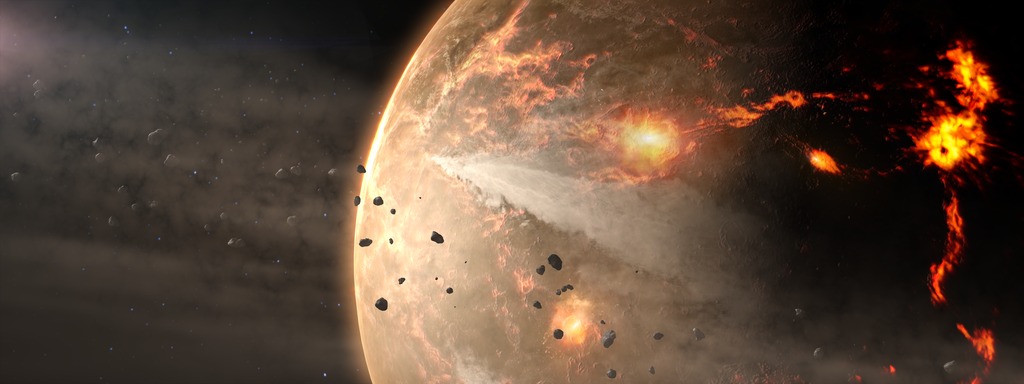
Scientists are proposing a new theory regarding the intense heat of Earth's early Hadean Eon, suggesting that cosmic bombardment played a significant role in melting the planet's first crust. While internal heat from Earth's core has long been considered the primary source of this extreme temperature, the new research indicates that frequent and massive impacts from asteroids and comets could have contributed substantially. These celestial collisions would have generated immense thermal energy, sufficient to liquefy the nascent crust and influence the planet's geological evolution. The findings challenge the conventional understanding of Earth's formation and early development. This alternative explanation offers a more comprehensive picture of the forces that shaped our planet during its initial stages. Further research is needed to fully validate the extent of this impact-driven heating.
This research reframes the understanding of early Earth's thermal environment, suggesting that external cosmic forces, rather than solely internal processes, may have been the dominant factor in melting the planet's initial crust. Such insights are crucial for understanding the conditions under which life might have first emerged, as the presence of liquid water and stable geological formations are key prerequisites. Considering the increasing frequency of near-Earth object detection and the ongoing development of planetary defense strategies, this perspective also highlights the dynamic and potentially hazardous nature of planetary formation, underscoring the long-term significance of understanding celestial mechanics and impact risks.
AI-generated to prompt reflection — not editorial opinion, not advice, not a statement of fact. How this works.