Could Alien Civilizations Use Long-Duration Beacons Instead of Lasers?
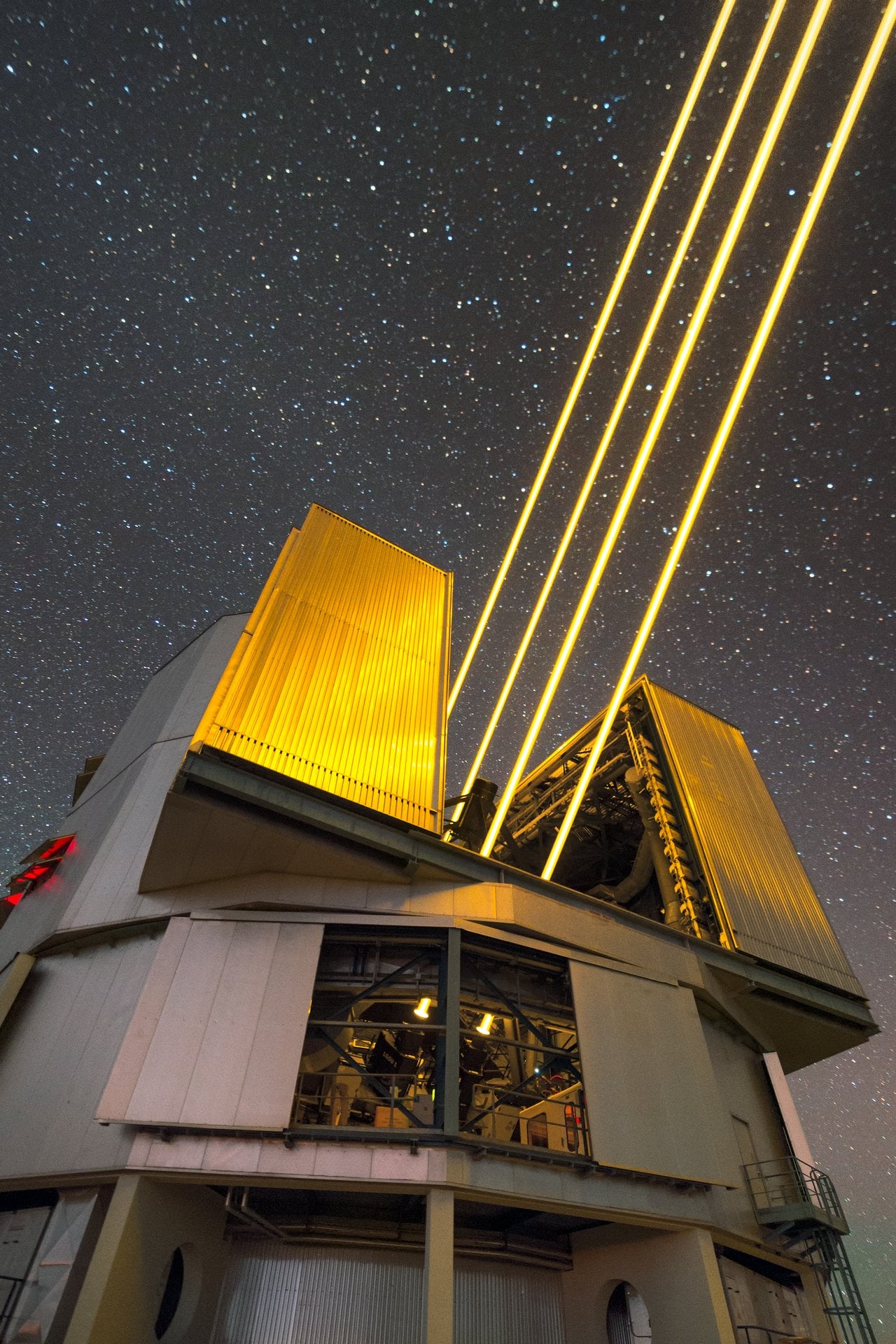
Current searches for extraterrestrial intelligence (SETI) predominantly focus on signals mirroring our own advanced technologies, such as high-energy laser bursts. However, a new paper by researchers Dániel Apai, Chia-Lung Lin, and Kevin Wagner proposes that this approach might be flawed. They suggest that a more resource-conscious alien civilization might opt for a different communication strategy. Instead of complex, energy-intensive transmissions, these civilizations could utilize long-duration pulsing interstellar beacons. The paper, available as a pre-print on arXiv, argues that this alternative method could be a more practical and sustainable way for advanced extraterrestrial societies to signal their presence across the vastness of space. The researchers advocate for shifting our search efforts to detect these potential long-duration beacons, which may have been overlooked due to our current technological biases.
The prevailing strategy in SETI, which prioritizes signals analogous to current human technological capabilities, may inadvertently limit the scope of potential discoveries. This paper introduces a compelling alternative by considering the resource constraints and technological evolution of hypothetical alien civilizations. By proposing the search for long-duration pulsing beacons, the research challenges the anthropocentric assumptions often embedded in scientific exploration. This perspective encourages a broader, more adaptable framework for SETI, acknowledging that advanced civilizations might employ communication methods that are vastly different from our own, potentially prioritizing efficiency and sustainability over high-intensity, short-duration transmissions. This shift in focus could enhance the probability of detecting extraterrestrial intelligence by diversifying search parameters beyond our immediate technological horizon.
AI-generated to prompt reflection — not editorial opinion, not advice, not a statement of fact. How this works.