Could Life in Venus Clouds Originate from Earth, Panspermia Theory Suggests
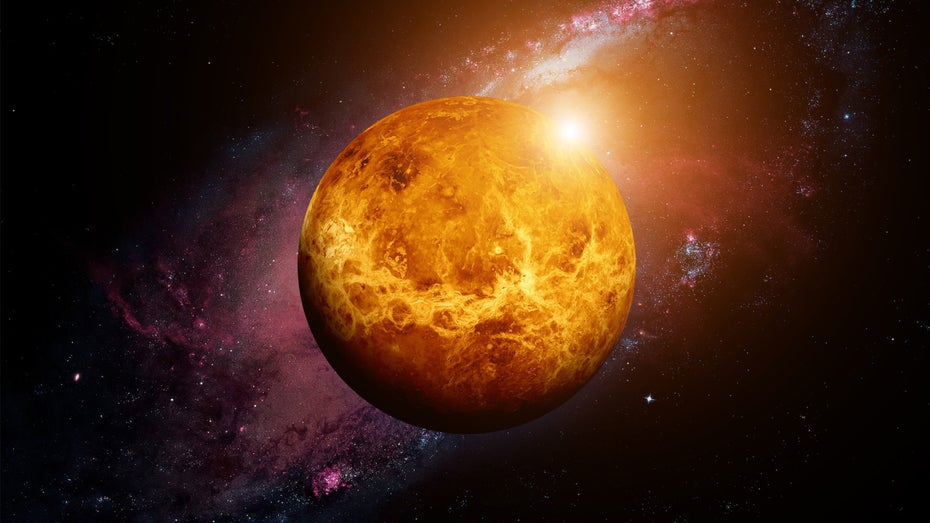
Scientists have proposed a new hypothesis suggesting that signs of life detected in the clouds of Venus might have originated from Earth. This theory, rooted in the concept of panspermia, posits that life could be transported between planets. The researchers explored the possibility that microbial life, or its precursors, could have traveled from Earth to Venus. This interplanetary transfer could have occurred through asteroid or comet impacts ejecting material from Earth into space, which then eventually reached Venus. The study considers the conditions on Venus, particularly in its cloud layers, which might be more hospitable to life than the planet's surface. While the surface of Venus is extremely hot and inhospitable, temperatures and pressures in the clouds are thought to be more moderate. This research opens up new avenues for understanding the potential for life beyond Earth and the mechanisms by which it might spread across the solar system. Further investigation is needed to confirm these findings and explore the implications for astrobiology.
This hypothesis, exploring the panspermia theory in the context of Venus, prompts consideration of planetary interconnectedness. The scientific inquiry into potential Earth-to-Venus microbial transfer, if substantiated, would significantly reshape our understanding of abiogenesis and the distribution of life. It highlights the importance of studying atmospheric conditions on exoplanets and within our own solar system as potential havens for life. Future research may focus on the resilience of terrestrial microbes to space travel and the specific chemical signatures that could confirm an extraterrestrial origin. This perspective encourages a broader view of life's potential persistence and propagation across celestial bodies, emphasizing the dynamic nature of planetary environments and the possibility of shared biological origins.
AI-generated to prompt reflection — not editorial opinion, not advice, not a statement of fact. How this works.