Court Orders Two Suspects Detained for Interrogation in Forcible Signature Case
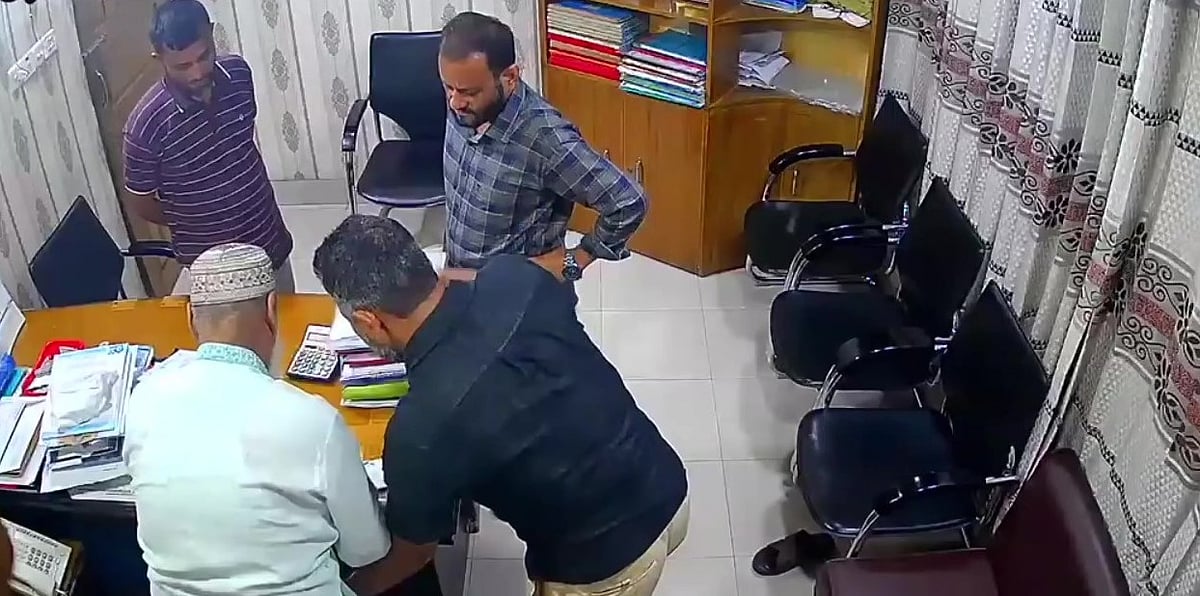
A court in Barisal has ordered that two suspects be held in custody for two days of interrogation in connection with a case involving the forced signing of checks and non-judicial stamps from a real estate businessman after an assault. The order was issued by Metropolitan Magistrate Nurun Nahreen on Tuesday afternoon, as confirmed by Rezaul Islam, bench assistant of the Metropolitan Magistrate Court. The main accused, Mostafizur Rahman alias Litu, and his associate Abul Kalam Azad, were arrested by Kotwali Model Police on Sunday. The investigation officer, SI Moniruzzaman Rasel, had requested a 10-day remand for further investigation, but the court opted for a two-day in-custody interrogation. The incident occurred on June 27 when four to five individuals entered the office of real estate businessman Abdul Aziz Howlader, the managing director of Agrani Housing Company Limited. Mostafizur Rahman allegedly assaulted Howlader and forced him to sign two checks and two non-judicial stamps by applying pressure to sensitive parts of his body. A 4-minute and 18-second video of the assault was circulated on social media on June 4. Howlader filed a case on June 2 against seven individuals, which the court ordered to be registered as an FIR by the Kotwali Model Police Station. While the main accused and one accomplice have been arrested, the other accused remain at large.
This case highlights the potential for coercion and abuse of power within business dealings, particularly when physical force and intimidation are employed. The court's decision to grant a limited interrogation period, rather than the full remand requested, suggests a cautious approach to the investigative process. The public dissemination of the assault video underscores the role of digital evidence in modern legal proceedings and its potential to expedite or influence investigations. Future scrutiny of such cases may focus on the effectiveness of legal frameworks in deterring violent extortion and ensuring accountability for perpetrators, especially when dealing with influential individuals or entities. The systemic implications involve the need for robust corporate governance and dispute resolution mechanisms that prevent resorting to illegal and harmful tactics.
AI-generated to prompt reflection — not editorial opinion, not advice, not a statement of fact. How this works.