Cox's Bazar Tourist Express Canceled Mid-Journey Due to Flooded Tracks
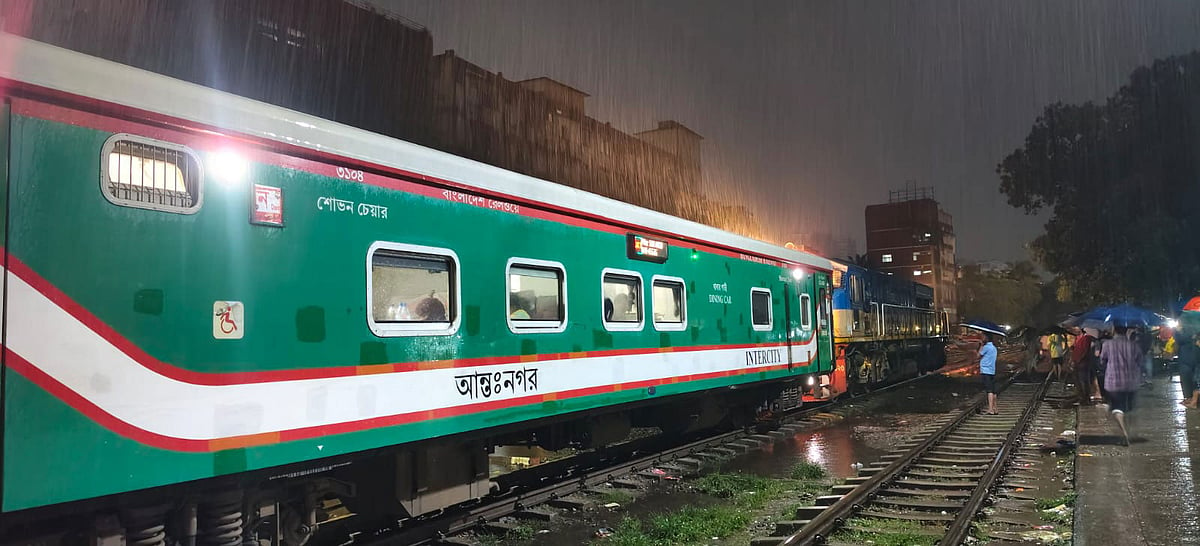
The Tourist Express train bound for Cox's Bazar had its journey canceled late Tuesday night because of waterlogged railway tracks. The cancellation was announced around 12:45 AM from the Pahartali control room of the eastern railway zone, affecting the segment from Chittagong to Cox's Bazar. Passengers who had already purchased tickets for this route will receive refunds. Many passengers disembarked before the official cancellation, opting for alternative road transport to reach Cox's Bazar. One such passenger, Mahmudul Hasan, who was traveling with his family from Dhaka, found himself stranded in Chittagong. After disembarking the train at Chittagong station around 11:30 PM, he stated they were proceeding to Cox's Bazar by bus. Lawyer Ruhul Amin, also on board, experienced significant delays and frustration. Initially offered assurances of departure, he and his family disembarked around 4:30 PM to arrange alternative transport, hiring a car for two thousand taka. However, railway staff persuaded them to re-board the train, only for it to remain stationary for several more hours, leading to further distress due to misinformation. He later confirmed they were leaving by bus. The Tourist Express had departed from Dhaka's Kamalapur station at 6:15 AM on Tuesday, passing Chittagong's Sholoshahar station at 12:35 PM. It stopped near Sunnia Madrasa due to submerged tracks and was subsequently returned to Sholoshahar station. The train was scheduled to arrive in Cox's Bazar at 2:40 PM. Approximately a thousand passengers were stranded on the train for nearly half a day due to heavy rainfall in Chittagong, which caused widespread waterlogging and submerged the railway line in the Muradpur area. In addition to the Tourist Express, two other trains, the Probal Express (Cox's Bazar to Chittagong) and the night train Soukat Express, also had their journeys canceled on Tuesday. The Probal Express was expected in Chittagong by midday but could not arrive due to the flooded tracks, leading to the cancellation of its return trip.
The cancellation of the Tourist Express highlights the critical infrastructure vulnerabilities exposed by extreme weather events, exacerbated by urban development patterns that increase flood risk. The incident underscores the need for robust disaster preparedness and resilient transportation networks capable of withstanding climate-induced challenges. Passengers' reliance on potentially inaccurate information and the subsequent scramble for alternative transport reveal systemic communication gaps during emergencies. Future planning must integrate advanced weather forecasting with real-time infrastructure monitoring to proactively manage such disruptions, ensuring passenger safety and minimizing economic impact. The situation calls for a re-evaluation of urban planning and drainage systems to mitigate future flooding and maintain essential services.
AI-generated to prompt reflection — not editorial opinion, not advice, not a statement of fact. How this works.