CPTM Train Lines 11, 12, and 13 Strike Continues Indefinitely in São Paulo
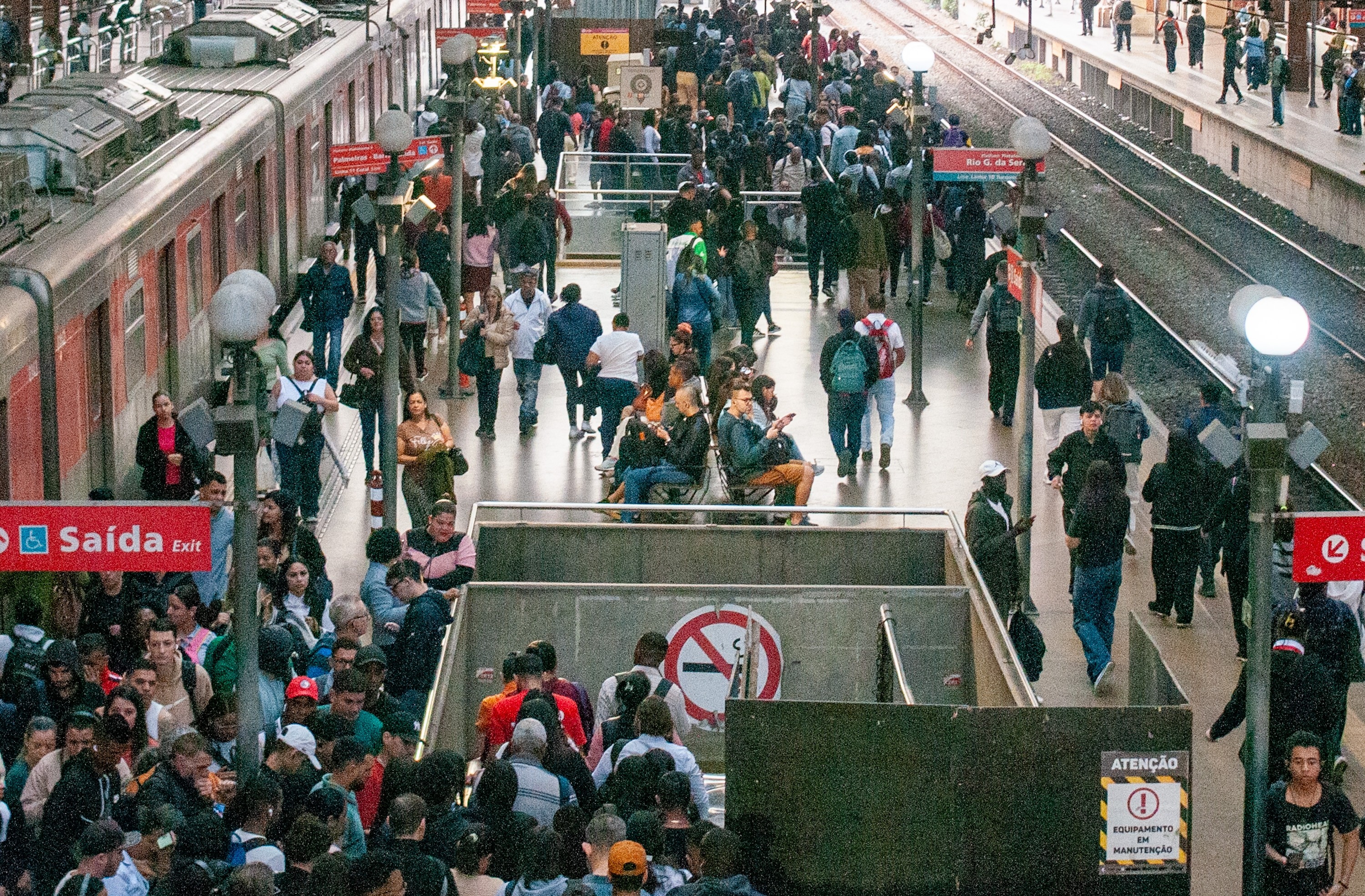
Employees of Companhia Paulista de Trens Metropolitanos (CPTM) lines 11-Coral, 12-Safira, and 13-Jade have maintained their indefinite strike, which began at midnight on Tuesday, August 4, 2026. The strike, decided by the Railway Workers' Union of Central Brazil after an assembly, centers on two main demands: the re-nationalization of the three lines transferred to the company Trivia Trens by the Tarcísio administration, or the preservation of the 4,700 jobs of CPTM employees currently undergoing a voluntary redundancy plan. The union stated that the government failed to provide concrete written guarantees for job security, which is the primary demand. A new assembly is scheduled for Wednesday, August 5, at 5:00 PM to reassess the situation. Governor Tarcísio de Freitas criticized the strike as political instrumentalization aimed at harming passengers, asserting that the government offered job maintenance guarantees which the union rejected, along with ignoring a Labor Court decision. The state government maintains that the strike is unilateral, based on misinformation, and affects nearly one million daily passengers, causing significant traffic congestion. Despite the strike, the government claims job security was communicated, and detailed how CPTM employees have been allocated to different roles or departments following the concession. The three lines were auctioned in March 2025 to the Comporte Participações group, which committed to significant investments. However, issues arose during the assisted operation and exclusive operation by Trivia Trens, including a fire on Line 12-Safira, leading Artesp to temporarily return operations to CPTM for 90 days for adjustments.
The indefinite strike by CPTM employees highlights a critical juncture in public transportation management, particularly concerning the balance between privatization benefits and workforce security. The core conflict appears to stem from differing interpretations of "job guarantees" and the perceived transparency of the concession process. While the government emphasizes efficiency gains and investment through privatization, the union prioritizes the stability of its members' employment, especially given the history of voluntary redundancy programs. The situation underscores the systemic challenge of ensuring equitable outcomes for both public service delivery and the livelihoods of public sector workers during transitions to private operation. Future governance models may need to incorporate more robust, legally binding mechanisms for workforce protection and transparent communication throughout the concession lifecycle to mitigate such disputes and maintain public trust.
AI-generated to prompt reflection — not editorial opinion, not advice, not a statement of fact. How this works.
