Crete: 300 Migrants Arrive in Two Days, Local Outcry Over New Facility
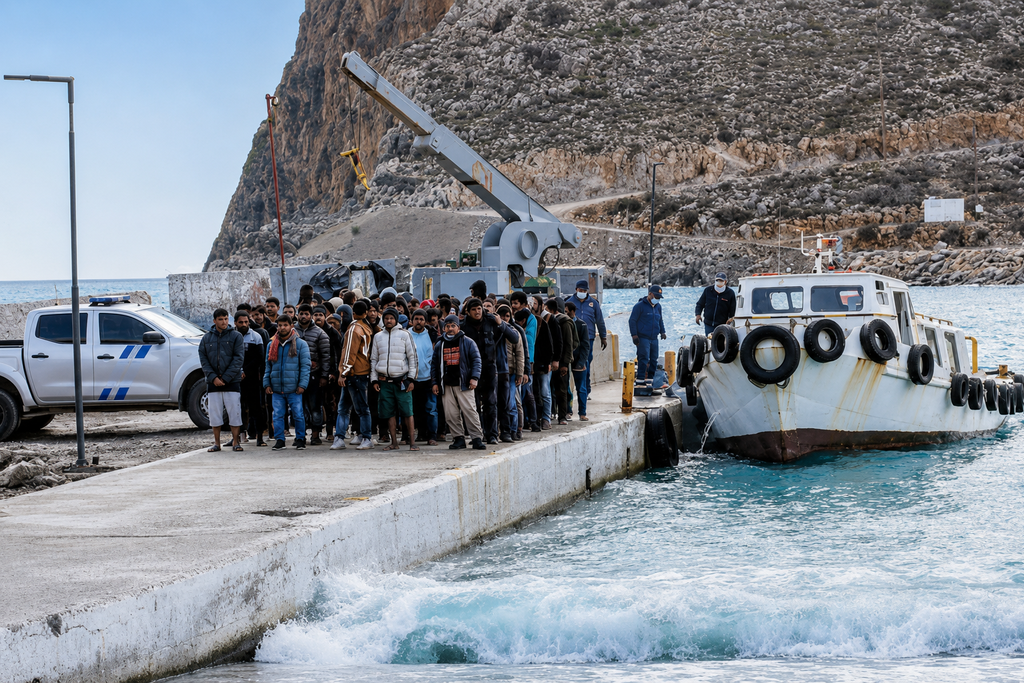
Over 300 migrants have arrived on the island of Crete in just two days, sparking strong reactions from the local community. The arrivals have intensified concerns regarding the capacity and management of reception facilities, particularly a new structure in Heraklion. Residents and local authorities have voiced significant opposition and distress over the rapid influx and its potential impact on the island's resources and social fabric. Despite the local outcry, the Ministry of Migration and Asylum has stated that the new facility in Heraklion will operate as planned. This directive from the ministry has further fueled tensions, with locals feeling their concerns are being disregarded. The situation highlights a growing challenge in managing migration flows in the Aegean, with Crete becoming a focal point for recent arrivals. The ministry's stance suggests a commitment to operationalizing the facility, regardless of immediate local opposition, indicating a potential disconnect between national policy and community sentiment.
The rapid arrival of 300 migrants in Crete over two days, coupled with local community opposition to a new reception facility in Heraklion, presents a complex challenge for migration management. The Ministry of Migration and Asylum's insistence on the facility's operation, despite local concerns, suggests a national-level strategy prioritizing reception capacity. This approach may stem from broader European Union directives or a perceived necessity to manage ongoing migratory pressures. However, the resulting friction with the local populace highlights a critical governance gap: the need for robust community engagement and transparent communication in implementing such policies. Future strategies could benefit from integrating local input earlier in the planning process to foster greater social cohesion and sustainable integration, rather than reacting to public outcry after decisions are made. This situation underscores the persistent tension between sovereign state responsibilities for border management and the socio-economic impacts on local communities, a dynamic likely to intensify in the coming decade.
AI-generated to prompt reflection — not editorial opinion, not advice, not a statement of fact. How this works.