Croatia Urges Montenegro to Resolve Bilateral Issues Before EU Accession
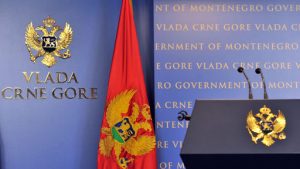
Croatia's Ministry of Foreign and European Affairs has issued a warning that Montenegro must resolve outstanding bilateral issues with Zagreb before it can finalize its accession negotiations with the European Union. The ministry emphasized that the principle of good neighborly relations is a fundamental political criterion within the EU's enlargement process. This statement highlights the importance Croatia places on settling these matters as a prerequisite for Montenegro's continued integration into the European bloc. The Croatian government's stance underscores the EU's commitment to ensuring that candidate countries adhere to regional cooperation and dispute resolution standards. Failure to address these bilateral concerns could potentially impede Montenegro's progress towards membership. The ministry's communication serves as a clear signal to Podgorica regarding the necessary steps to be taken. This development comes as Montenegro continues its efforts to meet the requirements for EU membership, a process that involves fulfilling numerous political and economic benchmarks. The emphasis on good neighborly relations reflects a broader EU policy aimed at fostering stability and cooperation among member states and aspiring members.
Croatia's assertion frames bilateral dispute resolution as a gatekeeping mechanism for EU accession, leveraging the bloc's enlargement policy to achieve its national interests. This approach highlights the complex interplay between sovereign foreign policy objectives and the institutional requirements of supranational bodies like the EU. The emphasis on 'good neighborly relations' can be interpreted as a codified mechanism for ensuring regional stability, but it also presents an opportunity for member states to exert influence over accession candidates. Looking ahead, the EU's enlargement process will likely continue to grapple with balancing the integration of new members with the need to manage existing bilateral tensions, potentially creating precedents for future accession negotiations in a multipolar world.
AI-generated to prompt reflection — not editorial opinion, not advice, not a statement of fact. How this works.