Cuba releases detained artist Luis Manuel Otero Alcántara into US exile
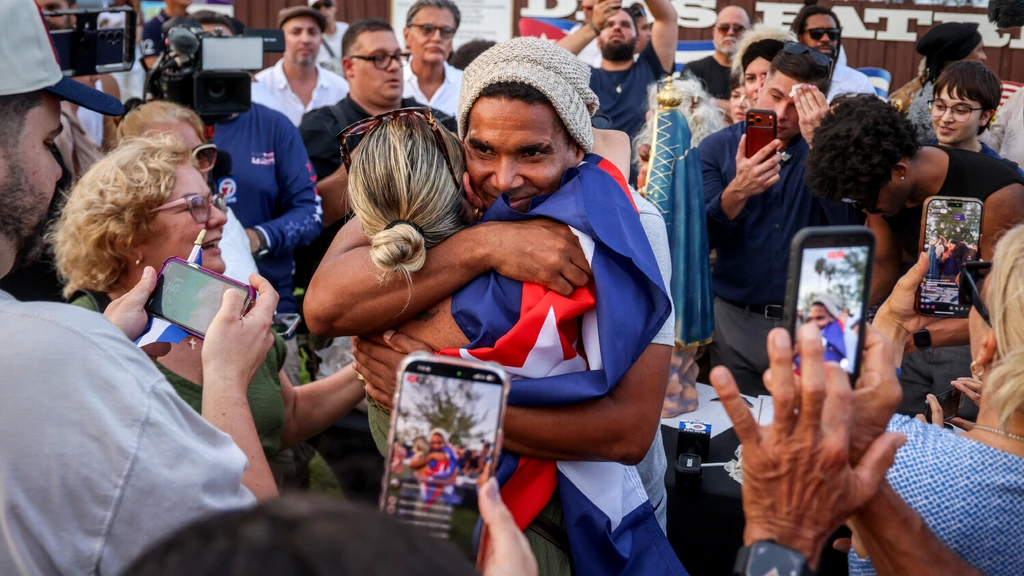
Cuban dissident artist Luis Manuel Otero Alcántara, aged 38, has been released from detention and allowed into exile in the United States. He arrived in Miami, where he was met by supporters. Alcántara was a prominent leader of the San Isidro Movement, an artistic collective based in Havana that opposes the island's communist government. He was initially detained in 2021 following protests, facing charges of disturbing public order, sedition, and disrespecting national symbols. Held in a high-security prison, Cuba agreed to his release on the condition that he leave the country. The U.S. subsequently granted him entry. While his departure was uncertain in recent days, his lawyers received notification yesterday that he was en route to the U.S. U.S. Secretary of State Rubio, whose own parents fled Cuba, used Alcántara's release to urge Cuba to free all political prisoners, stating Alcántara's only offense was demanding basic freedoms through his art. Alcántara is also known for his involvement in the song "Patria y Vida," which became an anthem for the protest movement and won a Grammy. Upon arrival in Miami, Alcántara asserted that only the Cuban people can end the dictatorship, emphasizing that "Cuba's future depends on us, the Cuban people."
The release of artist Luis Manuel Otero Alcántara from Cuban detention, facilitated by his exile to the U.S., represents a complex interplay of internal dissent and international pressure. While framed by supporters as a victory for freedom of expression, the Cuban government's decision to permit exile rather than release without conditions suggests a strategy to manage internal dissent by removing influential figures. This action may be influenced by broader geopolitical considerations and the economic impact of sustained internal instability. The U.S. government's response highlights the ongoing diplomatic tension and its commitment to advocating for political freedoms in Cuba. Looking ahead, such events underscore the enduring challenge of balancing state control with the evolving demands for individual liberties and political participation in the digital age, where information and artistic expression can rapidly mobilize public sentiment.
AI-generated to prompt reflection — not editorial opinion, not advice, not a statement of fact. How this works.