Curiosity, Not Wealth, Drives Scientific Advancement
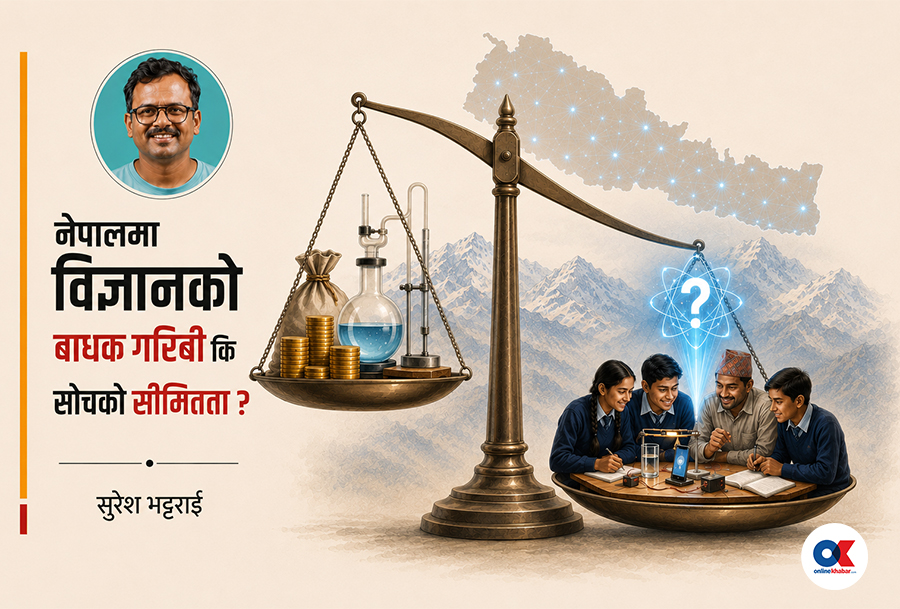
The development of a competitive advantage through scientific learning, particularly in fields like physics research, is not yet a widespread concept for the youth of today. This forward-thinking approach is prevalent in countries such as South Korea, Germany, and Switzerland, but it has yet to take root in Nepal. Until this perspective shifts, the burden of supporting scientific education and exploration will continue to fall disproportionately on families. This highlights a significant gap in how scientific inquiry is valued and integrated into societal progress, suggesting that a culture of curiosity and long-term investment in knowledge is more crucial than immediate economic gains for fostering a scientifically advanced nation.
The article points to a societal disconnect between immediate economic competition and the long-term benefits of scientific inquiry. While advanced economies like South Korea, Germany, and Switzerland appear to foster an environment where scientific learning is intrinsically valued for future competitiveness, Nepal, according to the author, has not yet developed this mindset. This suggests that the current educational and economic frameworks may not adequately incentivize or support scientific exploration beyond immediate family financial capacity. Moving forward, a cultural shift prioritizing curiosity and foundational scientific understanding, rather than solely immediate vocational or economic returns, could unlock greater potential for innovation and sustained national development in the coming decade.
AI-generated to prompt reflection — not editorial opinion, not advice, not a statement of fact. How this works.