Curiosity Rover Captures Mysterious Honeycomb Rock Formations on Mars
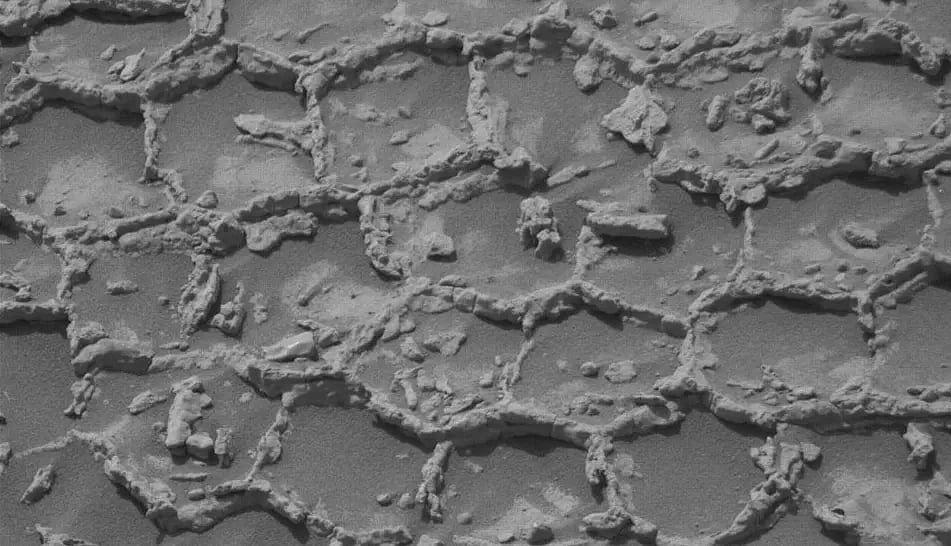
NASA's Curiosity rover has transmitted a puzzling image from the Martian surface, revealing a series of polygonal geological structures that bear a striking resemblance to a honeycomb.
These unusual formations were observed on the plains of Mars, sparking scientific curiosity about their origin. The honeycomb-like pattern suggests a geological process that has resulted in these distinct, repeating shapes. Scientists are now analyzing the data to understand the specific conditions and mechanisms that could have led to the creation of such a unique geological feature on the Red Planet.
The discovery of polygonal geological structures on Mars, reminiscent of a honeycomb, presents an intriguing natural phenomenon. Such formations often arise from processes like desiccation cracking in clay-rich sediments or thermal contraction, common on planetary surfaces. Understanding the precise geological and environmental conditions that led to this specific pattern on Mars can offer valuable insights into the planet's past geological activity and potential for habitability. Further analysis will likely focus on comparing these formations to terrestrial examples and modeling the geological processes involved, contributing to our broader understanding of planetary geology.
AI-generated to prompt reflection — not editorial opinion, not advice, not a statement of fact. How this works.