Curiosity Rover Finds Mysterious Honeycomb Structures on Mars
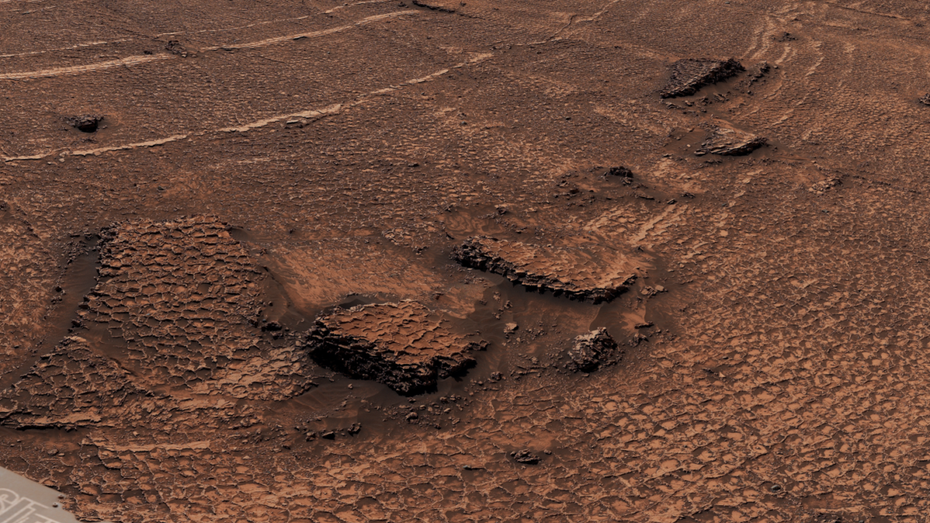
NASA's Curiosity rover has discovered unusual honeycomb-like structures during an excursion into "Valle Grande" on Mars. The origin of these formations remains a mystery to researchers. The rover, operated by NASA's Jet Propulsion Laboratory, has been exploring the Gale Crater region of Mars since 2012. The discovery was made during a recent traverse through a valley, where the rover's cameras captured images of the intriguing geological features. These structures appear to be a network of interconnected, hexagonal depressions in the Martian surface. Scientists are currently analyzing the data and images to determine how these formations were created. Possible explanations include erosion patterns, volcanic activity, or the presence of ancient water. Further investigation is required to confirm the exact geological processes responsible for the honeycomb structures. This finding adds another layer to the complex geological history of Mars and highlights the ongoing scientific exploration of the Red Planet.
The discovery of novel geological formations on Mars by the Curiosity rover underscores the dynamic and complex history of planetary bodies. Understanding the genesis of these honeycomb structures, whether through aeolian processes, past hydrological activity, or volcanic interactions, is crucial for refining models of Martian geological evolution. Such findings prompt a re-evaluation of surface processes and potential habitability conditions throughout Mars' history. Future missions and analytical techniques will be key to definitively characterizing these features and their implications for astrobiology and comparative planetology, offering insights into the diverse ways geological landscapes can form across celestial bodies.
AI-generated to prompt reflection — not editorial opinion, not advice, not a statement of fact. How this works.