Curiosity Rover's Wheels Show Significant Wear After 14 Years on Mars
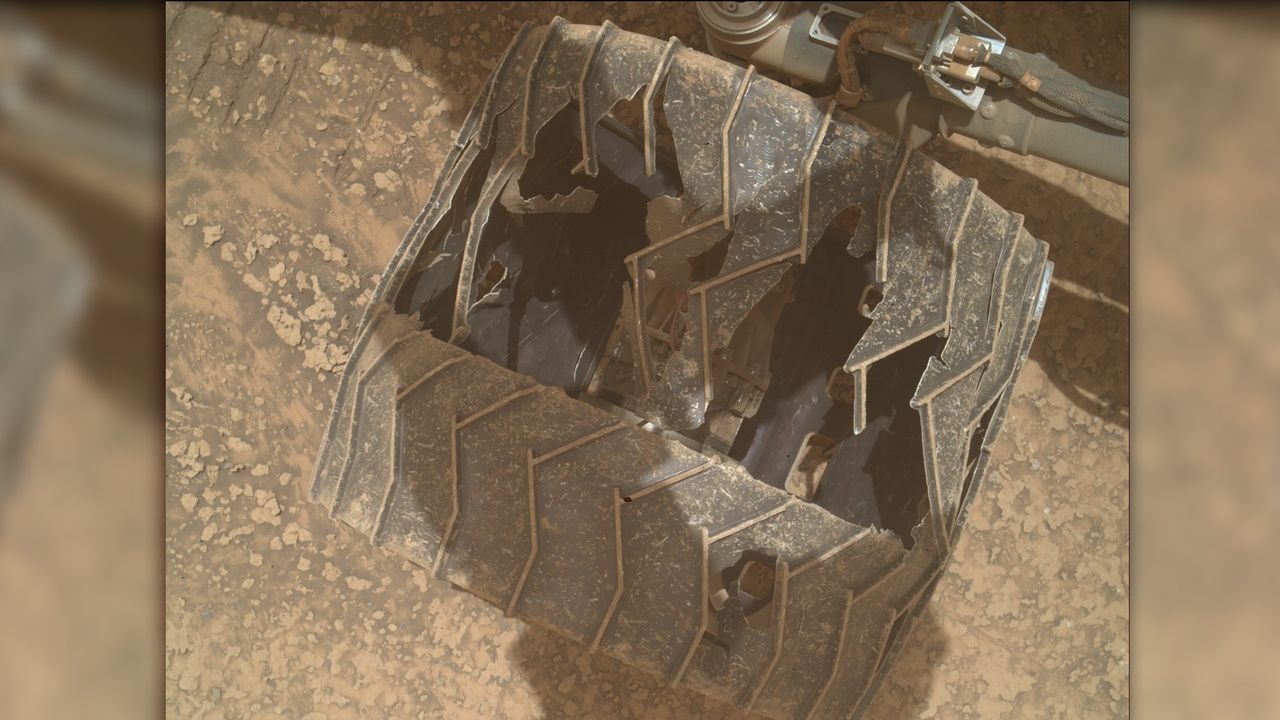
NASA's Curiosity Mars rover, which has been exploring the Red Planet for nearly 14 years, is showing significant signs of wear and tear, particularly on its wheels. New images captured by the rover reveal cracks and damage to its metallic wheels, a testament to the harsh Martian environment and the extensive exploration it has undertaken. These wheels are crucial for Curiosity's mobility, allowing it to traverse the diverse Martian terrain and reach its scientific targets. The rover's engineering team continuously monitors the wheel condition to ensure its operational longevity and mission success. Despite the wear, Curiosity continues its scientific mission, collecting data and sending images back to Earth. The images serve as a visual record of the rover's journey and the challenges of operating complex machinery in an extraterrestrial setting. This wear is an expected outcome of prolonged operation in a demanding environment.
The extensive wear on the Curiosity rover's wheels after 14 years highlights the inherent trade-offs between mission longevity and the physical demands of planetary exploration. While the damage is a natural consequence of traversing rugged Martian terrain, it underscores the need for ongoing innovation in materials science and wheel design for future missions. As robotic explorers venture further and operate for longer durations, developing more resilient and adaptive mobility systems will be critical to maximizing scientific return and minimizing maintenance requirements. This situation prompts consideration of how to balance aggressive exploration objectives with the engineering realities of sustained operation in extreme environments, potentially through advanced self-repairing materials or more robust locomotion designs.
AI-generated to prompt reflection — not editorial opinion, not advice, not a statement of fact. How this works.