Cyclist Fatally Struck on Rio-Santos Highway Shoulder; Driver Refused Breathalyzer Test
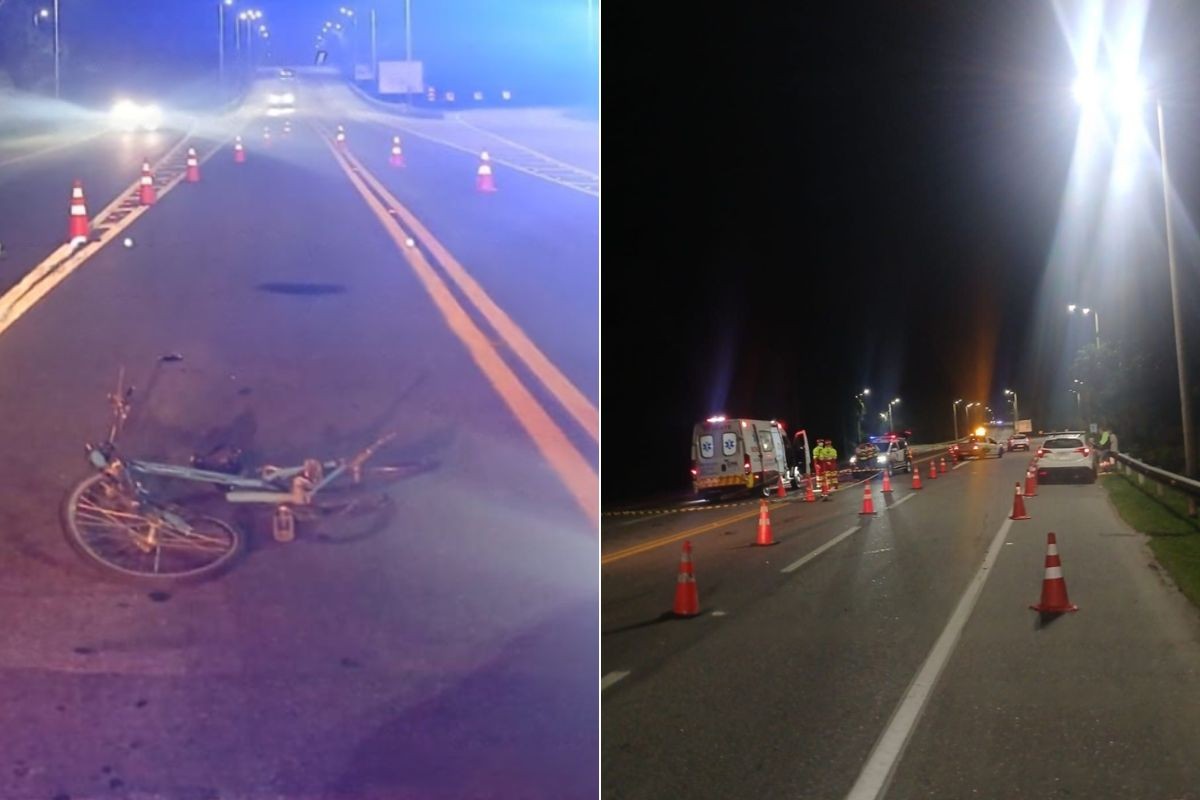
A cyclist tragically died after being hit by a car on the shoulder of the Rodovia Doutor Manoel Hipólito do Rego (SP-055), also known as Rio-Santos, near Bertioga, São Paulo. The incident occurred around 11:30 PM on Friday, November 10th, at kilometer 215. According to the São Paulo State Transport Regulatory Agency (Artesp), the driver encountered the cyclist while overtaking on the shoulder and was unable to stop or swerve in time. The victim fell into the median, while the car collided with a metal guardrail and came to a stop on the side median. A witness reported the vehicle was speeding at the time of the accident. Rescue teams confirmed the cyclist's death at the scene; the victim was unidentified and carried no documents. Traffic on both eastbound and westbound lanes was rerouted via the shoulder from 11:30 PM until approximately 5:00 AM on Saturday, November 11th. The driver refused to take a breathalyzer test. The case was registered at the Bertioga District Police Station as negligent homicide by a motor vehicle, and the driver was subsequently released. The São Paulo State Public Security Secretariat had not commented on the case as of the report's publication.
This incident highlights critical issues in road safety and driver accountability. The driver's decision to overtake on the shoulder, coupled with a reported high speed, directly contributed to the fatal collision. The refusal to undergo a breathalyzer test raises questions about potential impairment, which could complicate the legal proceedings and underscore the importance of strict enforcement of traffic laws. Moving forward, a review of highway design and traffic management strategies on this route may be warranted to prevent similar tragedies. The legal framework for handling such cases, including the driver's release, warrants examination to ensure public safety while respecting due process.
AI-generated to prompt reflection — not editorial opinion, not advice, not a statement of fact. How this works.