Czech Government Proposes Making Murder an Unforgivable Crime
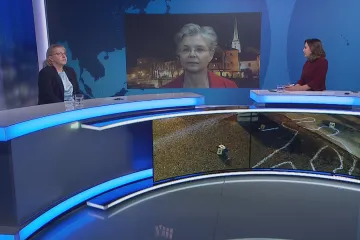
The Czech government is pushing to make murder an unforgivable criminal offense, a move that would allow prosecution of perpetrators for crimes older than the current 30-year statute of limitations. A similar proposal has also emerged in the Senate. Both initiatives are largely driven by advancements in forensic science, which increasingly enable the resolution of cold cases.
Hana Kordová Marvanová, a member of the ODS and TOP 09 senatorial club, champions the idea, stating that human life deserves the 'highest protection.' She argues that intentional murder should always carry the consequence of punishment, regardless of how much time has passed, and referenced unsolved cases, often referred to as 'memorials.'
However, Daniela Kovářová, a member of the Senate's constitutional and legal committee, expressed reservations, labeling the proposal a 'pleasing suggestion.' She cautioned that the Senate should not fundamentally alter the structure of criminal law in such a significant manner.
The proposed legislative changes in the Czech Republic aim to extend the statute of limitations for murder, driven by enhanced investigative capabilities. This reflects a global trend where evolving forensic technologies challenge traditional legal frameworks concerning the finality of justice. The debate highlights a tension between the state's duty to prosecute serious offenses and the legal principle of finality, which aims to provide closure and prevent indefinite legal uncertainty. As AI and data analytics continue to improve investigative potential, societies may increasingly grapple with the ethical and practical implications of revisiting long-past crimes, prompting a re-evaluation of how justice systems balance retribution, rehabilitation, and societal stability in the face of technological advancement.
AI-generated to prompt reflection — not editorial opinion, not advice, not a statement of fact. How this works.