Damasco Blasts Near Macron's Hotel Injure 18 Amid State Visit
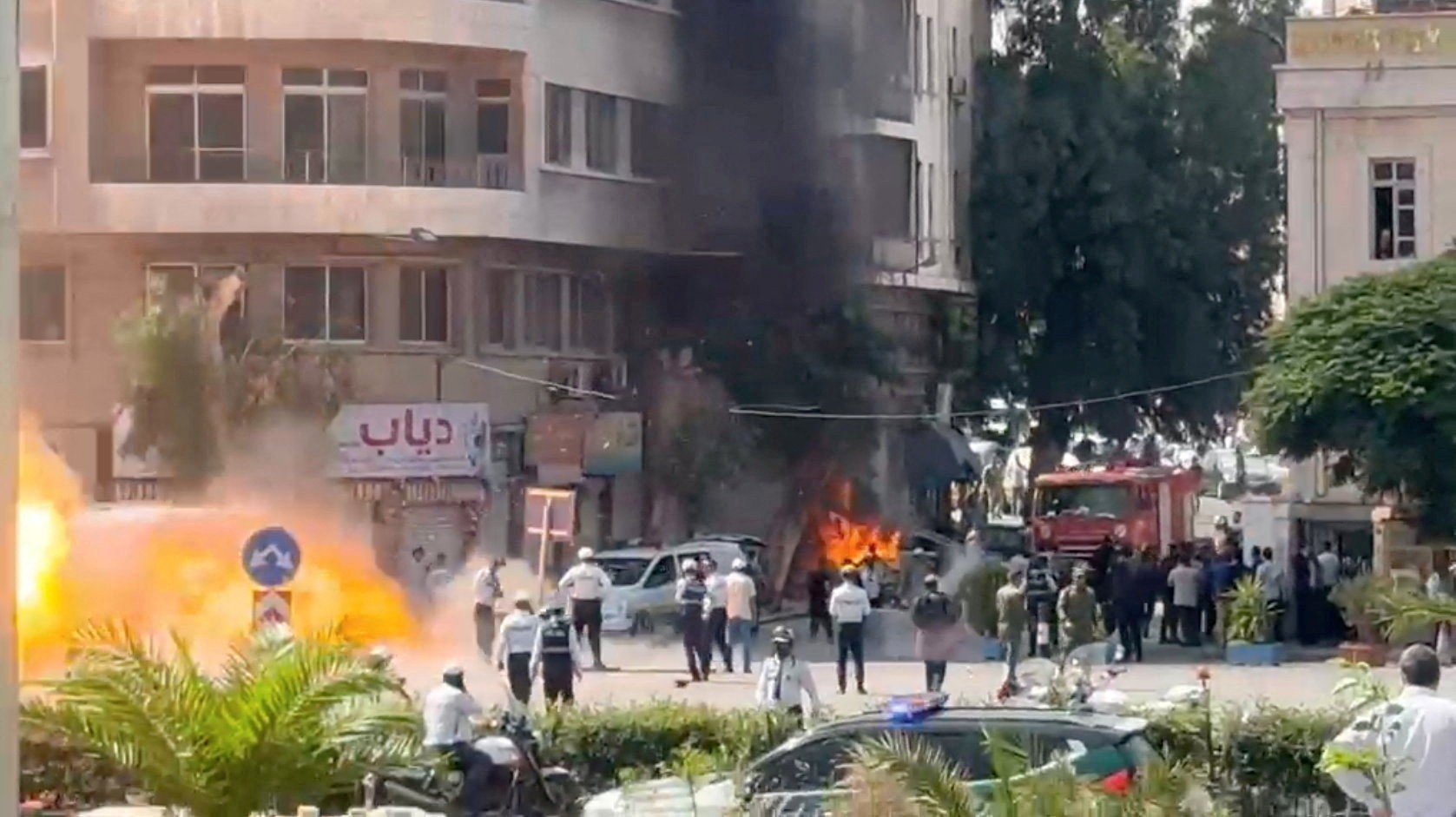
Two explosions occurred on July 7, 2026, in Damascus, Syria, near the hotel hosting French President Emmanuel Macron. The incident resulted in 18 injuries, including four police officers, according to the Syrian government. President Macron's office confirmed he was safe and did not hear the explosions. Macron, on a state visit, met with Syrian President Ahmed al-Sharaa shortly after the blasts. The cause of the explosions and their relation to Macron's visit were not immediately clear. Syrian state media reported that two explosive devices detonated on a busy street between the Ministry of Tourism and the National Museum, close to the Four Seasons hotel where Macron was staying. The explosions occurred shortly after Macron's convoy departed for the presidential palace. Images showed flames and smoke emanating from a trash bin, followed by a second explosion near an ambulance where bystanders had gathered. This event highlights security challenges in Syria following the 2024 ousting of dictator Bashar Al-Assad. Macron is the first EU head of state to visit Syria since rebel leader Sharaa took power. The visit aimed to showcase Syria's political transition under Sharaa, who has fostered ties with Western and Middle Eastern nations after years of isolation under Assad. Security forces have launched a search for those responsible, and roads were blocked as a precaution. The French presidency stated the explosions were not audible from Macron's convoy, and accompanying journalists also reported no awareness of the detonations.
The explosions in Damascus during President Macron's state visit underscore the persistent security vulnerabilities in Syria, even under the new leadership of Ahmed al-Sharaa. The incident, occurring shortly after the departure of Macron's convoy, raises questions about the capacity of Syrian authorities to ensure the safety of high-profile international visitors and manage internal security threats. The timing and proximity to Macron's accommodation suggest a deliberate act, potentially aimed at disrupting the nascent political transition or signaling ongoing instability. This event challenges the narrative of a stable post-Assad era and highlights the complex geopolitical landscape and the enduring presence of extremist elements, as evidenced by recent attacks. The incident prompts consideration of the trade-offs between diplomatic engagement with emerging regimes and the inherent risks associated with unstable environments, particularly in the context of long-term regional security and reconstruction efforts.
AI-generated to prompt reflection — not editorial opinion, not advice, not a statement of fact. How this works.