Dangerous Heat Wave Forces Cancellations of July 4th Events Across Eastern US
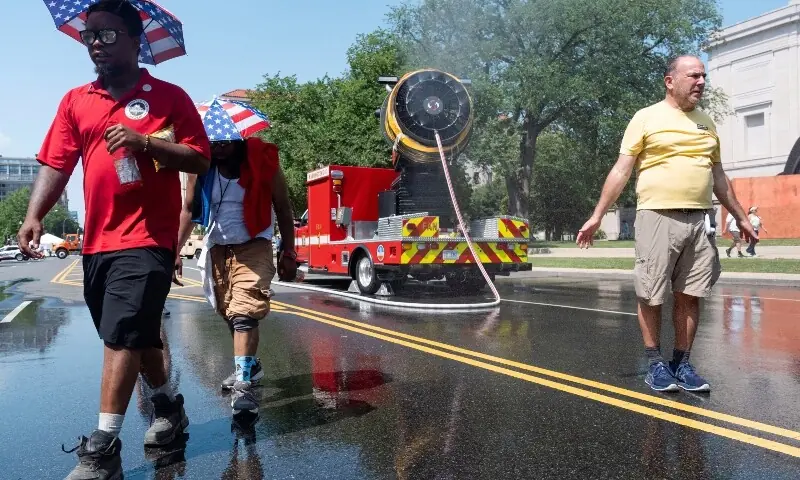
A severe heat wave significantly disrupted Fourth of July celebrations across large parts of the central and eastern United States on Friday, July 3, 2026. Numerous events, including parades, concerts, and fireworks displays, were canceled or postponed due to safety concerns stemming from dangerously high temperatures and humidity. In Washington D.C., the Great American State Fair on the National Mall, intended to showcase all 50 states as part of President Donald Trump's preparations for the nation's 250th birthday, experienced temporary closures. The National Park Service also canceled its annual Independence Day Parade, projecting heat index values as high as 115 degrees Fahrenheit. This extreme weather originated from a "heat dome" phenomenon that trapped hot air over the region, causing temperatures to soar. The scorching conditions also placed immense strain on power grids. PJM, the largest US power grid operator serving 67 million people, implemented emergency conservation measures to manage generator outages, overloaded transmission lines, and a surge in air-conditioning demand. In New York, Con Edison reported approximately 17,000 customers without power and urged conservation. The heat was so intense that shoe soles reportedly stuck to Manhattan streets. Despite the extreme heat warning, crowds gathered for celebrity arrivals at Madison Square Garden. Over 185 million people, more than half the US population, were under heat alerts, with peak heat indexes potentially reaching 46°C in some areas, and several cities setting new temperature records. Officials warned of potential fatalities and advised the public to stay hydrated and seek shade. Event cancellations extended along the Eastern Seaboard, with Philadelphia canceling its Salute to Independence Parade after temperatures hit 103°F, tying a record from 1901. Other affected locations included Haddon Township, New Jersey, and Watertown, New York, which canceled parades and fireworks, respectively. Boston delayed its annual riverside fireworks celebration by four hours.
The widespread disruption of national holiday celebrations by extreme heat underscores the growing vulnerability of public infrastructure and social gatherings to climate-related events. The strain on power grids highlights the challenge of meeting peak demand, particularly from air conditioning, during heat waves, which are projected to become more frequent and intense. This situation necessitates a re-evaluation of urban planning, energy infrastructure resilience, and public event management strategies to account for increasingly severe weather patterns. Future planning must integrate climate adaptation measures to ensure public safety and the continuity of essential services and cultural events in the face of a changing climate.
AI-generated to prompt reflection — not editorial opinion, not advice, not a statement of fact. How this works.