Dead whale washes ashore in São Paulo, drawing crowds and health warnings
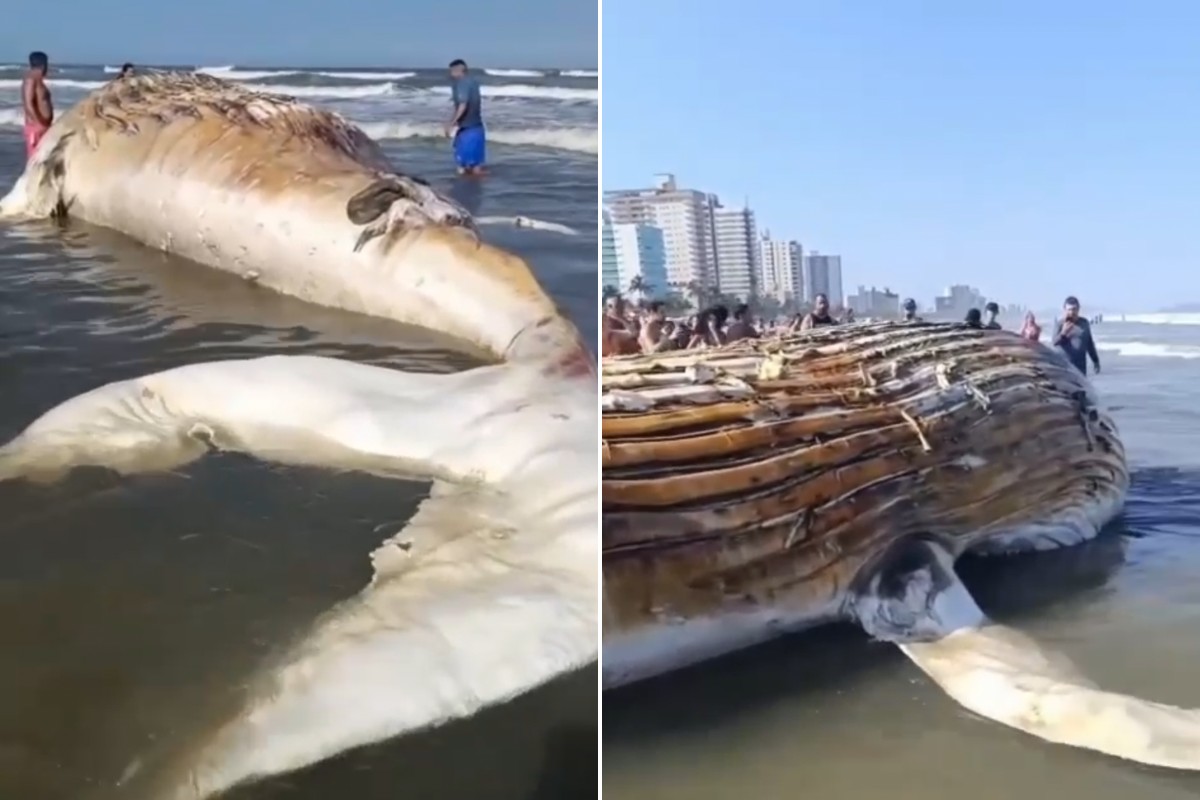
A humpback whale carcass was discovered on the beach in Praia Grande, São Paulo, on Saturday, October 1st. Local authorities, including the Instituto Biopesca and the Secretariat of Urban Services, were promptly notified and responded to the scene. The Instituto Biopesca team isolated the area, conducted a necropsy to determine the cause of death, and subsequently removed the whale's remains from the beach. Before official intervention, numerous beachgoers gathered around the deceased animal, as evidenced by social media footage. Biologist Eric Comin warned that such proximity poses significant risks, including public health concerns due to contagious bacteria, viruses, and fungi present in the carcass. He also highlighted environmental hazards, such as the release of toxic gases causing nausea and dizziness, and the potential for the body to rupture. Furthermore, Comin cautioned that the decomposing remains, along with bodily fluids, attract predators like sharks and scavengers to shallow waters and the shore, potentially endangering people nearby. Physical safety risks also exist from heavy body parts being moved by waves. The recommended protocol is to maintain a safe distance and report such findings to the authorities. Humpback whales undertake one of the planet's longest mammal migrations, traveling from the Antarctic to warmer Brazilian waters for breeding and nursing. These adult whales can reach lengths of 13 to 16 meters and weigh up to 50 tons. After the reproductive season, they migrate back to the Antarctic, with young whales learning to feed before the return journey.
The event highlights a common public reaction to large wildlife discoveries, where curiosity can override safety and environmental concerns. The presence of a dead whale, while a natural occurrence, presents a complex intersection of ecological processes and human behavior. The biologist's warnings underscore the potential for zoonotic disease transmission and the unintended consequences of human presence in such situations, including attracting dangerous predators. From a systems perspective, this incident points to the need for robust public education campaigns regarding wildlife encounters and effective rapid-response protocols for municipalities to manage such events, balancing public safety with ecological considerations and minimizing potential environmental contamination. Future planning should consider how to better manage public access and information dissemination during such natural events to mitigate risks.
AI-generated to prompt reflection — not editorial opinion, not advice, not a statement of fact. How this works.