Deer Fawn Rescued from Sergipe Highway Receives Care at Parque dos Falcões
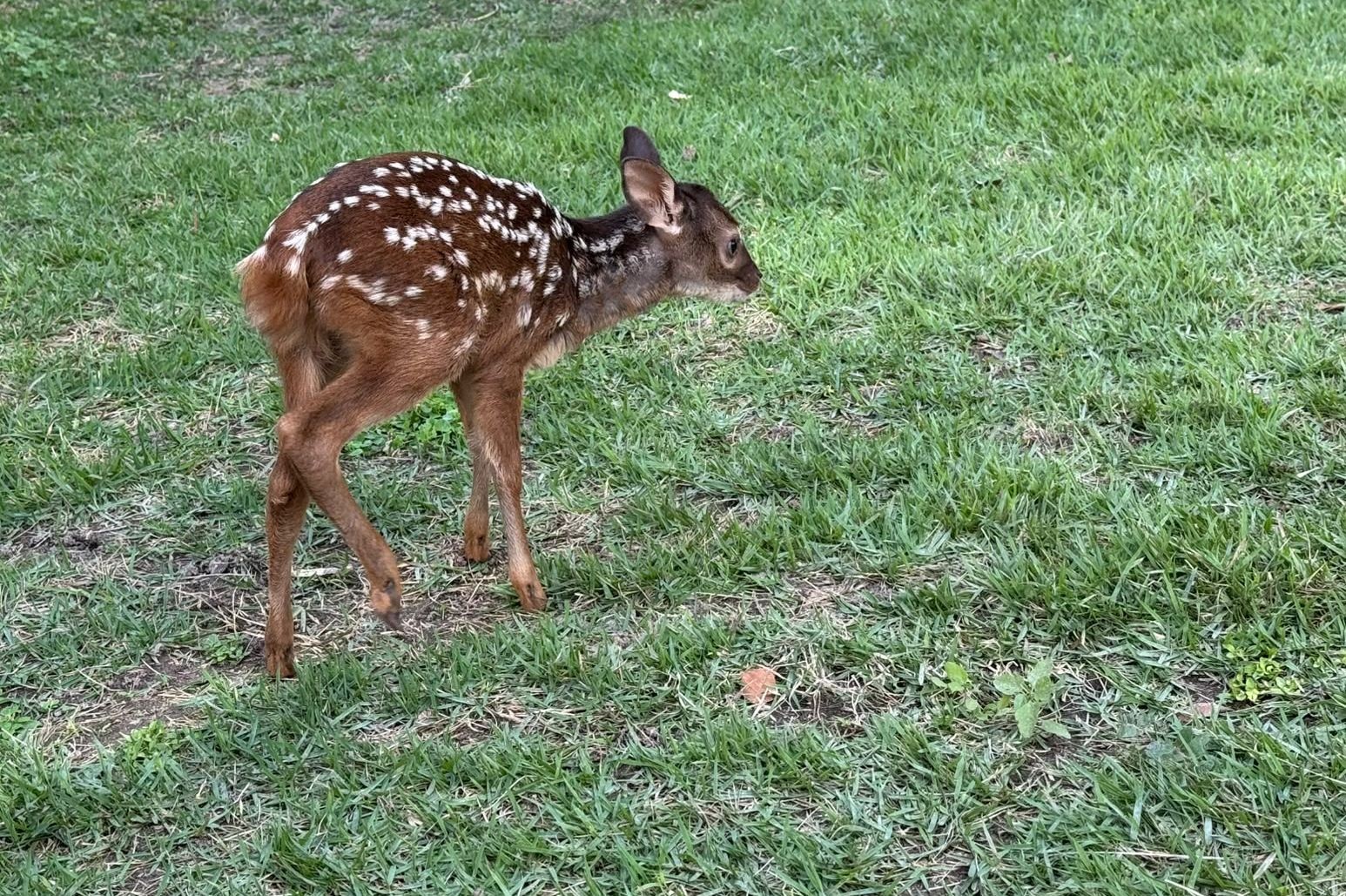
A young brocket deer fawn, found alone on the side of a highway in Sergipe, Brazil, has been taken to the Parque dos Falcões in Itabaiana for intensive care. The fawn has been at the park for 15 days. It was discovered wet from the rain by a family who brought it to the wildlife rehabilitation center. Park founder José Percílio stated that the fawn was placed in an incubator, received first aid, and is being administered medication under the guidance of a park veterinarian. Percílio noted that the animal's future—whether it can be returned to the wild or will live permanently at the park—depends on its recovery. Brocket deer are solitary, territorial animals, typically measuring just over a meter and weighing up to 25 kg. They exhibit sexual dimorphism, with males possessing horns and females having lighter-colored fur, while fawns are born with white spots. Key threats to the species include deforestation, road accidents, and illegal hunting. However, zootechnician Elias Alberto Gutierrez Carnelossi from the Federal University of Sergipe (UFS) cautions that finding a fawn alone does not always mean it is orphaned. He emphasizes that mothers often remain nearby, and premature removal by well-intentioned individuals can hinder the animal's ability to learn survival skills from its mother, making reintroduction into the wild difficult. If a wild animal must be moved, Carnelossi advises using closed wooden boxes with ventilation holes and immediately contacting environmental authorities. The Brazilian Institute of Environment and Renewable Natural Resources (Ibama) also advises the public to avoid direct contact with wild animals due to zoonotic disease risks and to report dangerous situations or environmental crimes to Ibama or the State Environmental Administration of Sergipe (Adema).
The rescue of the brocket deer fawn highlights a common human impulse to intervene when wildlife appears vulnerable, often stemming from genuine concern. However, this well-intentioned action can inadvertently disrupt natural processes, as noted by the zootechnician's warning about premature separation from the mother. In the context of increasing human-wildlife interface due to development and infrastructure like highways, understanding species-specific maternal behaviors and the critical role of early learning is paramount. Future conservation strategies may need to incorporate more sophisticated public education campaigns that empower citizens to identify genuine emergencies versus natural, albeit seemingly precarious, situations. This approach could reduce the incidence of well-meaning but detrimental interventions, thereby improving the long-term survival prospects for species like the brocket deer, especially as they face ongoing threats from habitat loss and human activity.
AI-generated to prompt reflection — not editorial opinion, not advice, not a statement of fact. How this works.