Delivery App Drivers Protest in Juiz de Fora, Disrupting Traffic
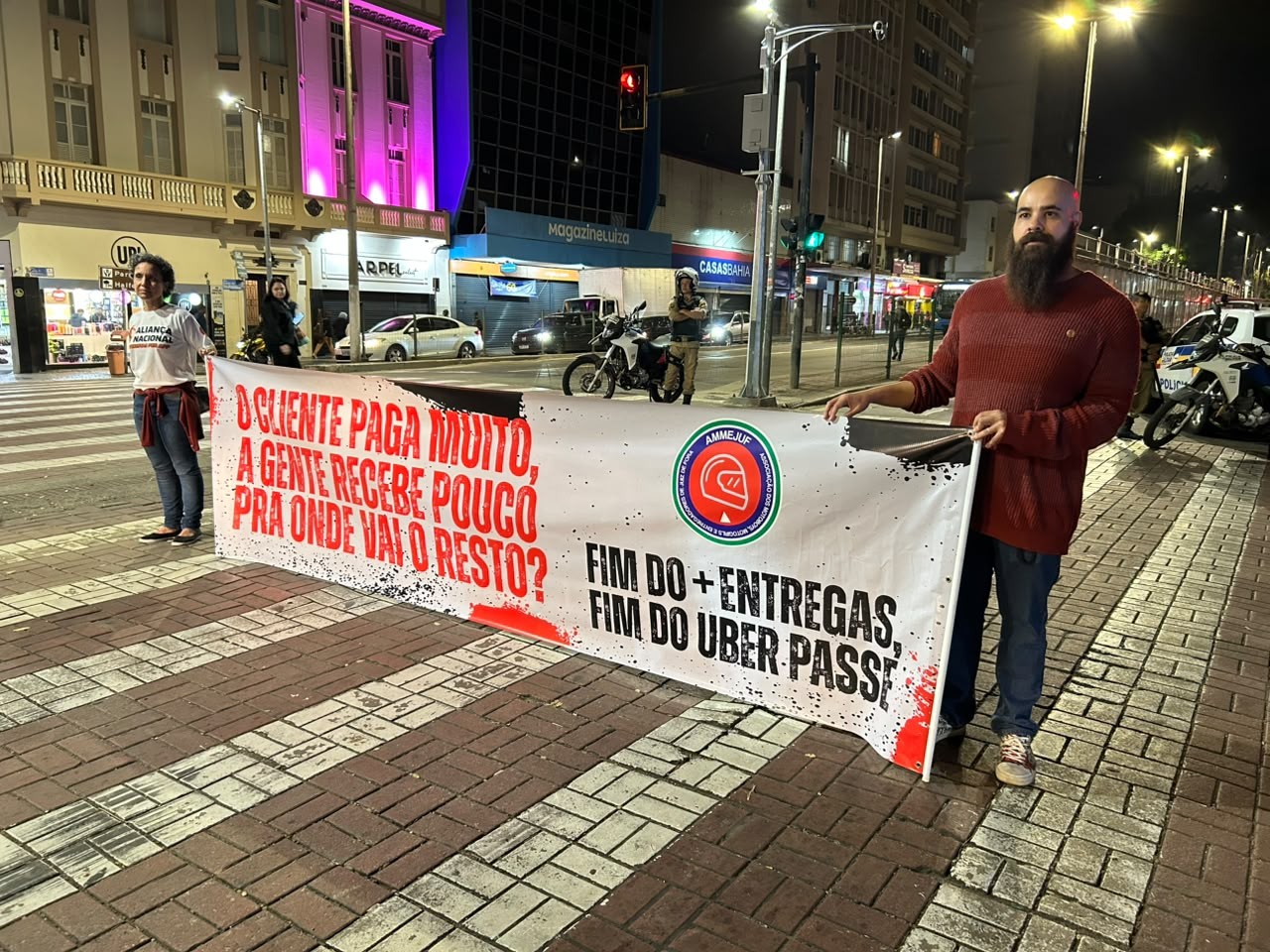
Hundreds of app-based delivery workers, including drivers, motorcyclists, and cyclists, staged a partial work stoppage and protest in Juiz de Fora on Monday afternoon, May 27th. The group, which provides services for various delivery platforms, is demanding improved working conditions and changes to the companies' operational systems. The demonstration began around 4 PM, with participants gathering at a roundabout in the Cruzeiro do Sul neighborhood before proceeding along Rio Branco Avenue, a major city thoroughfare. Nicolas Sousa Santos, legal director for the Association of Motorcyclists, Motorgirls, and Delivery Drivers of Juiz de Fora (Ammejuf), stated that public street action is necessary to bring attention to their issues and that current pay structures reduce their earnings. The Military Police accompanied the protest to ensure safety and manage traffic flow. Significant traffic disruptions occurred in the central region of Juiz de Fora, particularly near Parque Halfeld, where another gathering took place. Organizers indicated that further demonstrations are planned through Wednesday, May 29th. Key grievances include new services and fee structures implemented by delivery companies. Workers are advocating for fairer compensation and a review of app functionalities. Sousa cited an example where iFood's minimum fare for bicycle couriers is R$3.50 for a kilometer, which he described as a "tyrannical relationship" given Juiz de Fora's hilly terrain. In response, Uber stated that its "Passe para Motoristas" is a pilot program offering drivers 100% of weekly trip earnings for a single fee, with information communicated via email and the Uber Driver app. iFood affirmed its commitment to ongoing dialogue with delivery personnel and representatives, aiming to enhance dignity, earnings, and transparency. They highlighted "Mais Entregas" as an optional alternative where drivers can opt for hourly pay instead of per-order rates, with concentrated routes. iFood emphasized that this is optional and workers can retain their traditional payment model or switch between options.
The protest by app-based delivery workers in Juiz de Fora highlights a recurring tension between platform-based gig economy models and the labor rights of their contractors. These platforms often leverage technological efficiency and flexible work arrangements, which can lead to reduced operational costs and potentially lower service fees for consumers. However, this efficiency can come at the expense of worker compensation and benefits, particularly when algorithms dictate pay rates and working conditions. The workers' demands for fairer pay and improved conditions reflect a broader debate about the sustainability and equity of the gig economy. As AI continues to optimize logistics and potentially automate aspects of delivery, the economic models supporting these workers will likely face further scrutiny, necessitating a re-evaluation of how value is distributed between platforms, consumers, and the individuals performing the labor.
AI-generated to prompt reflection — not editorial opinion, not advice, not a statement of fact. How this works.