Delta Intelligence Secures Nearly $70M in Funding for Humanoid Robot Foundation Models
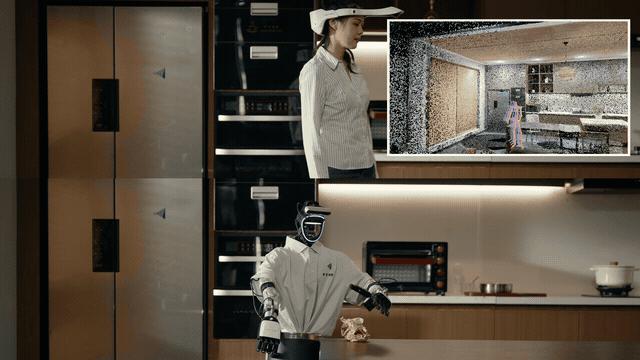
Delta Intelligence, a startup focused on foundational models for humanoid robots, has successfully closed an Angel++ funding round, raising nearly 500 million yuan (approximately $69 million USD). The investment was led by industrial arms of publicly traded companies and prominent financial institutions. These funds will be allocated to the continuous development of their humanoid robot foundation models, accelerating the mass production of proprietary data collection equipment, and building a robust data feedback loop. The company also plans to expand its core research and development team to facilitate the engineering and validation of its technologies in real-world industrial settings. This marks the sixth funding round for Delta Intelligence within six months of its establishment in January 2026. Previous investors include major humanoid robot manufacturers like Unitree Robotics and Intelin, as well as financial firms such as Hillhouse Capital and Lenovo Capital. The company's core mission is to develop native Universal Humanoid Foundation Models (HFMs) that enable comprehensive whole-body coordinated manipulation, thereby advancing embodied intelligence for industrial and domestic applications and accelerating the arrival of Physical AGI. The founding team comprises three individuals with PhDs from UCLA and strong academic backgrounds, including teaching at Peking University. Their expertise spans robotic learning, large-scale machine learning, robotic systems, and embodied intelligence, with prior experience at leading organizations like Google Robotics, NVIDIA Research, DeepMind, Meta, and Peking University. Delta Intelligence is addressing a critical gap in current embodied AI models, which often rely on 2D visual representations that struggle with depth perception and spatial understanding in complex, real-world environments. To overcome this, the company is building a native 3D world engine using 3D representations for direct processing of point clouds and Gaussian splatting, enabling native 3D understanding, reasoning, and environmental prediction. This engine is powered by a proprietary whole-body, panoramic data collection system that captures full-body human skeletal motion and reconstructs 3D scenes in real-time. The system captures both full-body skeletal data and high-precision 3D scene data, crucial for realistic human-robot interaction and environmental understanding. Delta Intelligence employs a layered approach to data collection, combining remote operation data with robot-agnostic motion capture modes for efficiency and cost-effectiveness. The company's CEO, Ma Xiaojian, emphasizes that learning for humanoid robots should mirror human learning, requiring comprehensive data of whole-body interaction with the environment to build an unbiased world model. Addressing the challenge of translating high-level task intentions into precise motor commands for high-degree-of-freedom humanoid robots, Delta Intelligence has developed a three-layer architecture: a 'brain' for perception and planning, a 'cerebellum' for fine motor control and balance, and a hybrid force-position control layer. This hierarchical structure, trained on extensive simulation and real-world data, aims to overcome the limitations of previous methods that often led to jerky movements or falls. Delta Intelligence is positioning itself as a foundational model provider, collaborating with major humanoid robot manufacturers to ensure its models can be quickly deployed and scaled across different hardware platforms, acting as a crucial link between hardware and upper-level applications.
The substantial funding secured by Delta Intelligence underscores the significant investor confidence in the burgeoning field of humanoid robotics and embodied AI. The company's focus on developing foundational models, particularly its emphasis on native 3D world engines and comprehensive whole-body data collection, addresses a key technical challenge: enabling robots to reliably interact with complex, unstructured physical environments. By prioritizing a 3D-centric approach over 2D visual representations, Delta Intelligence aims to overcome limitations in depth perception and spatial reasoning that have historically hindered robot deployment beyond controlled settings. The strategic decision to separate training data strategies for the 'brain' (real-world interaction data) and 'cerebellum' (simulation data for balance control) reflects a pragmatic understanding of the distinct requirements for task planning versus low-level motor control. As the industry matures, the ability of foundational model providers like Delta Intelligence to rapidly adapt their systems to diverse hardware platforms, through standardized adaptation processes, will be critical for ecosystem growth. This approach mitigates the need for costly, full-system retraining for each new robot model, potentially accelerating the pace of innovation and deployment across various industrial and domestic sectors.
AI-generated to prompt reflection — not editorial opinion, not advice, not a statement of fact. How this works.