Dense Fog Halts Operations at Brazil's Port of Santos and Coastal Ferries
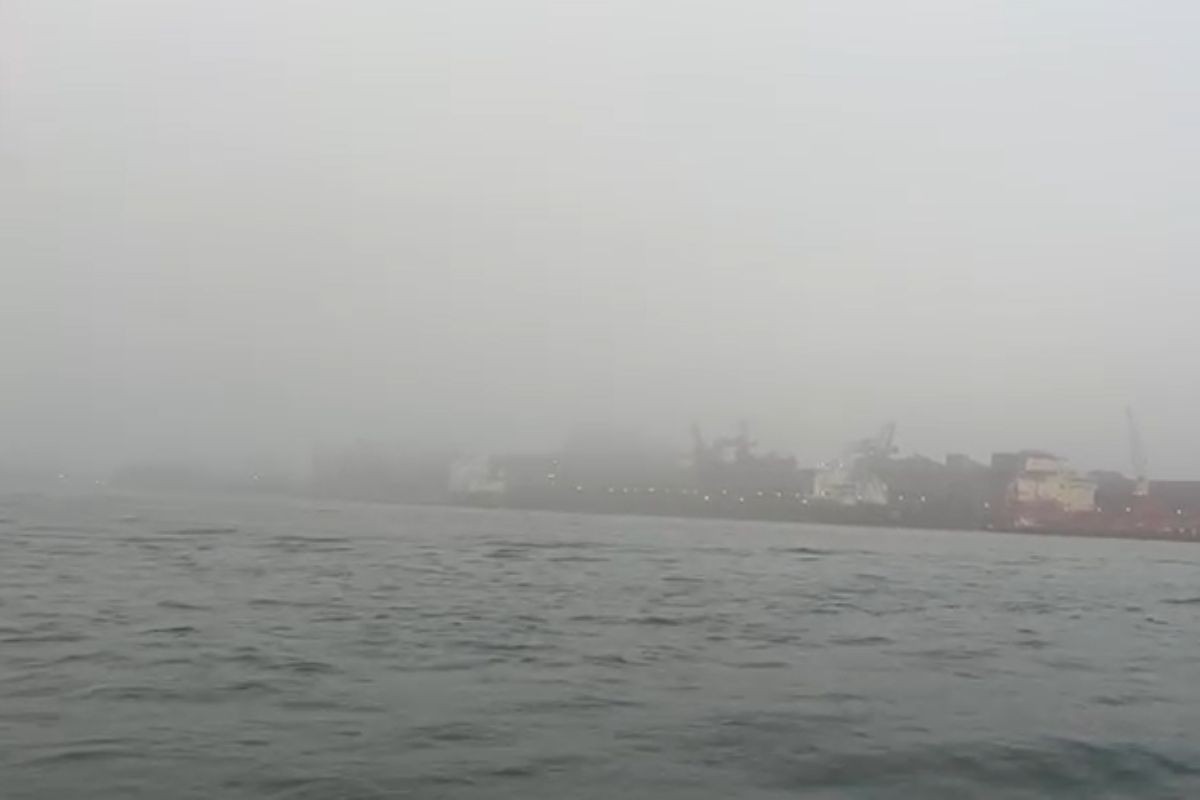
A dense fog blanketed the Baixada Santista region in São Paulo, Brazil, causing the suspension of navigation at the Port of Santos for the second consecutive day on Thursday, May 2nd. The fog reduced visibility to below 500 meters, leading the São Paulo Port Authority to halt maritime traffic starting at 3:50 AM. This disruption significantly impacted the port, which is the largest in Brazil. Coastal ferry services between Santos and Guarujá were also interrupted, forcing residents to use smaller boats known as 'catraias' for inter-city travel. The fog phenomenon has persisted in the region since Wednesday, May 1st, affecting visibility and obscuring buildings. A meteorologist from Unicamp explained that fog and mist are essentially the same phenomenon, distinguished by visibility distance, with fog being more intense. Both occur due to high humidity and reduced nighttime temperatures, causing water vapor to condense into visible water droplets. This condition is common during this time of year, particularly on clear nights with rapid temperature drops, and typically dissipates as the sun warms the earth's surface.
The recurring fog-related disruptions at the Port of Santos highlight the inherent vulnerability of critical infrastructure to natural phenomena. While weather events are unpredictable, the repeated paralysis of Brazil's largest port suggests a need for enhanced resilience planning. This includes evaluating the efficacy of current visibility thresholds for navigation and exploring advanced meteorological forecasting and vessel management technologies. The economic implications of such stoppages underscore the importance of proactive risk mitigation strategies, balancing operational efficiency with safety and environmental considerations in a region prone to such atmospheric conditions.
AI-generated to prompt reflection — not editorial opinion, not advice, not a statement of fact. How this works.