Dense Fog Halts South America's Largest Port, Causing Millions in Losses
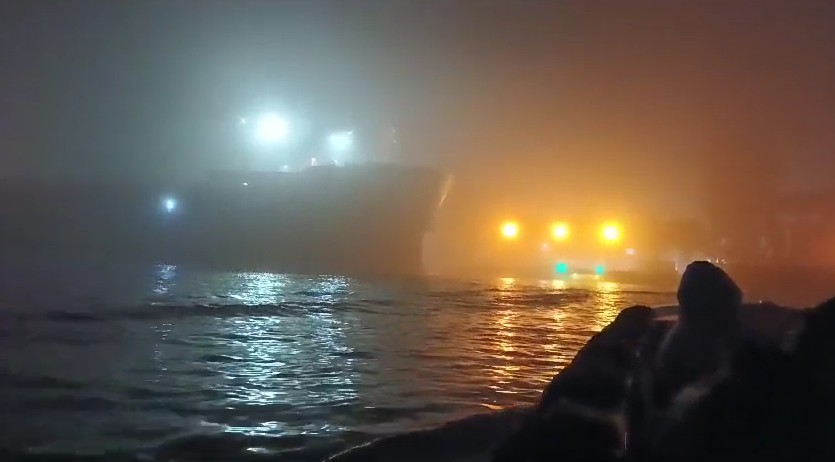
Dense fog along the coast of São Paulo has caused significant disruptions at the Port of Santos, South America's largest, leading to substantial financial losses. In July alone, operations were suspended for a total of 20 hours and 25 minutes due to low visibility, defined as less than 500 meters in the navigation channel. The Syndicate of Maritime Navigation Agencies of the State (Sindamar) reported that these stoppages resulted in an estimated loss of approximately US$800,000, equivalent to R$4.1 million, affecting 19 ships. These delays impact ship schedules and cargo loading, causing substantial financial damage to shipowners, who are the owners of merchant vessels. The executive director of Sindamar, José Roque, highlighted that while these disruptions are costly, they are essential for safety to prevent accidents that could lead to indefinite closures. The Port Authority of Santos (APS) clarified that while navigation in the channel was halted, other port operations, such as cargo handling for docked vessels, continued normally. To mitigate future impacts, the APS plans to implement the VTMIS system, which will integrate meteorological and oceanographic stations with sensors, including a "visibility meter," to better predict and manage navigational conditions, thereby minimizing downtime and enhancing port efficiency and safety. Meteorologist Ana Avila explained that fog and mist are essentially the same phenomenon, differing only in visibility distance, and occur due to high humidity and cooling temperatures causing water vapor to condense into visible droplets. Professor Ronaldo Christofoletti suggested that global warming, leading to warmer air masses, may increase the frequency of such fog events due to the contrast with cooler ocean temperatures.
The recurring disruptions at the Port of Santos due to fog highlight a critical infrastructure vulnerability to natural weather phenomena, exacerbated by climate change. While safety protocols necessitate operational halts, the significant financial losses underscore the economic imperative for enhanced predictive capabilities and resilience. The planned VTMIS implementation represents a technological approach to mitigate these risks by improving forecasting and operational planning. However, this also points to a broader systemic challenge: how global environmental shifts will increasingly impact critical trade infrastructure, demanding adaptive strategies that balance safety, economic continuity, and environmental realities. The potential for increased fog events due to global warming suggests that such disruptions may become more frequent, necessitating long-term investment in advanced technological solutions and potentially revised operational frameworks to maintain competitiveness and supply chain integrity in the face of evolving climatic conditions.
AI-generated to prompt reflection — not editorial opinion, not advice, not a statement of fact. How this works.