Depositors to get money back with interest from 5 merged banks: Finance Minister
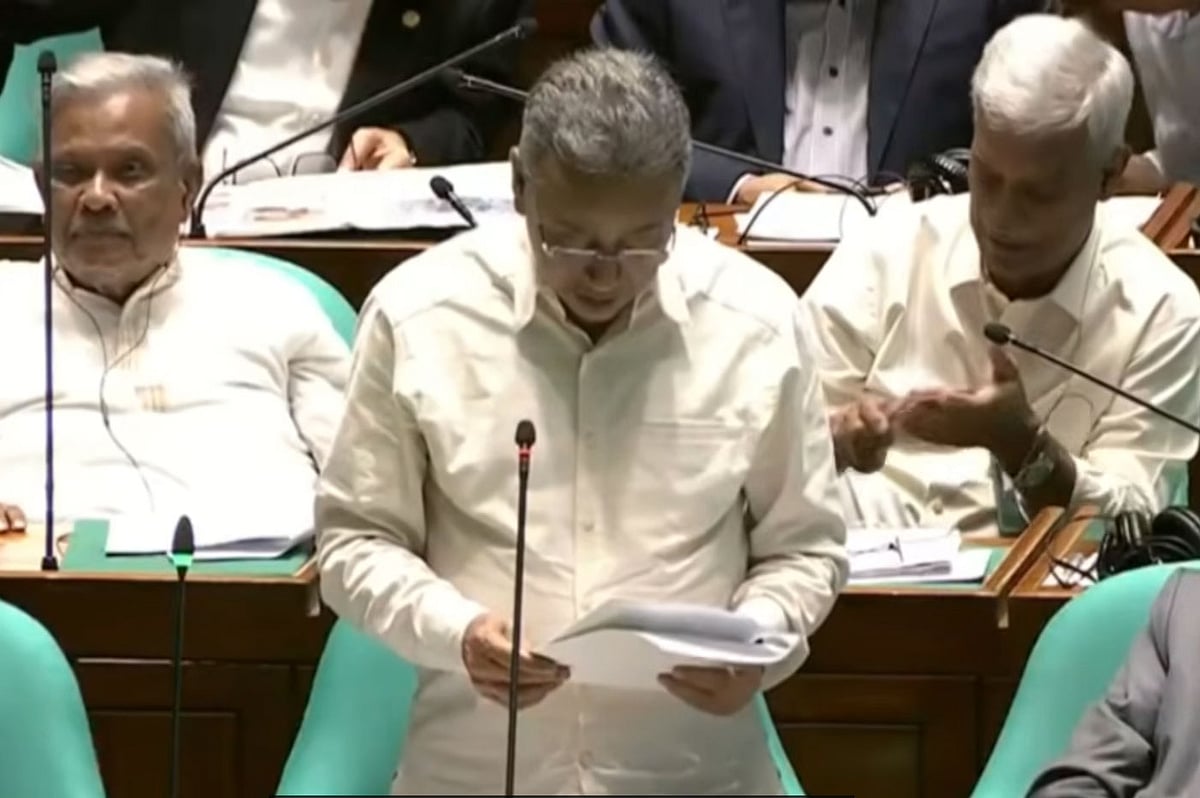
Finance Minister Amir Khasru Mahmud Chowdhury announced in the Bangladeshi Parliament that depositors will receive their funds with interest from the five Islamic banks that have been merged. He stated that while a 'haircut' or reduction in deposits will not be applied, depositors will need to exercise patience as the process unfolds. The announcement came in response to a motion raised by Rehana Akter Ranu, a reserved women's seat MP from the BNP. Ranu had highlighted issues of irregularities and alleged corruption in several banks, including Exim Bank, Social Islami Bank, First Security Islami Bank, Global Islami Bank, Union Bank, National Bank, and IFIC Bank, leading to depositors being unable to access their hard-earned money. She criticized the bank owners for allegedly absconding abroad while their customers suffer, and demanded punishment for them and the auction of their assets to repay depositors, along with the cancellation of the 'haircut' policy.
Minister Chowdhury acknowledged the situation as heartbreaking and assured that the government is committed to stabilizing the financial sector through a structured resolution framework, supported by the Bank Resolution Act. The five problem banks have been consolidated into a single entity, 'Combined Islamic Bank PLC,' preserving all depositor claims and interests. Depositors are being compensated in phases according to a Bangladesh Bank resolution scheme. Special forensic audits are underway to identify those responsible for irregularities in the five banks, with asset recovery measures to follow based on the audit reports. The minister also mentioned that civil proceedings have commenced against prominent groups like S Alam, Beximco, and Orion Group as part of efforts to recover funds. He reiterated that while the 'haircut' will not be implemented, the recovery process, especially with interest, will take time due to the banks' current losses.
The Finance Minister's assurance to depositors regarding the return of their funds with interest from the merged banks addresses immediate public concern. However, the underlying systemic issues that led to the financial distress of these institutions require robust, long-term solutions. The government's strategy of consolidation and forensic audits aims to identify and recover assets, which is a necessary step. The challenge lies in the effective execution of these measures, particularly in a complex financial landscape where asset recovery can be protracted and uncertain. Future policy should focus on strengthening regulatory oversight and corporate governance to prevent such situations, ensuring that the financial sector's stability does not rely solely on reactive measures after significant losses have occurred. The emphasis on patience, while understandable given the financial realities, highlights the critical need for transparent communication and a clear timeline for depositors to regain confidence in the banking system.
AI-generated to prompt reflection — not editorial opinion, not advice, not a statement of fact. How this works.